Trump ‘Shopping Messages’ on Iran War, Says Yale Expert
Yale scholar Jeffrey Sonnenfeld reveals that Donald Trump is 'shopping messages' regarding a potential conflict with Iran, testing different narratives to see what gains traction. Sonnenfeld draws parallels to the 'sleeper effect,' where repeated falsehoods, delivered confidently, can become accepted as truth.

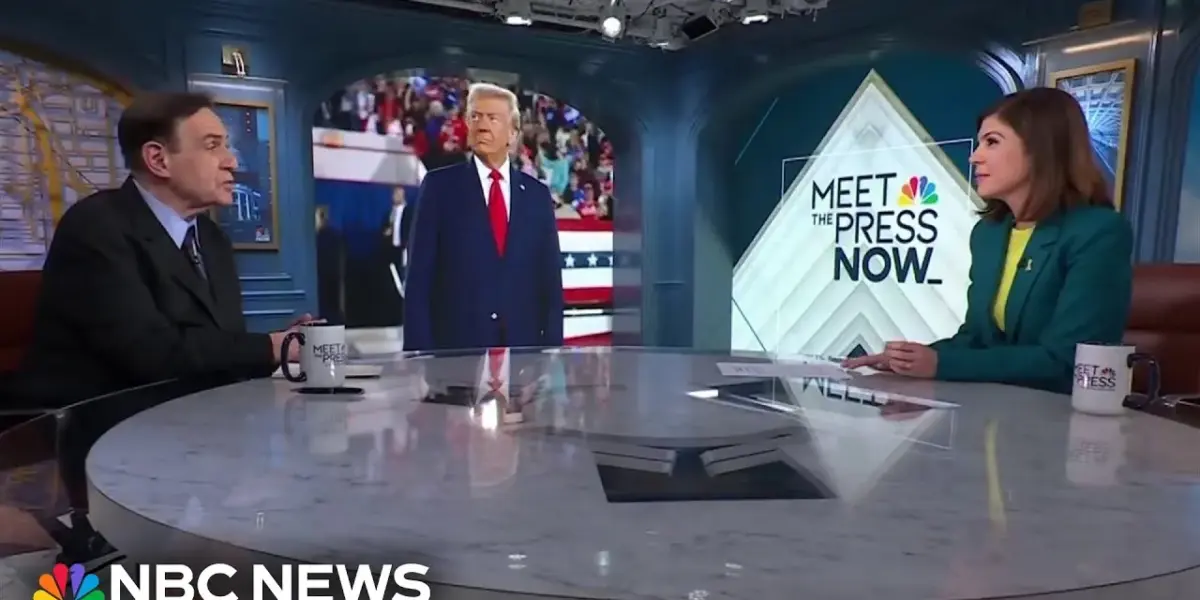
Yale Scholar Jeffrey Sonnenfeld on Trump’s Shifting Rhetoric
Donald Trump is currently “shopping messages” regarding a potential conflict with Iran, seeking to determine which statements resonate most effectively with the public, according to Jeffrey Sonnenfeld, a senior associate dean at the Yale School of Management and author of the upcoming book “Trump’s Ten Commandments.” Sonnenfeld, who has informally advised five U.S. presidents, explained that this tactic is part of Trump’s broader communication strategy, often characterized by the “sleeper effect”—a phenomenon where repeated falsehoods, delivered with unwavering confidence, can begin to be accepted as truth.
Origins of a Complex Relationship
Sonnenfeld’s insights into Trump stem from a long and often contentious relationship that began in 2004. Jeff Zucker, then running NBC Universal, asked Sonnenfeld to review the first season of Trump’s reality show, “The Apprentice.” Sonnenfeld’s initial review in The Wall Street Journal, which he described as “the worst possible portrait of business leadership on television,” was met with a strong, even threatening, reaction from Trump. Despite the early friction, Sonnenfeld predicted Trump’s presidential ambitions. The two eventually developed a working relationship, with Sonnenfeld even suggesting the concept for “Celebrity Apprentice” after observing that the original format’s premise of eliminating contestants lacked a clear leadership path.
“He’s a little sensitive to criticism, and he was a little threatening after the first review… I predicted he would run for president. This was 2004.”
– Jeffrey Sonnenfeld
The ‘Sleeper Effect’ in Political Discourse
Sonnenfeld elaborated on the “sleeper effect,” a concept studied at Yale in the mid-20th century, which draws parallels to propaganda techniques observed in 1930s Germany. He explained that this strategy involves implanting flawed messages, particularly effective with less sophisticated audiences, by repeating them consistently. Even when fact-checkers or credible sources debunk these claims, the initial message can linger in public memory, potentially swaying a significant portion of the population.
“The messenger’s confidence becomes more memorable than the message’s accuracy,” Sonnenfeld stated, highlighting how this psychological principle can be weaponized in political communication. He cited the example of persistent, debunked claims about refugees, suggesting that continuous repetition can lead a notable percentage of the public to believe them despite official denials.
Shifting Stance on Iran and Other Geopolitical Issues
The Yale scholar applied this theory to Trump’s recent rhetoric concerning Iran. Sonnenfeld noted a lack of a consistent message, pointing to contradictory statements made within a short timeframe. Trump has reportedly oscillated between claiming Iran’s nuclear capabilities have been “defanged” and asserting they need to be made “inoperable,” while also suggesting significant progress has been made, only to later state, “We have not yet begun to fight.”
“He needs to have a consistent message, and he usually does that. But right now, he’s shopping messages to find out what works,” Sonnenfeld observed. He compared this to Trump’s approach to Venezuela, where initial justifications for potential military action—such as drug interdiction—were abandoned when they proved unconvincing or contradictory to other actions, like pardoning a Honduran official linked to drug trafficking. Trump then shifted to other narratives, including allegations of Russian and Chinese ship involvement and claims that the oil industry was pushing for intervention, narratives that also failed to gain traction.
Evolution of Trump’s Leadership Style
Sonnenfeld also discussed the evolution of Trump’s leadership style from his first term to what might be considered a potential second term. He contrasted Trump’s initial cabinet picks, whom he described as individuals with established authority and expertise in their fields, with his current approach, which he characterized as surrounding himself with “sycophants” or individuals “beholden to him.”
“He has no guardrails now,” Sonnenfeld warned. “So he keeps pushing and pushing and pushing to see how far he can go.” He noted that Trump seems to thrive on pushing boundaries and that pushback, such as the collective action seen from Minneapolis business leaders, clergy, and demonstrators in response to certain events, can cause him to retreat.
Sonnenfeld also highlighted Trump’s “divide and conquer” strategy, evident in his approach to trade agreements like NAFTA and USMCA, and international alliances like NATO. According to Sonnenfeld, Trump benefits from creating friction between nations, believing that constant conflict prevents them from posing a unified threat to him.
In contrast to “Trump 1.0,” where power was delegated to experts, “Trump 2.0” is depicted as a highly centralized operation. “Everything goes through him,” Sonnenfeld stated, suggesting a significant shift in the structure of decision-making and influence.
Looking Ahead
As the political landscape continues to evolve, Sonnenfeld’s analysis suggests that understanding Donald Trump’s communication strategies, particularly his use of the “sleeper effect” and his tendency to test messages, will be crucial. His insights into Trump’s shifting rhetoric on critical foreign policy issues like Iran, coupled with the observed changes in his leadership style and reliance on a more centralized, less expert-driven inner circle, provide a framework for interpreting future actions and statements. The effectiveness of collective action in countering his approach, as seen in Minneapolis, also remains a key factor to watch.
Source: Trump is 'shopping messages' on Iran war 'to find out what works’: Yale’s Jeffrey Sonnenfeld (YouTube)

Related Articles
US-UK ‘Special Relationship’ Strained by Iran War Dispute
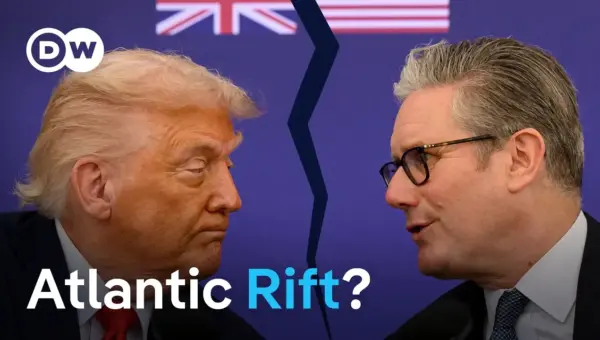
The long-standing 'special relationship' between the US and UK is facing unprecedented strain following the UK's reluctance to support the opening strikes on Iran. Public criticism from Donald Trump has intensified the debate over the alliance's future. Experts suggest this rift highlights deeper shifts in global priorities and evolving military capabilities, potentially reshaping transatlantic ties.
Trump Faces Backlash Over Iran School Bombing Claims
Donald Trump faces mounting criticism from his own base and media allies over his statements regarding the bombing of a girls' school in Iran. Reports suggest U.S. responsibility for the strike, yet Trump has offered alternative explanations, drawing skepticism and challenging the administration's messaging on the conflict.
Trump’s Rhetoric Ignites Global Market Mayhem
Global markets experienced a significant downturn as oil prices surged, exacerbated by geopolitical tensions and Iran's attacks on regional infrastructure. Analysts criticize unclear U.S. policy responses, while former President Trump's rhetoric is seen as dangerously dismissive of the risks.