Trump Shifts Iran Stance, Key Official Resigns Amid Escalating Conflict
President Trump has reversed his position on seeking international help to secure the Strait of Hormuz, now stating the U.S. needs no assistance. This shift occurs as top counterterrorism official Joe Kent resigns, citing his inability to support the war in Iran. The conflict escalates with increased military actions and regional fallout.


Trump Claims No Need for Iran War Help, NATO Criticized
President Trump has abruptly changed his tune regarding international assistance for securing the Strait of Hormuz, stating the United States does not need and never needed help from other nations. This comes after he had previously suggested numerous countries were preparing to assist.
During a meeting with the Irish Prime Minister, President Trump doubled down on his stance, criticizing NATO allies. “We don’t need help,” he declared. “We’ve that war is has been long prosecuted as far as I’m concerned. Almost from day one, we knocked out many of these things. We knocked out the navy essentially in a couple of days.” He added, “I think NATO’s making a very foolish mistake. And I’ve long said that, you know, I wonder whether or not NATO would ever be there for us.”
These comments follow remarks from White House economic advisor Kevin Hassett, who stated earlier that some oil tankers were beginning to move through the Strait. Hassett explained that the conflict was expected to be a four-to-six-week operation and that the U.S. was ahead of schedule. He suggested that Iran’s strategy to hurt the U.S. economy had failed, noting that while gas prices were higher, the overall economy remained sound.
However, data from Marine Traffic, a vessel monitoring group, shows that while a few cargo vessels have passed through the Strait, they are not predominantly oil tankers.
Top Counterterrorism Official Resigns Over Iran War Stance
Adding to the shifting dynamics, Joe Kent, Director of the National Counterterrorism Center and a longtime supporter of President Trump, announced his resignation. Kent stated on social media, “I cannot in good conscience support the ongoing war in Iran. Iran posed no imminent threat to our nation, and it is clear that we started this war due to pressure from Israel and its powerful American lobby.”
The White House, including President Trump and Press Secretary Karoline Leavitt, pushed back against Kent’s claims. They argued that Iran’s potential pursuit of a nuclear weapon constituted an imminent threat. President Trump himself later called Kent “weak on security,” raising questions about why he was allowed to lead such a critical center if his security views were deemed inadequate.
The resignation highlights potential divisions within the administration regarding the war’s justification and strategy.
Escalating Military Actions and Regional Fallout
Military strikes continue to escalate in the region. In Iraq, an Iran-aligned militia group fired on the U.S. Embassy in Baghdad, causing an explosion after a projectile breached U.S. defenses. Meanwhile, Israel announced it had killed Iran’s top security official and vowed to continue targeting Iranian leadership.
Raf Sanchez, reporting from Beirut, confirmed Israel’s claim of killing Ali Larijani, described as the de facto wartime leader of Iran and Secretary of the National Security Council. Israel also reported eliminating the head of the Basij, a paramilitary force used for internal repression. The targeting of the Basij head suggests Israel’s hope that internal protests could destabilize the Iranian regime.
Ken Pollack, Vice President for Policy at the Middle East Institute, noted that Larijani was seen as a pragmatist, and his death, along with that of the Supreme Leader, removes a voice of restraint within Iran. This could lead to a more aggressive stance from the remaining leadership, potentially increasing the risk of Iran pursuing nuclear weapons as a deterrent.
NATO’s Stance and U.S. Exit Strategy
European diplomats have indicated that the war in Iran is viewed as an American conflict, with the U.S. responsible for reopening the Strait of Hormuz. There is reportedly no appetite within Europe to become directly involved, as they were not consulted before U.S. and Israeli strikes began.
President Trump has suggested the U.S. could leave the region within weeks, stating that it would take Iran ten years to rebuild if U.S. forces withdrew. However, experts caution that even a damaged Iran would still pose a threat, particularly concerning its nuclear program, which remains intact.
Courtney Kube, NBC News Senior National Security Correspondent, explained that while the U.S. has the capacity to secure the Strait, it is extremely dangerous without international support, especially with threats like mines and missiles still active. She also noted that a U.S. withdrawal doesn’t guarantee Iran will cease hostilities, leaving the region potentially unstable.
Uncertainty Over Leadership and Future Negotiations
President Trump has expressed confusion about who is currently in charge in Iran following the death of the Supreme Leader and the questionable status of his son. Pollack clarified that the Revolutionary Guard leadership is running the show, and with the removal of more pragmatic figures, the regime is likely to become more aggressive and potentially pursue nuclear weapons.
The possibility of a negotiated settlement remains unclear, especially if Iran continues its aggressive actions. The U.S. faces the dilemma of whether to withdraw and risk continued Iranian aggression or maintain a presence in an increasingly volatile region.
Looking Ahead
The coming weeks will be crucial in determining the trajectory of the conflict. Key questions include whether Iran will cease its attacks if U.S. military operations wind down, the impact of leadership changes within Iran on its regional policy, and whether diplomatic channels can be opened amidst heightened tensions. The international community, particularly NATO allies, will be watching closely as the U.S. navigates its next steps in a complex and dangerous geopolitical landscape.
Source: Meet the Press NOW — March 17 (YouTube)

Related Articles
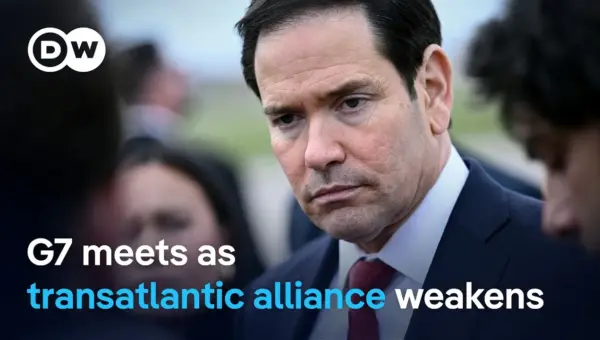
G7 Allies Clash Over Iran War Strategy, Urge Focus on Russia
G7 foreign ministers met in Paris, revealing deep divisions over the U.S. war with Iran. European allies urged the U.S. to pressure Russia, linking its actions to the conflict and fearing support for Ukraine will wane.

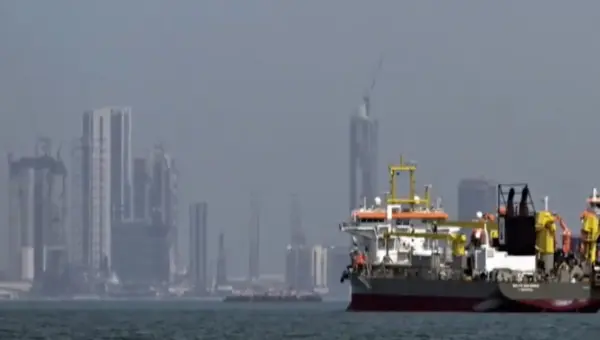
Iran Blocks China Ships, Exposing Beijing’s Weak Grip
Iran's recent decision to block Chinese ships at the Strait of Hormuz is exposing the limits of Beijing's influence in the Middle East. This action is causing delays and cancellations for Chinese manufacturers, turning a perceived geopolitical win into an economic strain.
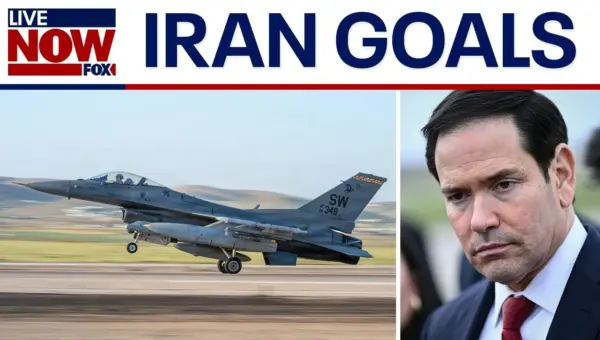
Rubio: US Can Achieve Iran War Goals Without Troops
Senator Marco Rubio outlined a strategy to counter Iran without deploying U.S. ground troops, focusing on weakening the regime and enhancing maritime security. He also criticized Cuba's economic system and expressed concerns about West Bank violence.