Trump Shares War Footage Amidst Iran Strikes; Civilians Fear
Former President Donald Trump has shared video footage of U.S. strikes in Iran, accompanying it with aggressive rhetoric that has alarmed civilians and experts. While some strikes may be targeted, concerns are rising over civilian harm and the potential for broader destruction, as Iranians express fear for their survival.

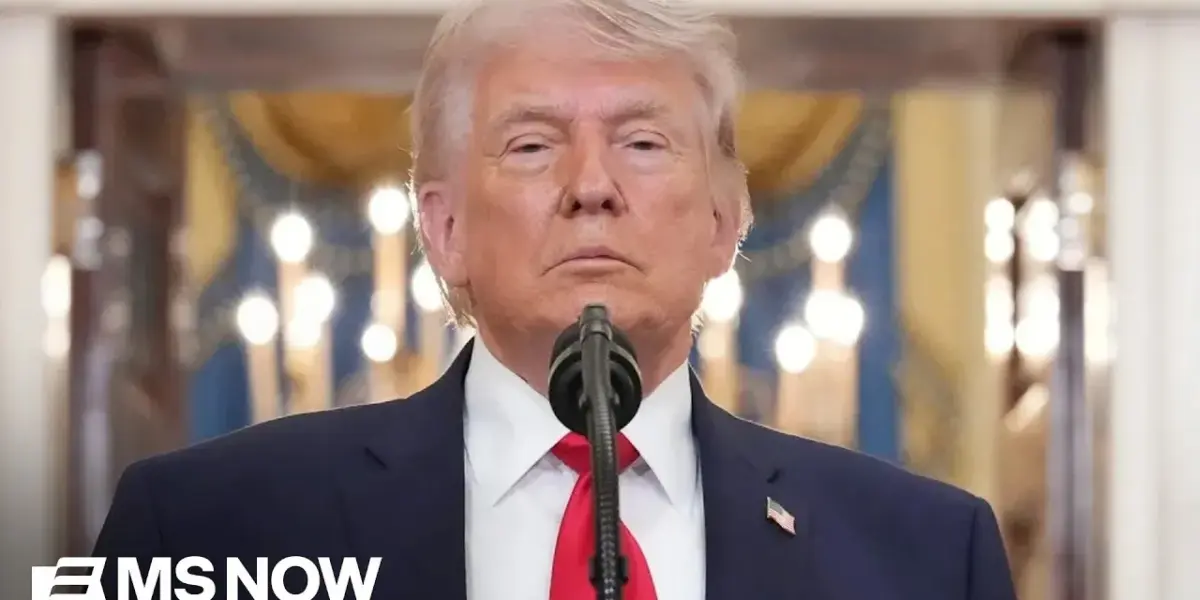
Trump Posts War Clips, Escalates Rhetoric Over Iran Attacks
In a dramatic escalation of tensions, former President Donald Trump has shared video footage appearing to show U.S. attacks on Iran, accompanying the posts with aggressive language. This comes as Iranian civilians express deep fear for their survival amidst ongoing military actions. The posts have drawn criticism for their tone and timing, particularly from those concerned about the human cost of the conflict.
Unclear Origins of Shared Footage
One video shared by Trump was described as a “massive strike in Tehran.” However, the exact timing and source of this footage remain unconfirmed. It is unclear if any new military leaders were killed or if the video accurately represents recent events. This follows a separate incident two days prior, where Trump celebrated a strike on a bridge near Tehran that reportedly killed eight people and injured nearly 100.
Rhetoric Sparks Concern and Fear
Trump’s public statements have been particularly alarming. Following the bridge strike, he posted, “Our military hasn’t even started destroying what’s left in Iran. Bridge is next.” He also previously stated, “We’re going to hit them extremely hard over the next two to three weeks. We’re going to bring them back to the Stone Age, where they belong.”
These words have created an atmosphere of dread for many Iranians. A Tehran business owner told The New York Times, “Iran is being destroyed in front of our eyes. What if we are left here to rot in the hands of this regime with no connection to the outside world?” The fear is that such rhetoric fuels a conflict that devastates ordinary lives.
Expert Weighs In on Language and Impact
Kian Tashpakhsh, an international relations professor at New York University and a former political prisoner, expressed deep concern over the inflammatory language. “As an American citizen and as an Iranian citizen, I am very disturbed by this kind of language,” Tashpakhsh stated. “I don’t want my American president to speak in these terms. And as an Iranian, I don’t want to hear those things being said about the country.”
Tashpakhsh noted that many Iranians are sophisticated and understand political rhetoric. “They know that Donald Trump is someone who uses very unconventional language for a politician. It’s a lot of bluster, a lot of hyperbole,” he explained. “So they discount, I think, a lot of what he says, and they look to see what’s happening on the ground.”
Targeted Strikes vs. Civilian Infrastructure
While acknowledging the potential for civilian harm, Tashpakhsh suggested that recent strikes have been relatively targeted. He believes many inside Iran recognize that the targets are often related to the regime’s Islamic Revolutionary Guard Corps (IRGC). However, the transcript also highlighted instances where civilian infrastructure may have been hit, including a music school, universities, a bridge under construction, and a psychiatric ward at a hospital. The Pasteur Institute, a respected scientific facility, was also reportedly destroyed.
Tashpakhsh emphasized that strikes on civilian infrastructure should be condemned as war crimes. “If there are targeted strikes on civilian infrastructure or civilian areas that should be absolutely condemned as a war crime,” he said. He expressed doubt that the U.S. military would intentionally strike non-military targets randomly, especially given concerns about munitions, but acknowledged that political objectives might override military considerations.
Debate Over Military Targets and Civilian Risk
The definition of military targets is a point of contention. Reports suggest some in the Pentagon may be exploring justifications for targeting electric power plants, arguing it could disable missile systems. However, Trump’s explicit desire to target power plants and “bomb them back to the Stone Age” raises concerns about broader objectives beyond strategic military aims.
Tashpakhsh drew an analogy to American highways, suggesting that targeting infrastructure like bridges or highways, which are vital for military transport, would be unthinkable in the U.S. He questioned the justification of bombing civilian infrastructure, even if it has military connections, without independent verification. “Tehran is a huge city of millions of people, overlaps with government, overlaps with military, overlaps with civil society,” he explained. “To then just say, hey, we’re going to bomb this hospital because it happens to be or bomb a school because it happens to be next to a military base and then you get 175 school children killed.”
Collateral Damage and Accountability
The issue of collateral damage in war is acknowledged as tragic. Tashpakhsh distinguished between deliberate targeting of civilians and accidental harm. He stated, “In war, the issue of collateral damage is a tragic, almost inevitability.” He added, “And the issue is whether civilians are targeted deliberately. That’s one issue. And the second issue is whether that kind of collateral damage is an exception or whether it’s the rule.”
He pointed out that Iran is accused of deliberately targeting residential areas in other countries. However, he also raised concerns about negligence, particularly regarding the reported incident at a girls’ school where many children were killed. “There should be accountability for that,” he asserted. He also mentioned that tactics used by groups like Hezbollah and Hamas, which involve embedding military installations within residential areas, may also be employed by the IRGC, potentially complicating targeting decisions for adversaries like the U.S. and Israel.
Regime Change Rhetoric and Reality
Tashpakhsh also addressed Trump’s claims about regime change in Iran. He found it disappointing that Trump stated definitively that regime change had occurred. “My take on that is, well, first of all, he must know,” Tashpakhsh said. “It’s either one of two things. Either he knows and that he’s now misguiding and misleading both the Iranian people and the American people in not telling them the truth.” He noted that the same hardened regime members remain in power.
He described Trump’s approach as a “slippery trick” to avoid accountability, allowing him to claim success without having achieved genuine regime change. The administration’s initial stated goal was not direct regime change, but rather to create conditions for the Iranian people to enact it themselves. Tashpakhsh questioned the safety of calling for popular uprisings without sufficient preparation on the ground.
Future Outlook
The situation remains highly volatile, with ongoing military actions and deeply concerning rhetoric. The focus will likely remain on the extent of civilian casualties, the strategic justification for strikes on infrastructure, and the long-term implications of the escalating conflict for both Iran and regional stability. Independent verification of strike targets and their consequences will be crucial in assessing accountability and understanding the true nature of the conflict.
Source: Trump gleefully posts war footage while Iranian fear for survival (YouTube)

Related Articles

US Rescues Pilot From Iran Amidst Strait of Hormuz Deadline
The U.S. military conducted a daring rescue of a downed airman from Iran, coinciding with President Trump's deadline for Iran to reopen the Strait of Hormuz. Escalating tensions see Iran striking energy sites in response to Israeli operations, threatening global energy supplies.
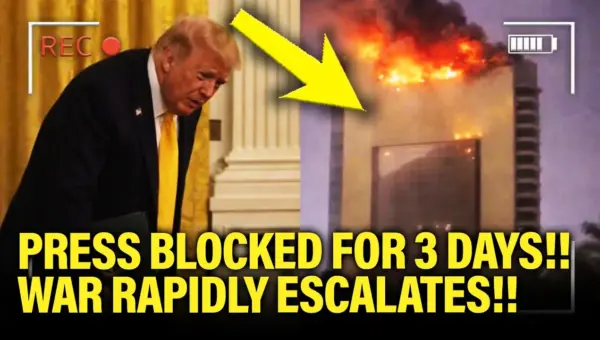
Trump’s Iran War Backfires, He Hides from Press
President Trump's Iran war is reportedly backfiring, leading to military setbacks and Iran striking US allies. Amidst this, Trump has avoided press, opting for social media posts. The conflict escalates with threats to civilian infrastructure and potential global economic fallout.


NATO Allies Should Threaten Trump With ‘Divorce,’ Says Retired General
A retired French general suggests NATO allies should collectively threaten Donald Trump with a 'divorce' if he continues to undermine the alliance. General Michel Yakovlev believes this direct approach is necessary to counter Trump's destabilizing rhetoric and actions.