Trump Rules Out Iran Ceasefire Amid Troop Buildup
President Trump has ruled out a ceasefire with Iran, signaling a more assertive stance amid reports of a significant U.S. troop buildup in the Middle East. Military experts discuss the strategic implications of potential ground operations and the critical role of the Strait of Hormuz. The conversation also touches on NATO's limited involvement and the potential roles of Asian allies in regional security.

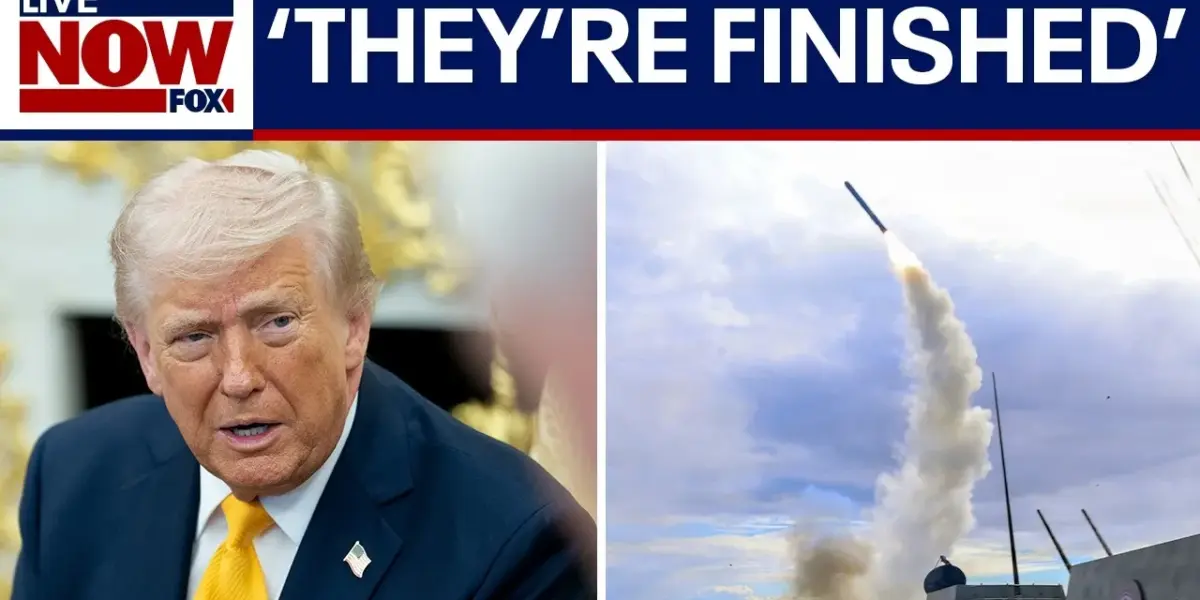
Trump Declines Iran Ceasefire Amid Military Buildup
President Trump has stated he is not interested in a ceasefire with Iran, even as the U.S. reportedly sends thousands of additional Marines and sailors to the Middle East. The remarks came during a press gaggle at the White House, as tensions continue to rise in the region. While no decision has been made to send troops into Iran itself, the deployment signifies a significant increase in U.S. military presence.
Massive Marine Expeditionary Units Deployed
Retired Marine intelligence officer Austin Westfall discussed the troop movements with Hal Kemper, host of the Strat podcast. Kemper confirmed that the deployments are substantial, involving multiple Marine Expeditionary Units (MEUs). These units, typically on regular rotations, are being pushed forward in their schedules. The 31st MEU from Okinawa, Japan, is already in the Indian Ocean. The 11th MEU from Southern California was moved up by five to six weeks, and an East Coast MEU out of Norfolk, Virginia, is also heading to the Middle East. Kemper noted that having three MEUs provides significant capability, suitable for operations like “island hopping” through the Persian Gulf.
Strategic Island Operations Considered
When asked about potential ground operations, Kemper suggested that targeting smaller islands might be more strategically sound than a direct assault on Iranian mainland shores. He explained that a direct attack could lead to intense ground fighting against reinforced Iranian forces. Instead, he pointed to islands like Greater Tomb, Lesser Tomb, and Abu Musa in the Persian Gulf as potential targets. These islands are claimed by the UAE, and their seizure by Iran in the 1970s is noted. Kemper also mentioned Qeshm Island, a larger island with a significant population and airport, as likely too challenging for a Marine operation. However, he highlighted its importance as a location where the Revolutionary Guard Corps hides small boats, submarines, and anti-ship missile equipment, making it a potential target for raids.
Focus on Strait of Hormuz and Nuclear Sites
The conversation also touched upon the critical Strait of Hormuz, a vital chokepoint for global oil transport. Kemper suggested that taking control of Qeshm Island could be a strategic objective, rather than destroying it. Regarding Iran’s nuclear program, Kemper discussed the difficulty of accessing and removing enriched uranium from well-defended underground facilities. He proposed that a potential negotiation could involve Iran allowing the removal of this material. Other potential discussion points, according to Kemper, could include agreements not to target oil fields and refineries, and ensuring the free passage through the Strait of Hormuz.
Trump Criticizes NATO’s Role
President Trump expressed strong criticism of NATO allies in a Truth Social post, calling them a “paper tiger” for not joining the U.S. in confronting Iran. He highlighted their reluctance to help secure the Strait of Hormuz, which he argued is the primary cause of high oil prices. Trump stated that the U.S. does not heavily rely on oil from the region and suggested that other nations, particularly those who use the strait, should be responsible for its security.
NATO’s Hesitation and Global Interests
Kemper explained NATO’s reluctance, noting their past involvement in Middle Eastern conflicts after 9/11. He suggested that European nations fear getting bogged down in another prolonged war, especially with existing concerns regarding Russia and Eastern Europe. Additionally, internal political considerations, including large Muslim populations and the risk of domestic unrest or terrorism, play a role. While the U.S. has less direct reliance on Middle Eastern oil, Kemper pointed out that Asian countries, like Japan and South Korea, are heavily dependent and have a strong vested interest in keeping the Strait of Hormuz open. Japan, in particular, imports about 95% of its oil from the Middle East, with 70% passing through the strait.
Potential Role for Asian Powers and Pakistan
The discussion explored which countries might step up to police the Strait of Hormuz. Japan and South Korea were identified due to their significant oil imports, though Japan’s constitution currently restricts its military from combat zones. China was also mentioned as a major importer, but Kemper expressed reservations about increasing China’s military presence in the region. An interesting possibility raised was Pakistan, which shares a border with Iran and has a mutual defense treaty with Saudi Arabia. Kemper noted Pakistan’s capable navy and the potential for it to assist in securing the strait, adding that Pakistan’s nuclear capability makes it a unique potential partner.
U.S. Defense Systems Shift to Middle East
Finally, the redeployment of U.S. Patriot defense systems from Europe to the Middle East was discussed. Kemper acknowledged that this could create potential gaps in European defense. He suggested that the U.S. is encouraging European nations to bolster their own defense capabilities. The move also highlights President Trump’s stance that if NATO allies are not contributing to securing vital waterways like the Strait of Hormuz, the U.S. may reconsider its own defense commitments to them. The U.S. is also deploying drone interceptor systems, known as MARPO, to the Middle East to counter threats.
Source: Trump on Iran war: 'I don't want to do a ceasefire' (YouTube)

Related Articles
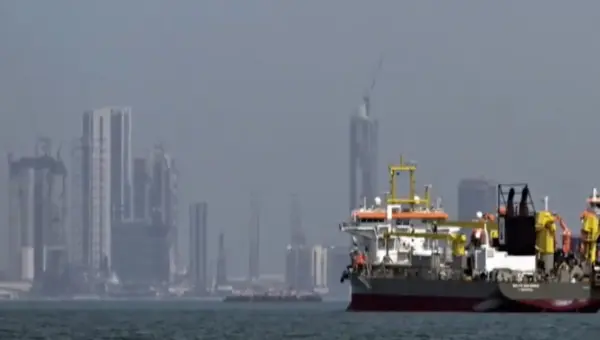
Iran Blocks China Ships, Exposing Beijing’s Weak Grip
Iran's recent decision to block Chinese ships at the Strait of Hormuz is exposing the limits of Beijing's influence in the Middle East. This action is causing delays and cancellations for Chinese manufacturers, turning a perceived geopolitical win into an economic strain.
Rubio: US Can Achieve Iran War Goals Without Troops
Senator Marco Rubio outlined a strategy to counter Iran without deploying U.S. ground troops, focusing on weakening the regime and enhancing maritime security. He also criticized Cuba's economic system and expressed concerns about West Bank violence.
Trump’s “Walk Away” Tactic Signals Tougher Stance on China
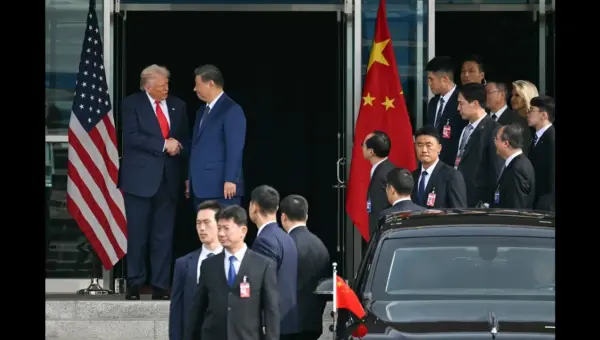
Retired Air Force Brigadier General David Stillwell believes President Trump's strategy of being willing to walk away from negotiations puts pressure on China. This tactic, combined with US global actions and strengthened alliances, signals a more assertive American foreign policy.