Trump Rehashes Obama Blame as Iran Strategy Falters
As geopolitical tensions with Iran simmer, former President Donald Trump reignites his criticism of the Obama-Biden administration's Iran nuclear deal. This commentary delves into the historical context of the JCPOA and the strategic implications of Trump's blame-shifting narrative amidst ongoing foreign policy challenges.


Trump Rehashes Obama Blame as Iran Strategy Falters
As the geopolitical landscape surrounding Iran continues to evolve, marked by increasing scrutiny of the current administration’s strategy, former President Donald Trump has once again pointed fingers at his predecessor, Barack Obama, and former Vice President Joe Biden. This rhetorical pivot comes as Trump’s own administration’s policies and the current administration’s handling of the region face growing questions regarding their effectiveness and public support.
Shifting Blame Amidst Growing Concerns
The narrative emerging from Donald Trump’s recent statements on social media platform True Social suggests a strategic attempt to deflect criticism regarding the ongoing situation with Iran. Trump asserts that the current challenges are a direct consequence of policies enacted during the Obama-Biden administration, specifically citing the Joint Comprehensive Plan of Action (JCPOA), commonly known as the Iran nuclear deal. He argues that his decision to terminate this agreement prevented Iran from acquiring nuclear weapons years ago.
“If I didn’t terminate Obama’s horrendous Iran nuclear deal, JCPOA, Iran would have had a nuclear weapon three years ago. That was the most dangerous transaction we have ever entered into. And had it been allowed to stand, the world would be an entirely different place right now. You can blame Barack Hussein, Obama, and sleepy Joe Biden.”
This statement, presented as a self-congratulatory message, frames Trump’s withdrawal from the JCPOA as a prescient act of national security. It seeks to position his actions as having averted a catastrophic outcome, thereby absolving his approach from any current difficulties. The underlying implication is that the current administration, by extension, is grappling with the fallout of a deal that Trump views as fundamentally flawed and dangerous.
Historical Context: The JCPOA and Its Aftermath
The JCPOA, negotiated and agreed upon in 2015 by Iran and the P5+1 countries (the United States, United Kingdom, France, Russia, China, plus Germany), aimed to limit Iran’s nuclear program in exchange for sanctions relief. It was a landmark diplomatic achievement, hailed by supporters as a vital step towards preventing a nuclear-armed Iran. However, it was also met with significant opposition, particularly from Republicans in the United States, who argued that the deal did not go far enough in curbing Iran’s capabilities and that it provided insufficient assurances against future proliferation.
Upon entering office in 2017, Donald Trump made the withdrawal from the JCPOA a central tenet of his foreign policy. He characterized the deal as “horrendous” and “the worst deal ever negotiated,” echoing sentiments that were prevalent among his political base. The subsequent re-imposition of stringent sanctions on Iran was intended to pressure the regime into negotiating a new, more comprehensive agreement. However, this strategy did not lead to the desired renegotiation and instead contributed to heightened tensions between the U.S. and Iran, including several escalatory incidents in the Persian Gulf region.
The Current Administration’s Stance and Challenges
The Biden administration has expressed a willingness to re-engage with the JCPOA, or a similar framework, but negotiations have been protracted and have yielded limited progress. Meanwhile, concerns persist regarding Iran’s ongoing nuclear activities and its regional influence, including its support for various proxy groups. The current administration faces the complex challenge of balancing diplomatic efforts with the need to counter Iranian aggression and ensure regional stability.
The criticism leveled by Trump against Obama and Biden can be seen as an attempt to capitalize on these persistent challenges. By framing the current situation as a direct result of past decisions, he seeks to undermine the credibility of his political opponents and elevate his own past actions as the correct course. This strategy of attributing current foreign policy difficulties to predecessors is a recurring theme in political discourse, particularly when immediate solutions appear elusive.
Why This Matters
The rhetoric surrounding Iran policy is not merely a partisan squabble; it has tangible implications for international relations, regional security, and the potential for conflict. The differing approaches to Iran—whether through stringent sanctions and withdrawal from multilateral agreements, or through diplomacy and the pursuit of negotiated settlements—carry significant consequences. Trump’s insistence on blaming Obama and Biden highlights a fundamental disagreement on the most effective path forward. This debate influences not only U.S. foreign policy but also the perceptions and actions of allies and adversaries alike.
Furthermore, the focus on historical blame can distract from the immediate complexities of the present situation. The absence of a clear, universally agreed-upon plan to address the multifaceted challenges posed by Iran—including its nuclear ambitions, ballistic missile program, and regional activities—is a critical concern. Trump’s assertion that there was no plan during his stream discussion, and his subsequent redirection of blame, underscores the difficulties in formulating and executing a cohesive and effective Iran strategy.
Implications, Trends, and Future Outlook
The recurring theme of blaming past administrations in foreign policy debates suggests a broader trend of political polarization that extends to national security. In times of uncertainty or perceived setbacks, leaders often resort to framing current problems as the legacy of their predecessors. This can serve to galvanize a political base and create a clear narrative of opposition, but it can also hinder constructive dialogue and the development of bipartisan consensus on critical issues.
Looking ahead, the situation with Iran remains volatile. The effectiveness of sanctions, the prospects for diplomatic breakthroughs, and the potential for military escalation all remain open questions. The differing perspectives represented by Trump’s critique and the current administration’s approach will likely continue to shape U.S. policy. The challenge for policymakers, regardless of their political affiliation, will be to navigate these complexities with a clear understanding of the historical context, the current realities on the ground, and the potential long-term consequences of their decisions.
Trump’s renewed focus on the Obama-Biden era underscores the enduring impact of the JCPOA debate and the persistent challenges in formulating a unified and effective approach to Iran. As the region continues to be a focal point of international concern, the ability to move beyond historical recriminations and forge a path based on pragmatic diplomacy and a clear-eyed assessment of threats will be paramount.
Source: Trump blames Obama again (YouTube)

Related Articles
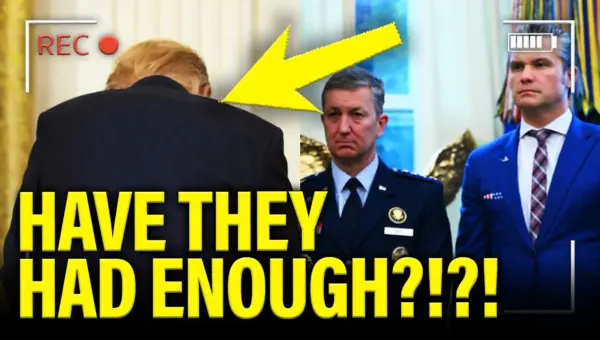
Military Brass Resists Trump’s War Push on Iran
Reports reveal internal dissent from military leaders urging caution against a full-scale attack on Iran. The administration's shifting justifications and perceived disregard for expert advice raise serious questions about strategic clarity and public trust.
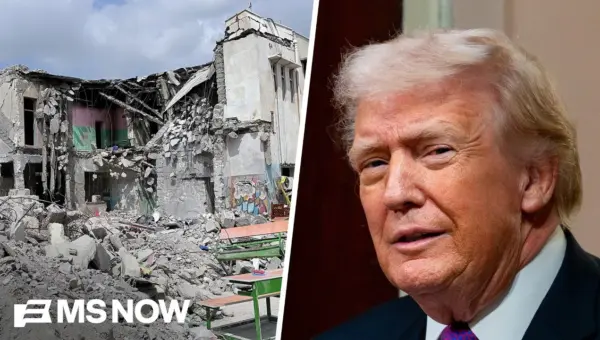
Dem Rep. Slams Trump Over Iran School Strike Report
Congressman Seth Moulton, a combat veteran, sharply criticized the Trump administration's handling of escalating tensions with Iran. He questioned the "humanity" behind potential U.S. strikes on an Iranian school and warned against deploying ground troops without a clear strategy.
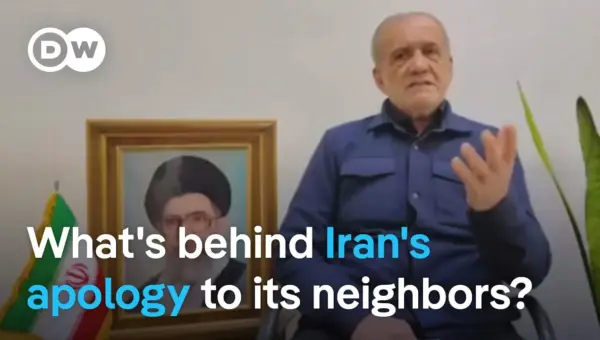
Iran Apologizes to Neighbors Amid Escalating Regional Conflict
Iran's President Masoud Pezeshkian has apologized to Gulf neighbors for recent attacks amid escalating conflict with the US and Israel. Despite the apology, questions linger about Iran's internal command structure and the reliability of its assurances as the region faces heightened instability.