Trump Rallies Support for Crypto Clarity Act Amidst Bank Pushback
The Trump administration has taken a firm stance against banks perceived to be undermining crypto legislation, particularly the Clarity Act. This move aims to solidify U.S. leadership in digital finance and addresses concerns over regulatory uncertainty driving innovation abroad.

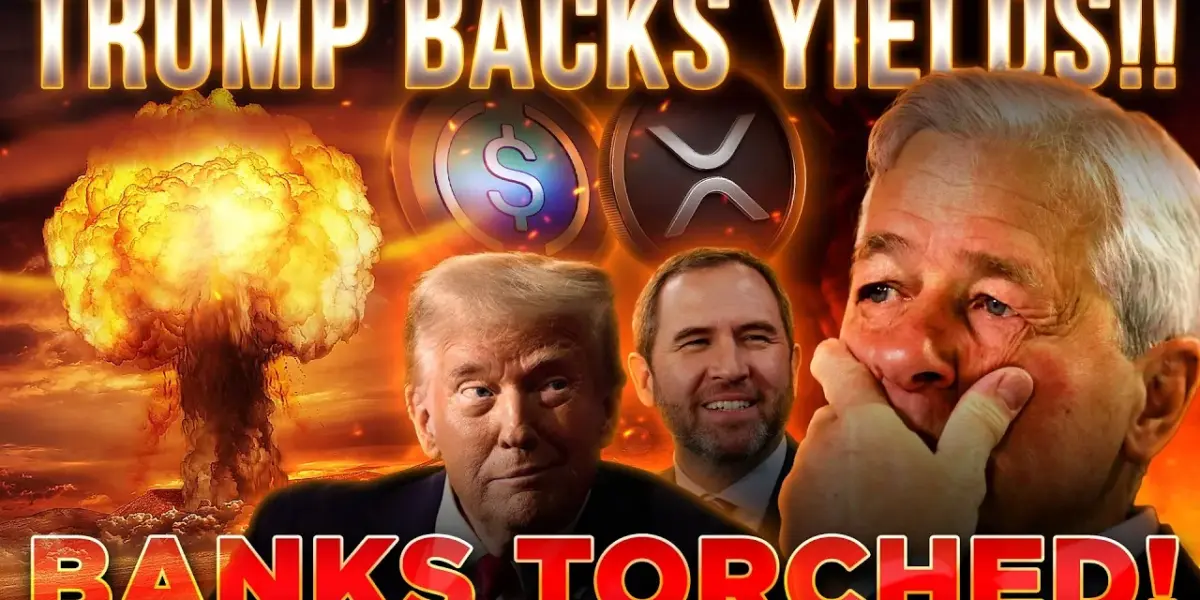
Trump Administration Challenges Banks on Crypto Legislation
In a significant development for the cryptocurrency industry, the Trump administration has taken a firm stance against traditional banking institutions that are perceived to be undermining efforts to establish clear regulatory frameworks for digital assets. The move signals a potential acceleration in the passage of crucial crypto legislation, aiming to solidify the United States’ position as a global leader in digital finance.
The Genius Act and the Clarity Act: A Push for Market Structure
The focus of the current legislative push revolves around two key pieces of legislation: the Genius Act and the Clarity Act. The Genius Act was initially conceived as the United States’ foundational step towards becoming the world’s crypto capital. The Clarity Act is seen as the subsequent, essential step to complete this mission and retain a burgeoning, powerful industry within the country’s borders. The administration, through strong public statements, has indicated that it will not tolerate attempts by banks to obstruct or ‘hold hostage’ these legislative efforts.
A particularly strong statement attributed to the Trump camp declared, “The banks are hitting record profits. We are not going to allow them to undermine our powerful crypto agenda. That will end up going to China and of course other countries if we don’t get the Clarity Act taken care of.” This rhetoric highlights concerns that regulatory uncertainty could drive innovation and capital elsewhere, to the detriment of the U.S. economy.
Industry Leaders React to the Administration’s Stance
The administration’s assertive position has garnered significant attention and support from within the crypto industry. Brad Garlinghouse, CEO of Ripple, issued a pointed message directed at those delaying regulatory clarity, implicitly targeting the banking sector. This was quickly amplified by figures like Anthony Pompliano, who retweeted the sentiment, and the ‘crypto czar’ of X (formerly Twitter). Eric Trump also weighed in, labeling the banks as “hypocrites” and accusing them of being in “mass panic” as they recognize the potential loss of dominance in the digital finance race.
Stablecoin Yields and Fractional Reserve Banking: The Core Debate
A central point of contention appears to be the treatment of stablecoin yields and the underlying banking practices. Patrick McHenry, Chairman of the House Financial Services Committee, articulated a nuanced perspective, suggesting that the debate should focus on the lending and rehypothecation of dollars rather than the mere payment of yield on balances. He differentiated this from traditional fractional reserve banking, where a deposited dollar can be lent out multiple times. In contrast, he highlighted that stablecoins are typically backed 1:1 by reserves, often in U.S. Treasuries, implying a more transparent and less leveraged structure.
McHenry’s framing, using the word “deceit,” suggests a strong rebuke of the banks’ position and implies that negotiations might be nearing a critical point. The use of such strong language could indicate that a deal is close or that significant pressure is being applied to the banking industry to reach an agreement.
Challenging Jamie Dimon and the ABA
The statements seem to be a direct challenge to figures like Jamie Dimon, CEO of JPMorgan Chase, and the American Bankers Association (ABA). Dimon’s claims that stablecoin issuers should not be subject to Know Your Customer (KYC) and Anti-Money Laundering (AML) regulations have been directly contested. The administration and crypto proponents argue that these claims are false and that stablecoin issuers must comply with existing financial regulations. This marks a new level of scrutiny for Dimon, who has often been a vocal critic of the crypto space.
Mike Belshi, a representative from the stablecoin issuer Circle, also weighed in, asserting that if stablecoin issuers are treated as banks, they adhere to the same requirements. He emphasized that Circle holds 100% reserves and offers better liquidity than many traditional banks, directly contrasting with the fractional reserve model of traditional banking.
Market Reaction and Legislative Momentum
The developments have spurred significant interest in the market. Data from PolyMarket, a prediction market, showed a notable surge in the perceived likelihood of the Clarity Act passing, with projections reaching over 80%. This suggests growing confidence among market participants that legislative progress is imminent.
Interestingly, the initial statements from the administration, while strongly advocating for crypto, notably omitted direct mentions of President Biden or the Democratic party. This suggests a strategic effort to foster a bipartisan approach to crypto regulation, which is crucial for navigating the powerful lobbying efforts of groups like the ABA.
Coinbase’s White House Visit and Industry Support
Further underscoring the evolving landscape, Coinbase CEO Brian Armstrong reportedly visited the White House. While the specifics of the meeting are unclear, such a visit can be interpreted as a validation of the crypto industry’s current standing and its engagement with policymakers. Charles Hoskinson, a prominent figure in the crypto space, has also shifted his stance, now publicly supporting the bill after previously expressing reservations, indicating a growing consensus around the administration’s current direction.
DeFi’s Regulatory Wins and Future Implications
Beyond stablecoins, the decentralized finance (DeFi) sector has also seen positive regulatory news. A recent court ruling in favor of Uniswap, a decentralized exchange, has established that the platform is not liable when bad actors misuse its software. This is a significant victory for DeFi, potentially shielding open-source developers from liability for the actions of malicious users. The DeFi Education Fund and figures like Hayden Adams have highlighted this win, suggesting it could provide a layer of protection for DeFi protocols, possibly independent of the Clarity Act.
Broader Geopolitical and Cybersecurity Concerns
The crypto regulatory debate is unfolding against a backdrop of broader geopolitical and cybersecurity concerns. U.S. banks have been placed on high alert due to warnings of potential cyberattacks, with intelligence assessments pointing towards Iranian state-sponsored actors. Major financial institutions like JPMorgan Chase, Bank of America, and Citigroup have been identified as potential targets. This heightened security environment could influence the urgency with which regulatory clarity is sought, as a stable and secure financial system becomes paramount.
Congressional Scrutiny and Potential Regulatory Hold-ups
Despite the administration’s push, congressional processes can introduce complexities. Senator Tom Tillis has expressed strong dissatisfaction with certain administrative actions, particularly concerning the Department of Homeland Security’s spending and oversight. His position on the Senate Banking and Housing and Urban Affairs Committee gives him leverage to potentially delay legislative progress if his concerns are not addressed. This highlights the intricate political dynamics at play, where even a unified executive stance can face hurdles within the legislative branch.
However, there is a possibility that the administration’s push for the Clarity Act could be used to resolve issues that Senator Tillis is scrutinizing, potentially accelerating the bill’s passage. The White House has indicated its desire to see the Clarity Act enacted swiftly, suggesting a concerted effort to overcome these potential roadblocks.
Market Outlook
The confluence of regulatory developments, industry support, and geopolitical factors is creating significant implications for the cryptocurrency market. With Bitcoin showing signs of aggressive movement, the coming week is expected to be pivotal. The ongoing push for regulatory clarity, particularly concerning stablecoins and the broader digital asset ecosystem, could unlock further institutional interest and adoption, potentially driving significant market shifts.
Source: Trump Just NUKED Banks Over Stablecoin Yields!!!🔥FINALLY! 🚨CLARITY Incoming (YouTube)

Related Articles


Crypto Founder Slams “Horrific” Clarity Act Bill
Crypto pioneer Charles Hoskinson warns that the U.S. Clarity Act, in its current form, could harm innovation by defaulting new projects to securities. He criticizes the bill's lack of DeFi support and the contentious issue of stablecoin yields, fearing it creates regulatory "attack vectors."


Crypto Fuels 2026 Midterms: Industry Spends Millions
The cryptocurrency industry is investing heavily in the 2026 US midterm elections, channeling millions through super PACs like Fairshake to elect pro-crypto politicians. Key legislative goals include passing the Clarity Act, which aims to provide regulatory certainty for digital assets. The industry's strategy highlights a growing political influence, though its heavy reliance on one party raises long-term concerns.


Kyle Doops Unveils High-Conviction Trades Amidst Market Volatility
Trader Kyle Doops has identified his next high-conviction trade setups, emphasizing the need for swift execution in the volatile crypto market. These opportunities arise amidst broader market dynamics, requiring agile strategies and reliable data for success.