Trump Questions Iran’s World Cup Safety Amidst Political Tensions
U.S. President Donald Trump has raised questions about the safety of Iran's national football team at the upcoming FIFA World Cup, sparking controversy and debate. The comments come amidst complex geopolitical tensions and highlight the ongoing intersection of politics and international sports.

Trump Sparks Controversy Over Iran’s World Cup Participation
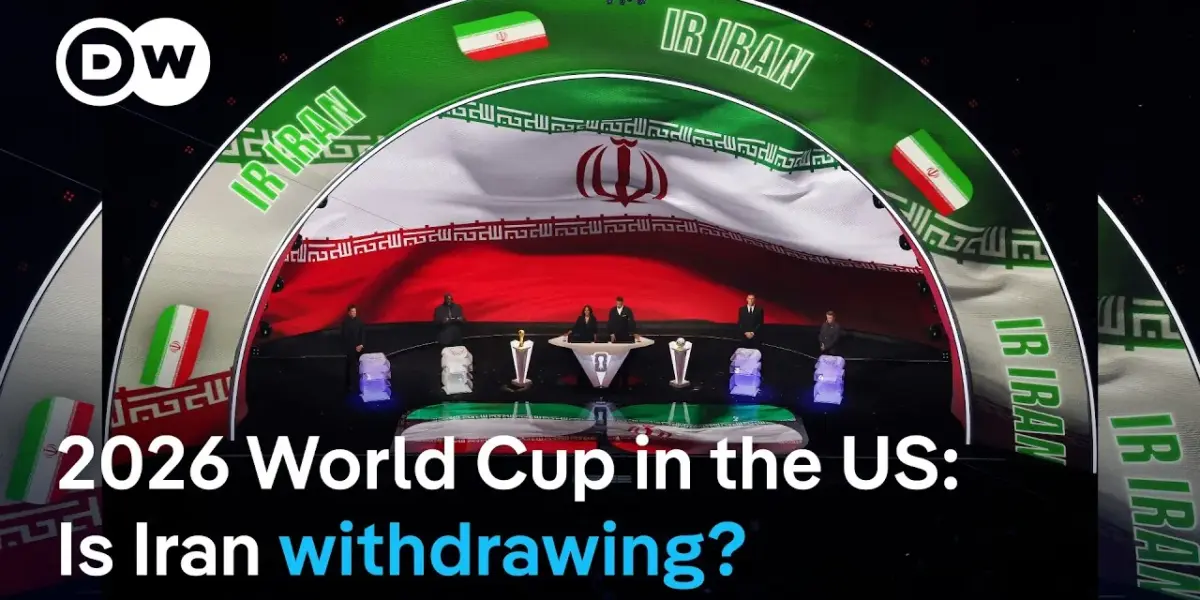
In a move that has ignited debate and cast a shadow over the upcoming FIFA World Cup, U.S. President Donald Trump has publicly questioned the appropriateness of Iran’s national football team participating in the tournament. The World Cup is set to be co-hosted by the United States, Canada, and Mexico, with Iran’s team scheduled to play matches in Los Angeles and Seattle in mid-June. Trump’s statement, posted on his social media platform Truth Social, suggested that while the team is welcome, their presence might not be suitable for their “own life and safety.” This remark has led to significant speculation regarding the underlying reasons and potential implications for international sports diplomacy.
Unpacking Trump’s Ambiguous Statement
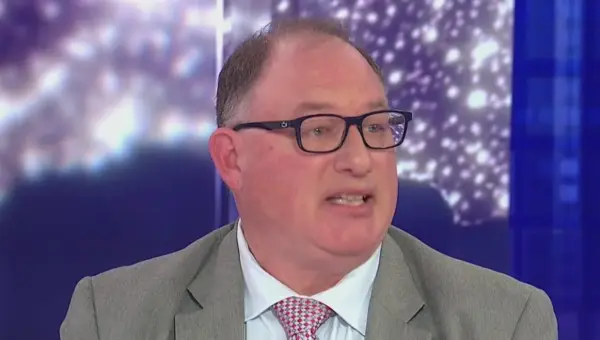
Alexander Abnos, Senior Sports Editor at The Guardian US, highlighted the difficulty in definitively interpreting Trump’s statement. “This, like many things that Donald Trump says, can be really hard to parse,” Abnos noted. He pointed out the apparent inconsistency, given that FIFA President Gianni Infantino had previously stated that Iran was “more than welcome to come to the World Cup,” a sentiment seemingly echoed by Trump’s initial welcome. However, the specific mention of life and safety introduces a layer of ambiguity. “That could mean anything. It could be a threat,” Abnos suggested.
One potential interpretation offered by Abnos relates to the Iranian women’s national team. During the Asian Championship in Australia, some players made a political statement by not singing the national anthem, which led to criticism and safety concerns upon their potential return to Iran. Six players sought asylum, indicating the risks associated with political expression for Iranian athletes. Abnos speculated that Trump’s comment might allude to similar potential repercussions for the men’s team if they engage in political statements or face adverse outcomes during the World Cup.
The Intersection of Politics and Sports
The exchange underscores the increasingly blurred lines between politics and international sports. Abnos expressed his personal view that while politics is often intertwined with sports, he wishes for a degree of separation in this context. “I feel the Iranian national team, they’re consistently one of the strongest in Asia. They deserve the chance to go to a World Cup and play and do and try and do their best without any sort of political pressure on them,” he stated. This sentiment reflects a broader concern that political interference can detract from the athletic integrity and spirit of major sporting events.
“I feel the Iranian national team, they’re consistently one of the strongest in Asia. They deserve the chance to go to a World Cup and play and do and try and do their best without any sort of political pressure on them.” – Alexander Abnos, Senior Sports Editor, The Guardian US
Iranian Officials Respond with Strong Condemnation
Adding to the controversy, Iran’s Minister of Sports and Youth also cast doubt on the team’s participation. The minister issued a strong statement, stating, “This corrupt US government has assassinated our leader. So we are not in a position to participate in the World Cup. Our players will not be safe in the United States.” The minister cited alleged U.S. actions, including “two wars” and the killing of thousands of Iranians, as reasons why participation would be impossible due to the perceived “wicked acts they have committed against Iran.”
A Missed Opportunity for Diplomacy?
Abnos considered Trump’s statement a potential missed opportunity for reassurance. “Yeah, I mean, I would say so, but I would also think that something like that would be very out of character for him and very out of character for the moment,” he commented when asked if Trump could have instead assured the Iranian team of their safety in the U.S.
Crucially, Abnos emphasized that, as of the discussion, Iran had not officially filed any withdrawal with FIFA, nor had FIFA taken any action to bar the team. The situation was described as a “very public battle of words” between Iran, its national federation, Donald Trump, and his government, with FIFA and its president, Gianni Infantino, caught in the middle.
FIFA’s Public Relations Quandary
The controversy is further complicated by Donald Trump’s status as the recipient of FIFA’s inaugural Peace Prize, awarded just months prior. This juxtaposition of receiving a peace award from FIFA and then publicly questioning the safety of a participating nation has been labeled a “PR disaster for FIFA” by Abnos. He noted Infantino’s efforts to cultivate a close relationship with Trump, including wearing a hat with Trump’s name and attending events with him, which some might view as a violation of FIFA’s statutes against political displays.
Abnos suggested that Infantino’s approach might be driven by a need for U.S. government cooperation to ensure the success and revenue generation of the World Cup. “The best way to do that is to cozy up to the president,” he explained, implying a pragmatic, albeit controversial, strategy.
Logistical and Replacement Scenarios for FIFA
With Iran drawn in Group G alongside Belgium, Egypt, and New Zealand, their potential withdrawal throws the tournament’s logistics into question. Abnos outlined FIFA’s options should Iran pull out. While time is a factor, FIFA could potentially select a replacement team. Iraq, which finished just behind Iran in Asian qualifying and is slated for an intercontinental playoff, is a likely candidate. FIFA might also consider a more prominent footballing nation, such as Italy, the highest-ranked team not to have qualified, although this could generate significant backlash.
Abnos pointed out that teams have withdrawn from the World Cup after qualifying only once since 1950, primarily due to logistical and financial reasons, not geopolitical conflicts like the current situation. The decision-making process for FIFA is described as complex, balancing official procedures with potential political and economic considerations.
Broader Shadows Over the World Cup
The dispute with Iran is not the sole issue casting a shadow over the tournament. Abnos mentioned previous concerns, including ICE actions in Minnesota and the killing of unarmed American citizens by federal forces, which he felt could have, in extreme hypothetical scenarios, justified FIFA stripping the U.S. of hosting rights. “I think this attack on Iran… is just the latest example of something that is a long-running problem with the World Cup being in this country at this time with this particular leadership,” Abnos concluded, suggesting a pattern of issues that have plagued the lead-up to the event.
Source: Will Iran skip this year's FIFA World Cup? | DW News (YouTube)

Related Articles
U.S. Iran Tensions Rise Amid Shifting Alliances
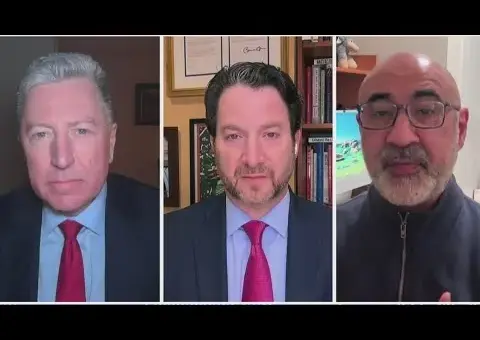
Rising tensions between the U.S. and Iran are creating a volatile geopolitical situation. With conflicting signals on de-escalation and potential shifts in alliances like NATO and U.S.-Israel relations, the path forward remains uncertain. The global economy and regional stability hang in the balance.

Iran Targets US With Cyberattacks, Escalating Digital Warfare
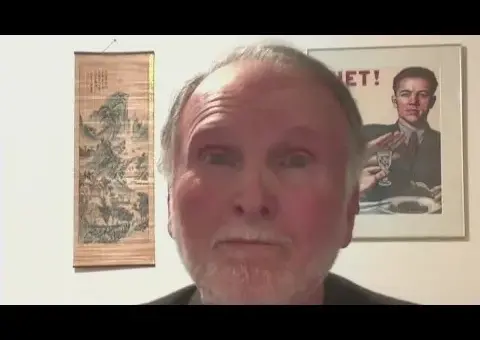
Iran is increasingly using cyberattacks to challenge the U.S., as seen in a recent hack of the FBI director's account. Experts say this is a strategic shift due to Iran's limitations in conventional warfare. The U.S. needs to strengthen its digital defenses, focusing on encryption and cloud computing, rather than solely relying on traditional security measures.

Iran Hacks FBI Chief, Exposing U.S. Cyber Vulnerabilities
A recent hack of FBI Director Kash Patel's personal email by an Iran-linked group highlights Iran's growing cyber threat to the U.S. Experts explain how simple security oversights are exploited, emphasizing the need for basic defenses like two-factor authentication to protect against propaganda and potential infrastructure attacks.