Trump Pivots Blame: Obama’s Iran Deal Fueled Current Conflict
As U.S. involvement in conflict with Iran escalates, former President Trump deflects blame onto the Obama administration's Iran nuclear deal. This analysis examines the historical context of the JCPOA, challenges Trump's narrative, and explores the implications of such political maneuvering.

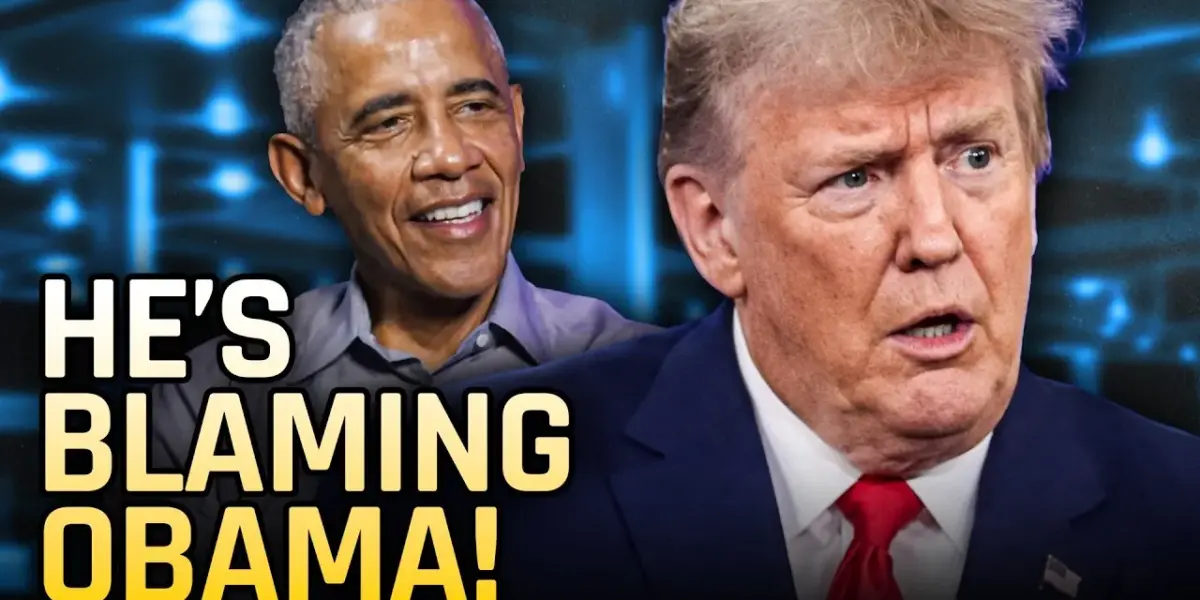
Trump Pivots Blame: Obama’s Iran Deal Fueled Current Conflict
In the face of mounting public scrutiny and dwindling popularity surrounding the United States’ involvement in a conflict with Iran, former President Donald Trump has adopted a new rhetorical strategy: shifting blame to the Obama and Biden administrations. This pivot comes amid a perceived lack of clear strategy, rationale, allies, and evacuation plans for Americans in the Middle East, as highlighted in recent analyses.
The Core of Trump’s Argument
Trump’s accusations, primarily voiced on his social media platform Truth Social, center on the Iran nuclear deal, officially known as the Joint Comprehensive Plan of Action (JCPOA). He asserts that his decision to terminate the JCPOA was a crucial act that prevented Iran from acquiring a nuclear weapon years ago. According to Trump, the deal itself was “the most dangerous transaction we have ever entered into,” and its continuation would have led to a drastically different, presumably worse, global landscape.
In one post, Trump stated: “If I didn’t terminate Obama’s horrendous Iran nuclear deal, JCPOA, Iran would have had a nuclear weapon three years ago. That was the most dangerous transaction we have ever entered into. And had it been allowed to stand, the world would be an entirely different place right now. You can blame Barack Hussein Obama and sleepy Joe Biden.”
Challenging the Narrative: A Closer Look at the Timeline and Intent
Critics, however, point to inconsistencies and a flawed timeline in Trump’s claims. The argument that Iran would have obtained a nuclear weapon three years ago, if Trump hadn’t exited the deal, is met with skepticism, especially since Trump withdrew from the JCPOA approximately seven years ago. This discrepancy leads to questions about the factual basis of his assertions, with some observers characterizing his statements as arbitrary and lacking coherence.
Furthermore, the JCPOA is widely regarded as a signature foreign policy achievement of the Obama administration. It was initially hailed by many as a significant diplomatic success, aiming to prevent Iran from developing nuclear weapons while fostering a degree of normalization in relations between the two countries. The premise was a mutual benefit: Iran would forgo nuclear ambitions, and the international community would gain assurance, leading to a potentially more stable region.
Trump’s justification for withdrawing from the deal, portraying it as a necessary intervention to avert an imminent nuclear threat, is thus directly contrasted with the understanding of the deal’s original intent and its perceived benefits at the time of its negotiation.
The “Radical Left” and Political Polarization
Trump also addressed criticism from “radical left Democrats” regarding the recent U.S. and Israeli actions against Iran. He argued that their complaints stem precisely from his actions, suggesting that if he had not acted, these same critics would have been demanding his immediate intervention. He characterized these political opponents as inherently opposed to his decisions, stating: “Whatever I do, they will be on the opposite side. These people are sick, crazy, and demented.”
This statement, ironically, sees Trump labeling others as “demented” while facing accusations of similar cognitive decline himself. The underlying sentiment, however, is an acknowledgment of the deep political polarization, where his supporters might see his actions as decisive, while opponents view them as reckless or misguided.
The author of the original analysis acknowledges the accuracy of the statement that opposition exists for “everything you do,” but attributes this opposition to the perceived wrongness and detrimental nature of Trump’s policies. The analysis contrasts Trump’s approach with that of Obama and Biden, suggesting that while they were not without flaws, they did not face the same level of legal setbacks, public protests, or high-profile mistakes within their first terms.
Historical Context: The JCPOA and Shifting Alliances
The JCPOA was negotiated in 2015 by Iran and the P5+1 countries (the United States, United Kingdom, France, Russia, China, plus Germany). Its primary objective was to limit Iran’s nuclear program in exchange for sanctions relief. The deal imposed strict limitations on Iran’s uranium enrichment activities and mandated extensive international inspections. It was seen by proponents as a robust mechanism to prevent Iran from developing a nuclear weapon, a concern that has long shadowed Middle Eastern geopolitics.
However, the deal was controversial from its inception. Critics, including many in Israel and conservative circles in the United States, argued that it did not go far enough, did not address Iran’s ballistic missile program or its regional influence, and provided insufficient assurances against a covert nuclear weapons program. The Trump administration officially withdrew the U.S. from the JCPOA in May 2018, reimposing stringent sanctions on Iran and pursuing a policy of “maximum pressure.” This decision was met with widespread international condemnation from the remaining signatories of the deal.
Why This Matters
Trump’s current rhetoric highlights a recurring pattern in political discourse: the deflection of responsibility during times of crisis. By attributing current geopolitical challenges to past administrations, he seeks to shield himself from accountability for his own policies and their consequences. This narrative framing is crucial because it influences public perception and shapes the political landscape. It suggests that the current administration (or any subsequent one) is burdened by the decisions of predecessors, thereby complicating efforts to address complex foreign policy issues.
The debate over the JCPOA is not merely an academic exercise; it has tangible implications for regional stability, nuclear proliferation, and international relations. The withdrawal from the deal arguably emboldened Iran, leading to an escalation of tensions and a potential acceleration of its nuclear activities, which is precisely what the deal aimed to prevent. Trump’s attempt to reframe this history serves to legitimize his past actions and potentially prepare the ground for future policy decisions, regardless of their actual efficacy or consequences.
Implications, Trends, and Future Outlook
The trend of politicians blaming predecessors for current problems is a well-established tactic, particularly in foreign policy where outcomes are often complex and long-term. This strategy can be effective in rallying a base and creating a narrative of victimhood or righteous action. However, it often obscures the nuanced realities of international relations and the agency of various actors involved.
The future outlook remains uncertain. The current conflict with Iran, whatever its immediate causes and manifestations, is deeply intertwined with the legacy of the JCPOA and the subsequent U.S. policy decisions. Whether a return to diplomacy, a continuation of confrontational tactics, or a new approach is adopted, the historical context of the JCPOA debate will undoubtedly continue to inform these choices. The challenge for any administration will be to navigate these complexities without resorting to simplistic blame games, and instead focusing on evidence-based strategies for de-escalation and long-term stability.
Ultimately, Trump’s current stance underscores the enduring impact of his presidency on U.S. foreign policy and the persistent divisions within American political thought regarding international engagement and national security. The ongoing discourse surrounding Iran serves as a stark reminder of how past decisions, and the narratives constructed around them, continue to shape present realities.
Source: Defeated Trump Blames Obama For Iran War (YouTube)

Related Articles
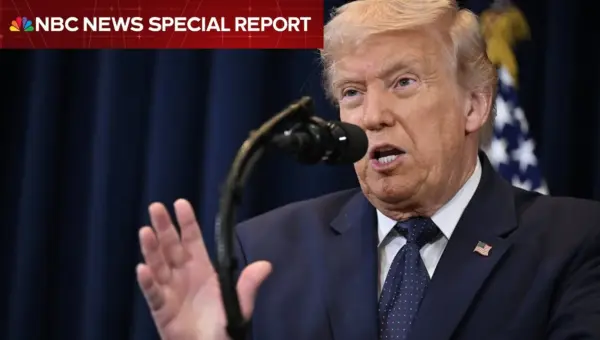
Trump Declares Iran ‘Wiped Out’ Amid Escalating Military Action
President Donald Trump declared a decisive victory over Iran, stating its military capabilities have been "wiped out" following extensive U.S. strikes. During a press conference in Doral, Florida, he detailed the destruction of Iranian naval power, missile, and drone launchers, asserting the primary goal was to prevent Iran from acquiring nuclear weapons. Trump also addressed global oil security and his call with Russian President Putin.
Trump Claims Iran Has Tomahawk Missiles, Lacks Evidence
Former President Donald Trump has claimed Iran possesses Tomahawk missiles, a statement unsupported by intelligence assessments. He also indicated he could accept U.S. responsibility for a deadly strike in Tehran, despite ongoing investigations.
Trump Predicts Swift End to Iran War Amid Escalating Global Impact
President Trump anticipates a swift conclusion to the war in Iran, citing completed military objectives. Meanwhile, escalating regional airstrikes on oil infrastructure are driving up global prices, with the national average gas price nearing $5 a gallon. New evidence suggests a U.S. missile may have struck an Iranian school, an accusation the President denies.