Trump Officials Grilled Over Iran War Intelligence, Escalation Fears
Top Trump officials, including CIA Director Gina Haspel, faced intense questioning over intelligence leading up to the Iran conflict. Officials repeatedly stated they were unaware of President Trump's remarks regarding Iran's actions, drawing criticism. The closed Strait of Hormuz is causing economic pain, with gas prices soaring, while concerns grow over the lack of a clear endgame and the potential for escalation.

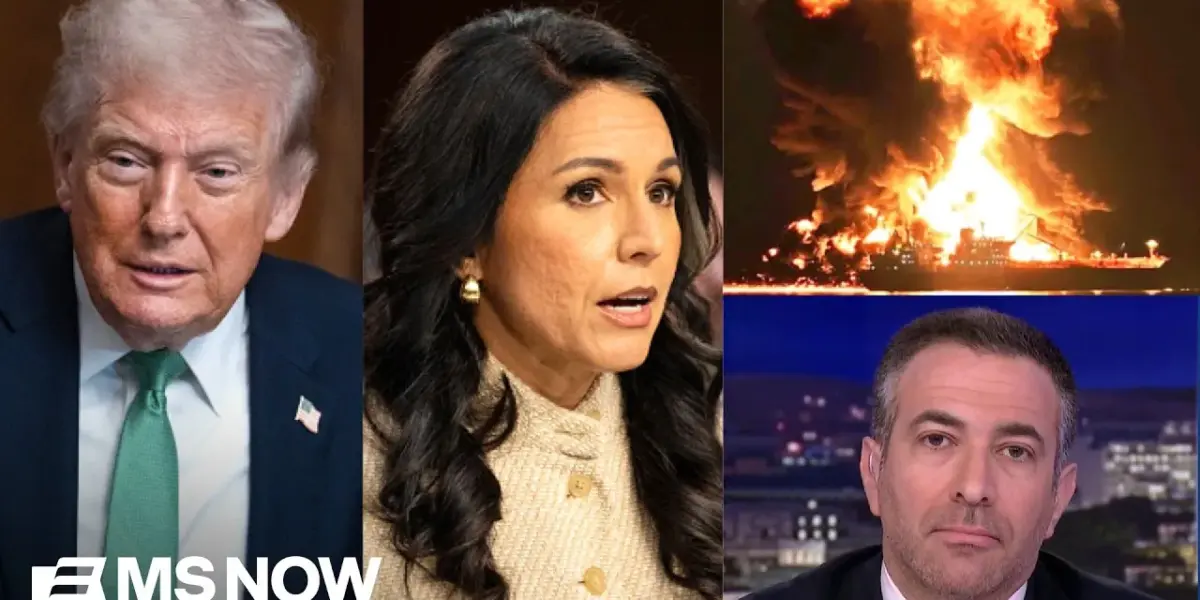
Officials Pressed on Pre-War Intelligence Regarding Iran Conflict
Top Trump administration officials faced intense questioning regarding the intelligence assessments that led to the recent conflict with Iran. During a hearing, CIA Director Gina Haspel was pressed by senators about the lack of an imminent threat from Iran, a point that led to a lieutenant’s resignation in protest. When asked about President Trump’s reported surprise at Iran’s actions, including the move to take over the Strait of Hormuz and strikes on Gulf states, Haspel repeatedly stated she was “not aware of those remarks.” This consistent lack of awareness drew sharp criticism, as senators emphasized her role as intelligence chief requires a high level of awareness.
Intelligence Assessments and the Nuclear Threat
The questioning also touched upon whether intelligence suggested Iran was unlikely to target the Strait of Hormuz. Haspel acknowledged that the current Iranian regime, while degraded, remains intact. However, she declined to state whether she believed Iran posed an imminent threat, deferring that assessment to President Trump. This stance was met with strong disagreement from Democrats, who argued that making intelligence assessments is the intelligence chief’s job, not the President’s. The hearing also revealed concerns about the potential for Iran to possess bomb-grade nuclear material, which is reportedly stored deep underground.
Economic Fallout and Lack of Clear Endgame
The conflict’s impact is already being felt economically. The Strait of Hormuz, a critical chokepoint for global oil supply, remains closed, contributing to diesel gas prices hitting $5 per gallon, a four-year high. Three weeks into the conflict, President Trump has not outlined a clear strategy or an endgame. Reports suggest the President is considering expanding operations in Iran, potentially targeting nuclear material. Experts warn that such actions could escalate beyond an air campaign, requiring risky ground forces.
Concerns Over Escalation and ‘Quagmire’ Risks
Experts expressed deep concern over the escalating situation. “We’re in a form of March Madness that is actually more dangerous for ordinary Americans on the security front and on the economic front,” stated one analyst. The conflict, initially projected by President Trump to last only four to six weeks, is already impacting Americans’ wallets. The analyst highlighted the danger of reports concerning Iran’s nuclear material, noting that President Trump had previously claimed all such material was destroyed, only to later cite it as a reason for war. This perceived shift in justification raised concerns about the administration’s narrative.
Marines Deployment and Strategic Ambiguity
The deployment of Marines to the region has also drawn scrutiny. The administration has not clearly explained the reasons for sending an expeditionary force. Possible explanations include the need to secure the Strait of Hormuz against Iranian mining efforts or to manage potential scenarios involving nuclear materials. The changing public statements from President Trump regarding the need for help in securing the strait have added to the confusion. The complexity of securing enriched uranium, or even preventing the dispersal of dirty bomb material, presents a significant intelligence and military challenge.
Lack of Clarity on End State Alarms Experts
A significant point of alarm for experts is the “clarity of the end state.” While acknowledging the military’s success in degrading Iranian missile arsenals and drones, analysts stressed that political leadership must define the goals of the operation. This was seen as a critical lesson from the prolonged conflicts in Iraq and Afghanistan. The current situation, with Iran targeting energy facilities and the Strait of Hormuz closed, is pushing the U.S. towards a potential quagmire. The interconnectedness of Middle Eastern events means that instability there directly affects global markets and prices, including food costs.
Looking Ahead: Clarity and Strategy Needed
As the conflict enters its third week with no clear end in sight, the focus remains on the need for transparency and strategic clarity. The economic repercussions and the potential for further escalation, particularly concerning Iran’s nuclear program, demand a well-defined strategy. The coming weeks will be crucial in determining whether the administration can articulate a clear objective and an exit strategy, or if the situation risks devolving into a prolonged and costly engagement.
Source: WHAT DID HE KNOW? Top officials GRILLED on what 'warmonger' Trump knew before 'potential quagmire' (YouTube)

Related Articles

G7 Allies Clash Over Iran War Strategy, Urge Focus on Russia
G7 foreign ministers met in Paris, revealing deep divisions over the U.S. war with Iran. European allies urged the U.S. to pressure Russia, linking its actions to the conflict and fearing support for Ukraine will wane.

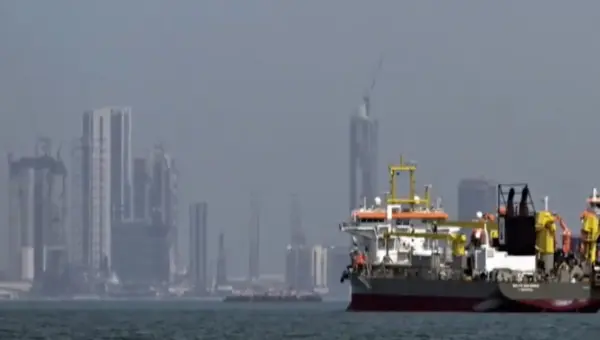
Iran Blocks China Ships, Exposing Beijing’s Weak Grip
Iran's recent decision to block Chinese ships at the Strait of Hormuz is exposing the limits of Beijing's influence in the Middle East. This action is causing delays and cancellations for Chinese manufacturers, turning a perceived geopolitical win into an economic strain.
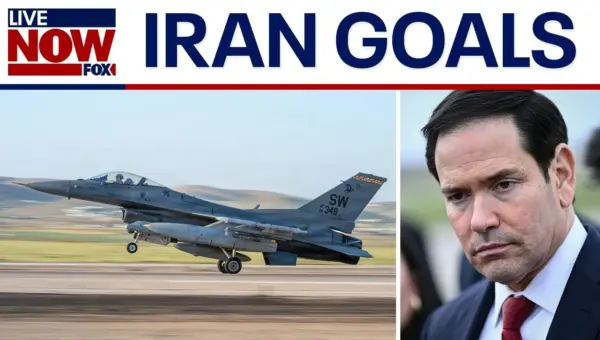
Rubio: US Can Achieve Iran War Goals Without Troops
Senator Marco Rubio outlined a strategy to counter Iran without deploying U.S. ground troops, focusing on weakening the regime and enhancing maritime security. He also criticized Cuba's economic system and expressed concerns about West Bank violence.