Trump Links Wars to Healthcare Cuts: A Nation’s Priorities Questioned
Former President Trump suggested the U.S. can't afford healthcare due to ongoing wars, proposing states take over funding. This sparks debate on national priorities, balancing global roles with domestic needs, and potential inequalities if states manage healthcare.

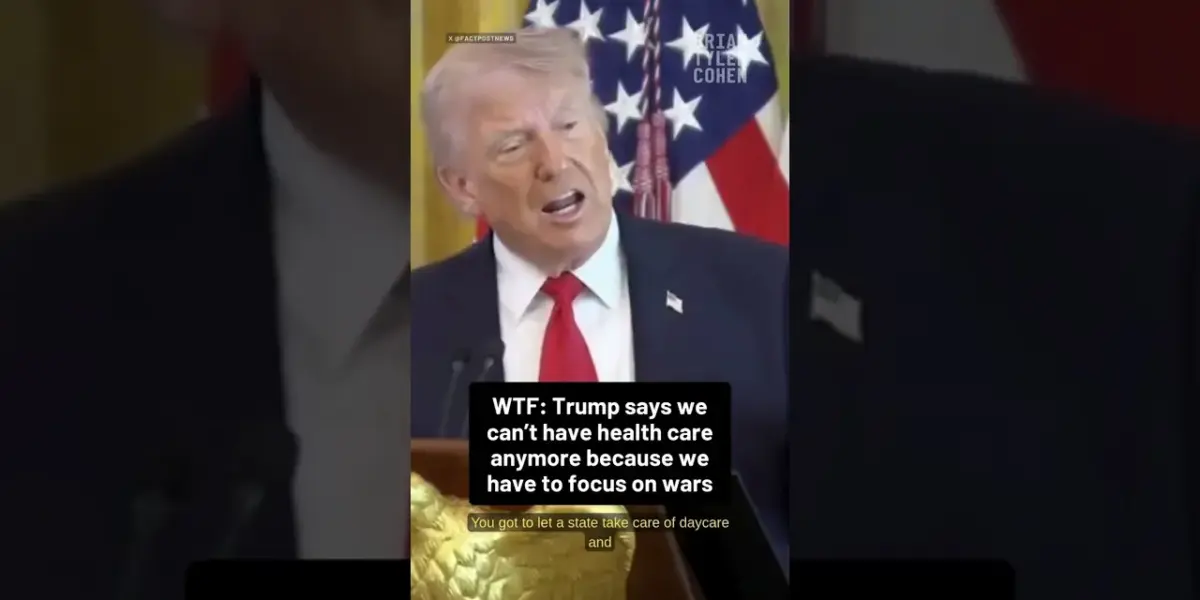
Trump Links Wars to Healthcare Cuts: A Nation’s Priorities Questioned
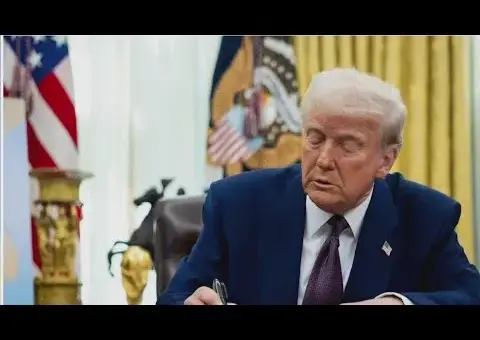
Recently, former President Donald Trump made a striking statement, suggesting that the United States cannot afford to provide healthcare because the nation is too busy fighting wars. This idea, expressed in a recent public comment, raises important questions about how we prioritize national spending and what we owe to our citizens. Trump’s comments specifically mentioned “daycare” but the broader implication points to a wider range of social programs, including Medicaid and Medicare.
Shifting Responsibility to States
Trump’s core argument is that managing programs like healthcare is too much for the federal government to handle. He believes these responsibilities should fall to individual states. His reasoning is that the country is large, with 50 states and many people, and is also engaged in ongoing conflicts. This dual burden, he suggests, makes federal management of social programs impossible.
He proposed that states should be responsible for funding these programs, even if it means raising state taxes. To balance this, he suggested the federal government could slightly lower its taxes to help states compensate. The idea is to decentralize the management and funding of essential services, moving them away from Washington D.C. and closer to the people, or at least, to state capitals.
The Federal vs. State Debate
This idea of pushing responsibility to the states is not new. Throughout American history, there has been a constant discussion about the balance of power between the federal government and individual states. Some argue that states are better equipped to understand and meet the specific needs of their residents. They believe a one-size-fits-all federal approach often fails to address local differences effectively.
However, critics point out that relying solely on states can lead to significant inequalities. Wealthier states might be able to provide more robust services, while poorer states struggle, leaving their citizens with less access to essential care. This could create a patchwork system where the quality of healthcare depends heavily on where you live, rather than your need.
The Cost of War and Social Programs
Trump’s statement directly connects the cost of military conflicts to the ability to fund domestic programs like healthcare. This highlights a common debate in public finance: how do we pay for everything? When a nation spends heavily on defense and international engagements, resources are diverted from other areas.
The United States has a long history of significant military spending, often in response to global events and perceived threats. These expenditures, while argued as necessary for national security, do represent a substantial portion of the national budget. The question then becomes one of trade-offs. Every dollar spent on defense is a dollar that could potentially be spent on healthcare, education, infrastructure, or other domestic priorities.
Historical Context of Healthcare in America
The concept of healthcare as a right or a government responsibility has evolved over time. Before the mid-20th century, healthcare was largely a private matter, with individuals responsible for their own medical costs. However, events like the Great Depression and the experiences of World War II began to shift public opinion.
The creation of Medicare and Medicaid in 1965 under President Lyndon B. Johnson marked a significant federal commitment to ensuring healthcare access for the elderly and the poor. These programs were seen as a way to address widespread gaps in coverage and provide a safety net. The debate over the extent of government involvement in healthcare has continued ever since, with different administrations proposing various approaches to expand or reform the system.
Why This Matters
Trump’s comments bring a crucial issue to the forefront: how does a nation balance its international obligations with its domestic responsibilities? The statement suggests that America’s role as a global power, including its military involvements, directly impacts its ability to care for its own citizens. This forces a conversation about national priorities.
If providing healthcare is indeed a priority, then the resources allocated to other areas, such as defense spending, must be examined. Conversely, if maintaining a strong military presence and engaging in global affairs is deemed paramount, then the implications for domestic social programs must be acknowledged and addressed. This is not just an economic question; it is a moral one about the kind of society we want to build and the well-being of our people.
Implications, Trends, and Future Outlook
The idea of devolving healthcare responsibilities to states could lead to a more varied and potentially unequal system across the country. We might see innovation in some states, but also significant gaps in others. This trend aligns with a broader political movement in some circles that advocates for less federal control and more state autonomy.
Looking ahead, the ongoing discussions about healthcare costs, access, and the nation’s role in the world will likely continue to shape policy. The tension between funding wars and funding social programs is a persistent challenge. Future debates will likely involve finding ways to manage both effectively, or making difficult choices about which takes precedence. The conversation sparked by Trump’s remarks is a reminder that these are not abstract issues, but ones that directly affect the lives and health of millions of Americans.
Source: WTF: Trump says we can’t have health care anymore because we have to focus on wars (YouTube)

Related Articles
Trump’s ‘Alternate Reality’ Cracks as Voters Wake Up to Real-World Costs
New analysis suggests Donald Trump's focus on foreign policy and a perceived "alternate reality" may be alienating voters, including his base. Rising costs and broken promises are reportedly causing anxiety, with some polls showing Trump himself is a top concern for voters. Analysts warn this could weaken his standing and raise concerns about election integrity.
Trump Funds DHS Amid Shutdown Stalemate
President Trump has ordered payments for all Department of Homeland Security employees amid a 50-day government shutdown. The move bypasses Congress, citing national security concerns. Meanwhile, a proposed budget signals a major increase in defense spending.


Trump Ousts AG; Journalist Kidnapped Amidst Iran Tensions
President Trump dismisses Attorney General Pam Bondi amidst rising Iran tensions and reports of a Russian role in aiding Tehran. Meanwhile, American journalist Shelly Kittelson is kidnapped in Baghdad, and a 32-year-old cold case involving a missing girl is solved.