Trump Issues Ultimatum: Iran Must Deal or Face ‘Worst Nightmare’
President Trump issued a stern warning to Iran, stating the country must negotiate an end to its nuclear ambitions or face severe consequences. He also noted Iran's recent action of allowing oil boats through the Strait of Hormuz as a potential gesture. This exchange highlights the ongoing high-stakes tensions and complex diplomacy between the two nations.

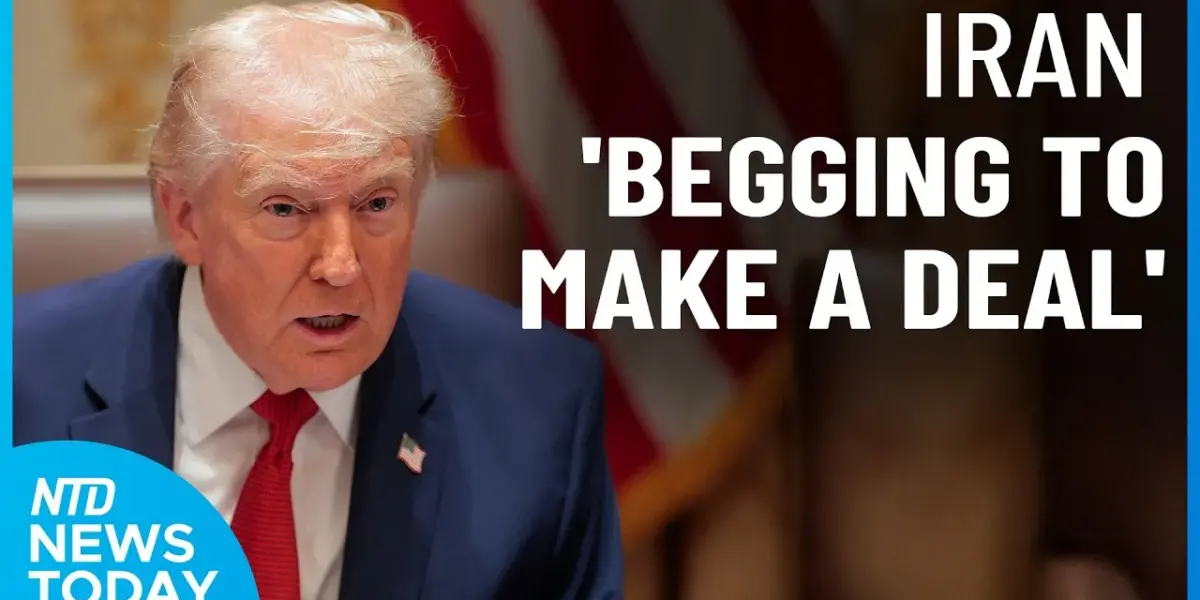
Trump Issues Ultimatum: Iran Must Deal or Face ‘Worst Nightmare’
President Donald Trump recently sent a strong message to Iran, stating the country is now in a position to negotiate a deal to end its nuclear ambitions. During a White House cabinet meeting, Trump declared Iran has a chance to choose a new path forward. He also warned that if Iran does not cooperate, the United States will be their “worst nightmare.” This statement comes amid ongoing tensions and U.S. military actions in the region.
Trump revealed that Iran’s recent action was to allow eight oil boats to pass through the Strait of Hormuz. He referred to this as a “present” to him. This move by Iran, allowing passage through a vital waterway, could be seen as a signal of willingness to engage, or simply a routine passage. The context of U.S. and Israeli actions, which Trump mentioned as something Iran wants to end, adds weight to his ultimatum.
Background: A History of Tensions
The relationship between the United States and Iran has been complex and often strained for decades. Following the 1979 Iranian Revolution, diplomatic ties were severed. Tensions have flared over various issues, including Iran’s nuclear program, its support for regional militant groups, and its ballistic missile development. The U.S. has imposed significant economic sanctions on Iran, aiming to pressure the government into changing its policies.
The Strait of Hormuz is a critical chokepoint for global oil supplies, with a significant portion of the world’s oil passing through it daily. Any disruption in this area can have major global economic consequences. Iran has, in the past, threatened to block the strait, and the U.S. has maintained a naval presence to ensure freedom of navigation. The passage of oil boats, therefore, is an event with considerable strategic importance.
Examining Trump’s Strategy
Trump’s approach appears to be one of “maximum pressure.” This strategy involves using economic sanctions and military posturing to force Iran to the negotiating table. His public statements, like calling Iran “begging” for a deal, are part of this pressure campaign. The goal is to make the cost of Iran’s current policies too high to bear, pushing them towards a new agreement that addresses U.S. concerns about its nuclear program and other activities.
However, this strategy is not without its critics. Some analysts argue that extreme pressure could provoke Iran into more aggressive actions, potentially leading to a wider conflict. Others suggest that diplomatic channels, rather than solely relying on pressure, are essential for de-escalation. The mention of “U.S. and Israeli bombing” suggests a perception from Iran that they are under attack, a narrative that complicates the situation.
Iran’s Perspective and Potential Responses
From Iran’s viewpoint, the U.S. withdrawal from the Joint Comprehensive Plan of Action (JCPOA), the 2015 nuclear deal, was a major setback. Iran felt it had met its obligations under the deal, only for the U.S. to reimpose sanctions. This has led to a sense of mistrust and a belief that the U.S. is not a reliable negotiating partner. Iran’s actions, such as allowing oil boats to pass, could be interpreted in various ways: a genuine attempt to de-escalate, a tactical move to gain international sympathy, or simply a response to internal pressures.
The “present” of allowing oil boats through Hormuz might be Iran’s way of showing a willingness to keep essential trade routes open, perhaps hoping for some reciprocal gesture or a reduction in tensions. It’s a subtle signal in a high-stakes game of international diplomacy and power projection. The ball, as Trump suggests, is in Iran’s court, but Iran also has its own set of demands and grievances.
Why This Matters
The standoff between the U.S. and Iran has significant implications for global security and the world economy. A direct military confrontation could destabilize the entire Middle East, disrupt oil markets, and have far-reaching humanitarian consequences. The outcome of these negotiations, or lack thereof, will shape regional alliances and international relations for years to come.
The decisions made by both President Trump and Iran’s leadership will determine whether tensions escalate further or if a path toward de-escalation and a potential diplomatic solution can be found. The world watches closely, as the stakes are incredibly high for peace and stability in a vital part of the globe.
Looking Ahead
The future outlook remains uncertain. Trump’s “worst nightmare” rhetoric suggests a willingness to escalate military action if diplomacy fails. Iran’s response will be crucial. Will they see Trump’s ultimatum as an opportunity to negotiate a new deal, or will they perceive it as an unacceptable threat, leading to further defiance? The international community, including European allies who remain committed to the JCPOA, will likely play a role in shaping the outcome.
The situation highlights the delicate balance of power and diplomacy in the Middle East. The ability of both sides to manage rhetoric, avoid miscalculation, and engage in meaningful dialogue will be key to preventing further conflict and finding a stable resolution to the long-standing issues.
Source: Trump: Iran 'Begging' for Deal; Let 10 Oil Boats Through Hormuz Strait | NTD News Today (March 26) (YouTube)

Related Articles

Trump Halts Iran Strikes Amid Stalled Diplomacy
President Trump announced a pause on planned strikes against Iran, citing productive talks, though Iran denies negotiations occurred. Reports also suggest a potential U.S. ground operation on Iran's Hark Island. The situation raises concerns about international support for Ukraine and potential shifts in U.S. foreign policy.
Polls Spell Doom: Republicans Face Voter Backlash
New polling data reveals a sharp decline in public confidence regarding the economic impact of Republican policies, particularly under Donald Trump. A significant majority now feel financially worse off, a trend that is especially pronounced among independent voters. This economic discontent poses a major challenge for the Republican party heading into future elections.
Iran’s Missile Threat Reduced by 90%, Analyst Says
An analyst reports that Operation Epic Fury has degraded Iran's missile launchers by 90%, despite challenges in targeting hidden sites. The conflict's duration and media coverage are also discussed, with implications for global energy markets and investor confidence.