Trump, German Chancellor Discuss Iran Conflict Amid Escalation
President Trump hosted German Chancellor Friedrich Mertz at the White House for critical discussions on the escalating Iran conflict. The leaders affirmed a unified stance against Tehran's regime, while also addressing trade, Ukraine, and the future of Iranian governance.

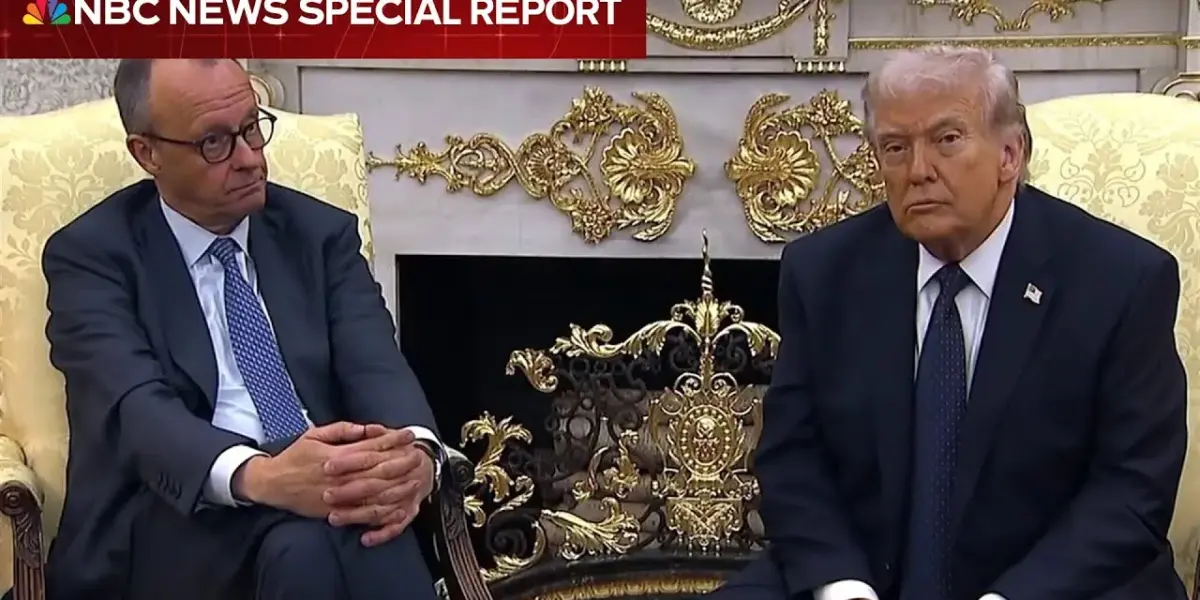
White House Hosts Crucial Diplomatic Talks
In a significant diplomatic development, President Trump welcomed German Chancellor Friedrich Mertz to the White House for an in-person meeting in the Oval Office. This marks the President’s first face-to-face encounter with another world leader since the commencement of military operations against Iran. The meeting underscored the deepening international focus on the escalating conflict in the Middle East and the strategic alignment between the United States and key European allies.
Shared Stance on Iran’s Regime
Both leaders expressed a unified front regarding the necessity of confronting Iran’s current leadership. “We are on the same page in terms of getting this terrible regime in Tehran away,” Chancellor Mertz stated, highlighting the shared objective of removing the existing government. President Trump echoed this sentiment, characterizing the Iranian regime as “evil people” responsible for widespread violence and terror.
The President detailed the significant impact of U.S. military actions, asserting that Iran’s military capabilities have been severely degraded. “They have no navy. It’s been knocked out. They have no air force. It’s been knocked out. They have no air detection that’s been knocked out. Their radar’s been knocked out and just about everything’s been knocked out,” Trump reported. He emphasized the strength and effectiveness of the U.S. military in achieving these objectives.
Discussion on Post-Conflict Scenarios and Future Governance
Beyond the immediate military conflict, the discussions also touched upon the crucial “day after” scenario. Chancellor Mertz specifically raised the importance of planning for what happens once the current Iranian regime is no longer in power. President Trump acknowledged the complexities of this transition, expressing a desire to see a leadership emerge that will “bring it back for the people.” He also noted the potential for instability if a new leadership proves to be as detrimental as the previous one.
The conversation also explored potential candidates for future leadership, with Crown Prince Reza Pahlavi mentioned as a possibility. However, President Trump suggested that a leader emerging from within Iran might be more appropriate, provided they are popular and aligned with more moderate ideals.
Economic and Trade Relations
The meeting also served as a platform to discuss significant trade deals between the United States and Germany. President Trump expressed optimism about these negotiations, stating, “We’ll be talking about some very big trade deals and those I know will work out too.” He praised the strong existing relationship, noting, “Our countries get along very well. We have a great affinity for each other.”
Chancellor Mertz emphasized his desire to see a trade agreement in place as soon as possible, further underscoring the economic ties between the two nations. The U.S. President also highlighted the strong trade relationship, noting their ability to “do our deals and it’s been very strong.”
Broader Geopolitical Issues: Ukraine and NATO
The escalating conflict in Ukraine was another significant topic on the agenda. Chancellor Mertz stressed the urgency of bringing the war to an end while ensuring Ukraine’s territorial integrity and security interests are preserved. “But Ukraine has to preserve its territory and their security interests,” he stated.
The leaders also touched upon NATO’s role and the burden-sharing among member states. President Trump expressed disappointment with some European nations, specifically Spain and the UK, for not meeting defense spending commitments. He reiterated his stance on the need for allies to contribute more significantly to collective security. “Germany has been great. He’s been terrific. Others have been very good. Terrific,” Trump noted, contrasting Germany’s cooperation with perceived uncooperative stances from other allies.
Addressing the Imminent Threat and Civilian Concerns
When questioned about the imminent threat that prompted the U.S. strikes, President Trump suggested that Iran was preparing to attack first. “It was my opinion that they were going to attack first. They were going to attack. If we didn’t do it, they were going to attack first,” he explained. He also highlighted Iran’s targeting of neutral countries and civilian areas, describing it as indicative of a “level of evil.”
The President also addressed concerns about stranded Americans in the Middle East due to commercial air travel restrictions. He explained that the rapid escalation of events necessitated swift action, implying that an evacuation plan was not feasible given the perceived imminence of an Iranian attack.
Economic Impact and Future Outlook
The rising oil and gas prices resulting from the conflict were acknowledged as a factor damaging economies. Chancellor Mertz expressed hope for a swift end to the war to stabilize markets. President Trump predicted that prices would fall significantly once the conflict concludes, stating, “as soon as this ends, those prices are going to drop, I believe lower than even before.”
The conversation also delved into the U.S. trade policies, with President Trump defending the use of tariffs as a tool to ensure fair trade practices and protect American economic interests. He highlighted a recent Supreme Court decision that affirmed the executive branch’s authority in implementing trade measures, including potential embargoes.
A United Front Against Global Threats
The meeting concluded with a strong emphasis on the global unity emerging against Iran’s actions. President Trump pointed to the unprecedented cooperation from various nations, including Saudi Arabia, Israel, and Qatar, in confronting Iran. He attributed this unity to the “evil” nature of the Iranian regime and its destabilizing influence across the region and the world. The leaders reaffirmed their commitment to addressing these complex challenges through continued diplomatic engagement and strategic cooperation.
Source: Special Report: Trump meets with German Chancellor Merz as Iran conflict intensifies (YouTube)

Related Articles
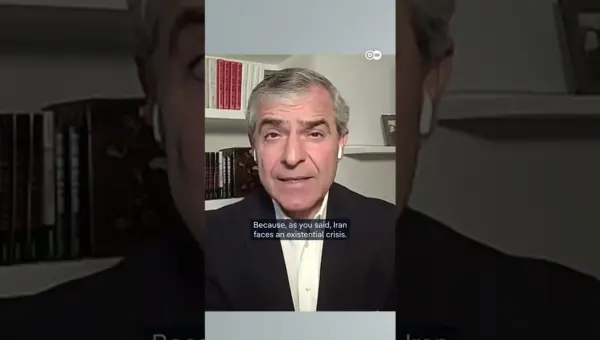
Iran Conflict: A ‘War of Choice,’ Analyst Argues
An analyst speaking with DW News challenges the Western narrative on Iran, arguing that the current conflict is a "war of choice" driven by specific political leaders rather than an unavoidable threat. The analysis suggests Iran has been on the defensive while facing internal and external pressures.
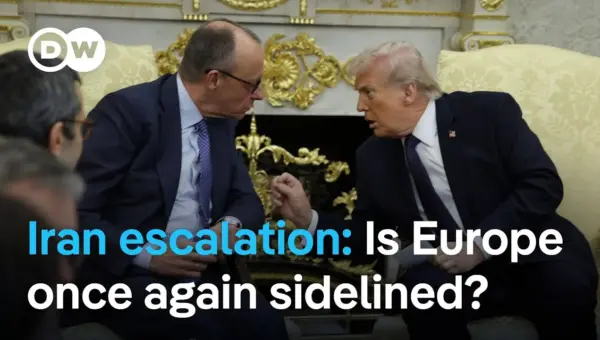
Germany Backs US on Iran Regime Change Amidst Tensions
German Chancellor Olaf Scholz met with President Donald Trump, aligning on the goal of removing the Iranian regime while not endorsing recent military actions. The visit also touched upon trade and the war in Ukraine, highlighting complex diplomatic challenges.

Trump Hijacks Medal of Honor Ceremony for Ballroom Brag
President Donald Trump reportedly diverted a Medal of Honor ceremony to discuss his White House ballroom renovation, drawing sharp criticism for misplaced priorities. MSNBC host Chris Hayes noted the President's alleged inability to maintain focus during the solemn event, which occurred amid heightened tensions following U.S. and Israeli strikes on Iran.