Trump Funds DHS Amid Shutdown Stalemate
President Trump has ordered payments for all Department of Homeland Security employees amid a 50-day government shutdown. The move bypasses Congress, citing national security concerns. Meanwhile, a proposed budget signals a major increase in defense spending.

Trump Funds DHS Amid Shutdown Stalemate
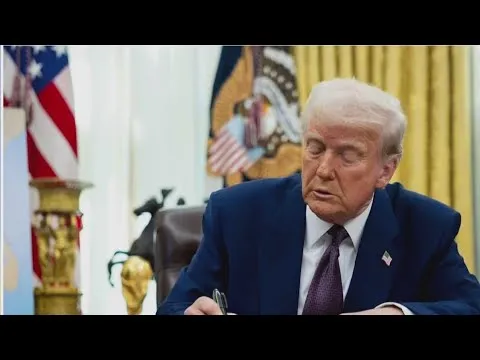
President Trump has taken a significant step to ensure Department of Homeland Security (DHS) employees receive their paychecks. This action comes 50 days into a partial government shutdown. Lawmakers remain divided on how to fund the department, leaving its future uncertain.
White House Plan to Pay DHS Workers
The President signed a new order directing paychecks to all DHS employees. This is an expansion of a previous order that focused only on TSA workers. The new order now includes civilian employees of the Coast Guard and FEMA. All parts of the DHS are expected to be covered.
This move addresses the ongoing government shutdown, which has now reached its 50th day. There is no clear end in sight for the shutdown. DHS Secretary Markwayne Mullin expressed frustration on social media. He stated that Democrats are refusing to fund Customs and Border Patrol agents. Mullin called this a political tactic that has held DHS employees hostage for 45 days.
With no agreement in Congress, the President is bypassing lawmakers. He issued a memorandum titled “Liberating the Department of Homeland Security from this Partial Shutdown.” The President declared the situation an emergency that threatens national security. This allows him to unilaterally order payments to DHS workers.
Budget Proposal Signals Future Spending Priorities
While the shutdown continues, the administration is also looking ahead. The President formally sent his Fiscal Year 2027 budget proposal to Congress. A key figure in this proposal is $1.5 trillion for defense spending. This represents a significant increase, nearly 40% more than last year’s Pentagon spending.
This proposed defense increase does not even include an additional $200 billion the administration has requested for specific defense needs. To offset these increased defense costs, the administration is proposing major cuts to non-defense spending. This includes cuts to climate programs and various grants across government agencies. These budget proposals signal a clear shift in spending priorities.
Global Impact
Why This Reshapes the World Order
President Trump’s decision to fund the Department of Homeland Security directly, bypassing Congress, highlights a growing trend of executive action in U.S. foreign and domestic policy. This move, driven by a prolonged government shutdown and disagreements over border security funding, demonstrates the President’s willingness to use executive authority to address national security concerns as he defines them. By declaring an emergency situation, he asserts that the operational readiness of DHS is paramount and cannot be held hostage by legislative gridlock.
The funding order directly impacts the lives of thousands of DHS employees, ensuring they continue to receive salaries despite the political standoff. This action, while resolving an immediate pay issue for federal workers, does not resolve the underlying dispute over border security funding, which remains a central point of contention between the White House and Congress. The DHS, responsible for a wide array of critical functions from border control to cybersecurity and disaster response, is a cornerstone of national security. Any disruption in its operations, even a partial one, can have ripple effects on domestic stability and international cooperation.
Furthermore, the administration’s proposed budget, with its substantial increase in defense spending and significant cuts to non-defense programs like climate initiatives, signals a broader strategic reorientation. This proposed budget prioritizes military strength and national security apparatus over other governmental functions. This approach suggests a foreign policy doctrine focused on projecting power and maintaining a strong military posture, potentially at the expense of diplomatic or environmental initiatives. The contrast between increased defense outlays and reduced spending on domestic social programs and climate action reflects a domestic political debate about national priorities.
Historical Context
Government shutdowns are not new in U.S. history. They have occurred under various administrations when Congress and the President could not agree on spending bills. However, the duration of the current shutdown and the specific focus on border security funding are particularly contentious. This situation echoes past debates over immigration policy and national sovereignty, but the current scale and political polarization make it a unique challenge.
The President’s use of executive orders to circumvent congressional appropriations is a powerful tool. It has been used in various contexts, from trade policy to national security. In this instance, the order to fund DHS employees is an attempt to mitigate the immediate consequences of a shutdown that has reached a critical point. This executive action highlights the ongoing tension between the executive and legislative branches regarding budgetary control and policy implementation.
Economic Leverage
The shutdown itself represents a form of economic disruption. Federal employees working without pay face financial hardship, impacting local economies. For DHS, consistent funding is crucial for maintaining operations, including border security, customs enforcement, and disaster preparedness. Disruptions can affect trade flows, national security operations, and public safety.
The proposed budget’s emphasis on defense spending, coupled with cuts to other areas, suggests a reallocation of national resources. The $1.5 trillion defense budget signals a commitment to maintaining a strong military. This economic strategy aims to project American power globally, while domestic programs face austerity. This approach can influence international trade relations and alliances, as other nations assess U.S. economic and military commitments.
Regional Alliances and Power Balances
While the transcript does not directly mention international alliances, the operational capacity of the DHS has implications for regional security. For example, effective border management and customs operations are vital for cooperation with neighboring countries like Canada and Mexico. Disruptions to these agencies can strain bilateral relationships and affect regional stability.
The proposed increase in U.S. defense spending could also signal a shift in global power dynamics. A stronger U.S. military might influence the strategic calculations of other major powers, potentially altering regional alliances and rivalries. However, domestic political divisions, as evidenced by the shutdown, can also project an image of internal weakness, influencing how allies and adversaries perceive U.S. resolve and capability.
Future Scenarios
One future scenario is that congressional negotiations eventually lead to a compromise on border security funding, ending the shutdown and restoring normal operations. Another possibility is that the President continues to rely on executive actions to manage government functions, leading to ongoing friction with Congress and potential legal challenges. The proposed budget also presents a scenario where defense spending dramatically increases, while non-defense programs face significant reductions, shaping U.S. domestic and foreign policy for years to come.
Source: Trump orders DHS to pay all employees | Morning in America (YouTube)

Related Articles
Trump’s Budget Plan Sparks Outrage, Strains Party
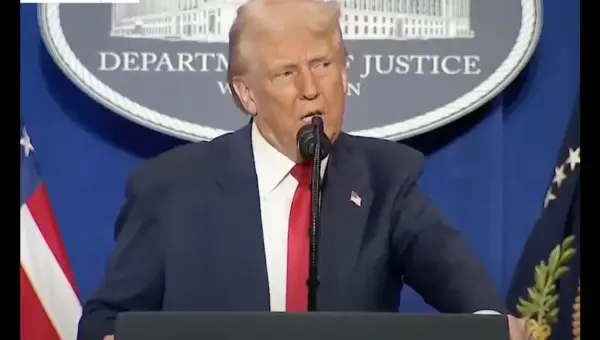
Donald Trump's proposal for a $1.5 trillion defense budget, nearly double current spending, is drawing sharp criticism. The plan involves deep cuts to domestic programs like healthcare and education, contrasting with his past calls for ending foreign wars.

US Left Turns on Jewish Allies, Disrupting Political Landscape
The American left is increasingly alienating pro-Israel Jews, reversing a century-long alliance. Media coverage and political rhetoric now often explain away antisemitic acts, while anti-Zionism becomes a core tenet of the left, impacting the Democratic Party's relationship with its Jewish base.


Young Americans Revolt Against War and Economic Woes
Young Americans are expressing deep frustration with the political system, citing foreign policy decisions and economic instability. They feel abandoned by both major parties and are seeking a more representative government. This discontent is fueling a desire for significant change and a reevaluation of America's role in the world.