Trump Eyes Military Options to Reopen Strait of Hormuz
President Trump is exploring military options to reopen the Strait of Hormuz, which Iran has effectively blockaded with drone and missile attacks. Options range from international naval escorts and ground troop deployments to economic pressure targeting Iran's oil exports.

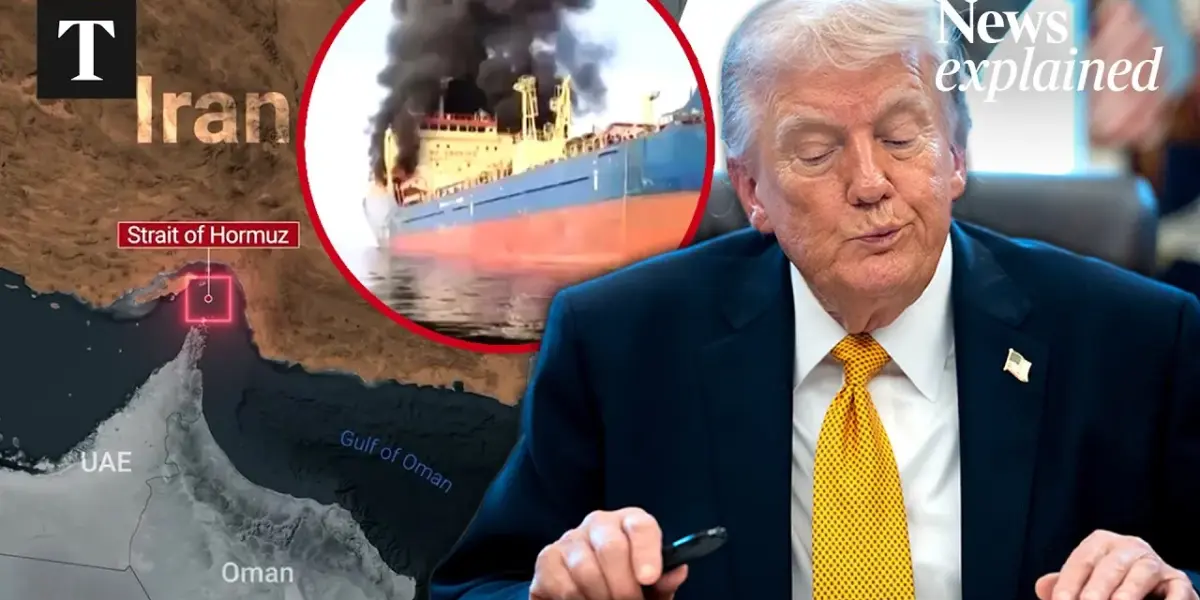
Trump Weighs Military Options Amid Strait of Hormuz Blockade
President Trump is considering a range of military actions to counter Iran’s blockade of the Strait of Hormuz. The vital shipping lane, through which 15% of the world’s oil passes, has seen traffic plummet due to Iranian drone and missile attacks. This disruption has sent global fuel prices soaring, prompting urgent calls for stabilization and the reopening of this critical trade route.
Strait of Hormuz Under Threat
The Strait of Hormuz, a narrow waterway connecting the Persian Gulf to the open ocean, serves as a crucial choke point for international commerce. Before Iran’s recent actions, an estimated 150 container ships navigated the strait daily. However, the escalating threat of Iranian attacks has drastically reduced this number to under 10 ships per day.
Coalition Efforts Face Hurdles
President Trump has appealed for international cooperation, urging a coalition of naval forces from Britain, France, Japan, China, and South Korea to join the U.S. Navy in securing the strait. The proposed strategy involves naval escorts for shipping to ensure safe passage. Initially, the United Kingdom and France expressed reservations, fearing entanglement in a broader conflict. Nevertheless, several European nations, along with Japan and Canada, have since condemned Iran’s attacks and signaled their willingness to assist in safeguarding maritime traffic.
Despite potential support from NATO allies, implementing naval escorts presents significant challenges. The operation is costly and may not fully reassure insurance companies about the safety of cargo. Iran’s method of warfare is described as inexpensive and easily deployable, utilizing truck-mounted launchers and readily available Shahed drones. While Iran has reportedly lost many missile launchers and had its navy damaged, it still possesses anti-ship missiles capable of striking vessels. These missiles have already hit 20 container ships since the conflict began.
Ground Deployment and Extended Reach
In response to the ongoing crisis, U.S. officials announced the deployment of up to 5,000 Marines and sailors to the Middle East. This deployment, though labeled as modest, could signal a prelude to a larger ground operation. Such an operation might aim to eliminate Iran’s missile and drone sites and potentially secure nuclear materials. However, President Trump may be hesitant to commit to a full-scale invasion, especially with midterm elections approaching.
Even with a ground presence, Iran’s military capabilities pose a significant threat. Its anti-ship missiles have a range exceeding 200 miles, requiring troops to advance deep inland to neutralize the danger. Furthermore, Iran’s Shahed 136 drone boasts a range of up to 1,500 miles, enabling attacks from virtually anywhere within the country. Effectively eliminating this threat might necessitate occupying the entirety of Iran, a daunting prospect.
Economic Pressure: The Kharg Island Option
A final potential strategy for President Trump involves applying economic pressure by targeting Kharg Island. This island, sometimes called Iran’s “crown jewel” or “forbidden island,” is a small landmass off Iran’s Persian Gulf coast. While the U.S. has conducted warning strikes near the island, it has deliberately avoided damaging its oil infrastructure. President Trump has stated that if Iran persists in threatening shipping, he will reconsider sparing these vital facilities.
Kharg Island is the primary export hub for over 90% of Iran’s oil. Disrupting this revenue stream could cripple the Iranian regime’s economy. This move could serve as the ultimate bargaining chip, offering a non-military but highly impactful way to force Iran to cease its aggressive actions in the Strait of Hormuz.
Looking Ahead
With oil prices already showing signs of recovery, the administration faces a critical decision on how to proceed. The effectiveness of international naval escorts, the risks and rewards of a ground deployment, and the potential economic consequences of targeting Kharg Island are all factors President Trump must weigh. The coming weeks will be crucial in determining the U.S. response and its impact on global energy markets and regional stability.
Source: What Are Trump's Options to Reopen the Strait of Hormuz (YouTube)

Related Articles

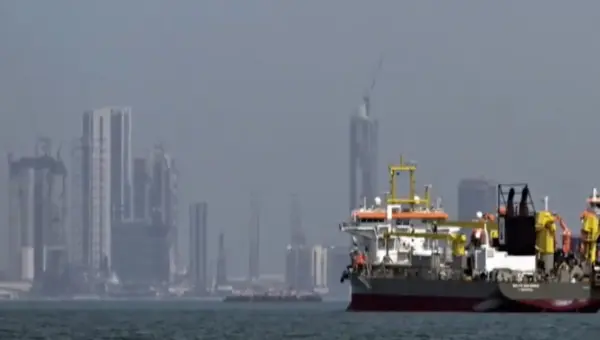
Iran Blocks China Ships, Exposing Beijing’s Weak Grip
Iran's recent decision to block Chinese ships at the Strait of Hormuz is exposing the limits of Beijing's influence in the Middle East. This action is causing delays and cancellations for Chinese manufacturers, turning a perceived geopolitical win into an economic strain.
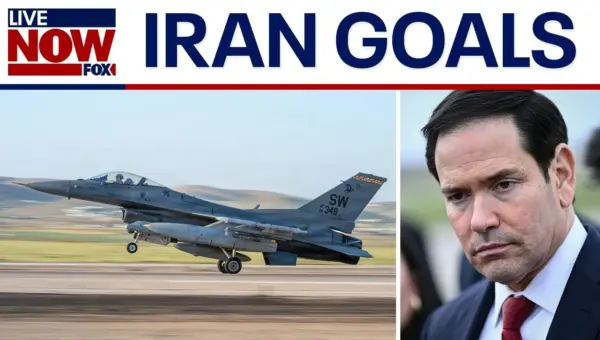
Rubio: US Can Achieve Iran War Goals Without Troops
Senator Marco Rubio outlined a strategy to counter Iran without deploying U.S. ground troops, focusing on weakening the regime and enhancing maritime security. He also criticized Cuba's economic system and expressed concerns about West Bank violence.


Israel Escalates Iran Strikes, Warns of Wider War
Israel has launched significant strikes inside Iran following continued missile fire, warning of further escalation. The conflict risks wider regional instability and economic disruption, especially concerning the Strait of Hormuz.