Trump Escalates Iran Standoff With Infrastructure Threats
President Trump has issued a stern ultimatum to Iran, threatening to destroy its infrastructure if a deal isn't reached by Tuesday. This follows a successful U.S. military rescue of two airmen. The situation highlights a dual strategy of demonstrating military power while pursuing diplomatic resolution.

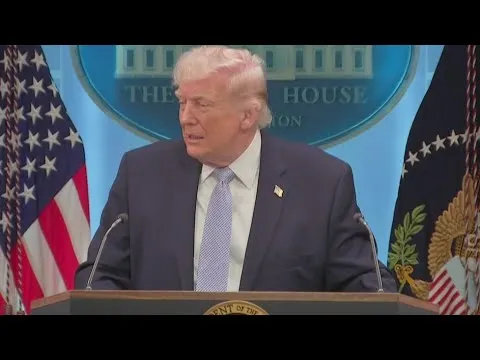
Trump Escalates Iran Standoff With Infrastructure Threats
President Trump issued a stark warning to Iran, threatening to target its bridges and power plants if a deal is not reached by a Tuesday deadline. This ultimatum comes just after a successful U.S. military operation to rescue two airmen from remote territory within Iran. The dual focus on a high-profile rescue and a severe diplomatic threat highlights the complex and tense relationship between the United States and Iran.
Dramatic Rescue Operation
The White House detailed a daring mission to save two American airmen. The operation involved significant U.S. military power, with President Trump stating that 155 aircraft and dozens of special forces members were used. The rescue was particularly challenging due to the location and the fact that one airman was injured and had to survive for nearly 48 hours while awaiting extraction. The CIA reportedly ran a deception campaign to confuse Iranian forces during the search.
While the mission was successful in bringing the airmen home without American casualties, it was not without risk. Some aircraft reportedly sustained damage from enemy fire. The success of this operation was presented by President Trump as proof of American military might and commitment to its service members.
Ultimatum and Negotiations
Following the rescue, President Trump addressed the ongoing negotiations with Iran. He described these talks as making progress and believes Iran is negotiating in good faith. However, he simultaneously set a firm deadline of 8:00 PM on Tuesday for Iran to reach an agreement.
If Iran fails to meet this deadline, President Trump declared that U.S. forces would target Iranian infrastructure. He explicitly stated that no options were off the table, even when questioned about hitting civilian targets. When asked if such actions would constitute a war crime, the President indicated he was not concerned about that designation. This approach suggests a willingness to escalate military action if diplomatic goals are not met.
Conflicting Signals: Deal or Escalation?
President Trump’s statements presented a dual path forward. He indicated a readiness to conclude the conflict with a deal if Iran cooperates. At the same time, he made it clear that the U.S. military is prepared to apply significant force against Iran’s infrastructure if negotiations fail.
The President mentioned that Iran had requested and received a seven-day extension on a previous deadline. The critical period now extends until Tuesday at 8:00 PM. The coming days will show whether diplomacy or military threat will shape the outcome of this tense standoff.
Global Impact
This situation has broader implications for regional stability and international relations. Threats to attack civilian infrastructure, even if framed within a negotiation strategy, can heighten tensions and increase the risk of wider conflict. The effectiveness of such threats in achieving diplomatic goals is often debated, as they can also provoke strong reactions and entrench positions.
The U.S. military’s capabilities, as demonstrated in the rescue mission, underscore its power. However, the potential for escalating conflict in a strategically vital region like the Middle East carries significant economic and humanitarian risks. Global energy markets and international shipping lanes could be affected by increased tensions.
Historical Context
The current U.S.-Iran relationship has been strained for decades, marked by events like the 1979 hostage crisis and ongoing geopolitical competition. Past U.S. administrations have employed various strategies, including sanctions and military deterrence, to influence Iran’s behavior. President Trump’s approach, characterized by direct ultimatums and threats of widespread destruction, represents a more aggressive posture compared to some previous diplomatic efforts.
Economic Considerations
While the transcript focuses on military actions and threats, economic factors are always present in U.S.-Iran relations. Sanctions have been a key tool used by the U.S. to pressure Iran economically. The success of negotiations could lead to the easing of these sanctions, impacting Iran’s oil exports and its ability to engage in international trade. Conversely, continued conflict or escalation would likely lead to further economic isolation for Iran.
Future Scenarios
Several outcomes are possible. Iran might agree to a deal by the deadline, leading to de-escalation and potential relief from sanctions. Alternatively, Iran could refuse or fail to meet the deadline, prompting the U.S. to carry out its threats against infrastructure, leading to a significant escalation. A third scenario could involve continued negotiations with lingering threats, a path that carries inherent instability.
Source: Trump threatens to destroy 'every bridge and power plant' in Iran | NewsNation Live (YouTube)

Related Articles


Britain’s Gulf Ambition Collides With Reality
Britain's plan to secure the Strait of Hormuz without the U.S. highlights global naval limitations. Decades of U.S.-led security have left allies without the necessary naval power to act independently. A political solution with Iran seems more likely than a military one.


Crypto Eyes Rally as Tax Day Looms, Geopolitics Simmer
Cryptocurrencies like Bitcoin and Ethereum are holding steady near important price levels as traders anticipate a potential rally following the U.S. tax deadline on April 15th. Geopolitical events and ongoing regulatory discussions are key factors influencing market sentiment.

Trump Threatens ‘Dramatic’ Iran Escalation in 48 Hours
President Donald Trump has threatened a dramatic escalation of conflict with Iran within 48 hours if a deal is not reached, targeting civilian infrastructure. Negotiations appear stalled, with Iran seeking a full end to hostilities while the U.S. pushes for a temporary ceasefire.