Trump Escalates Iran Standoff, Demands Strait of Hormuz Open
President Trump has issued a stark warning to Iran, threatening a massive escalation if a cease-fire is violated. Tensions are high over the Strait of Hormuz, a critical global trade route. Iran's struggling economy gives the U.S. leverage, but communication challenges complicate negotiations.

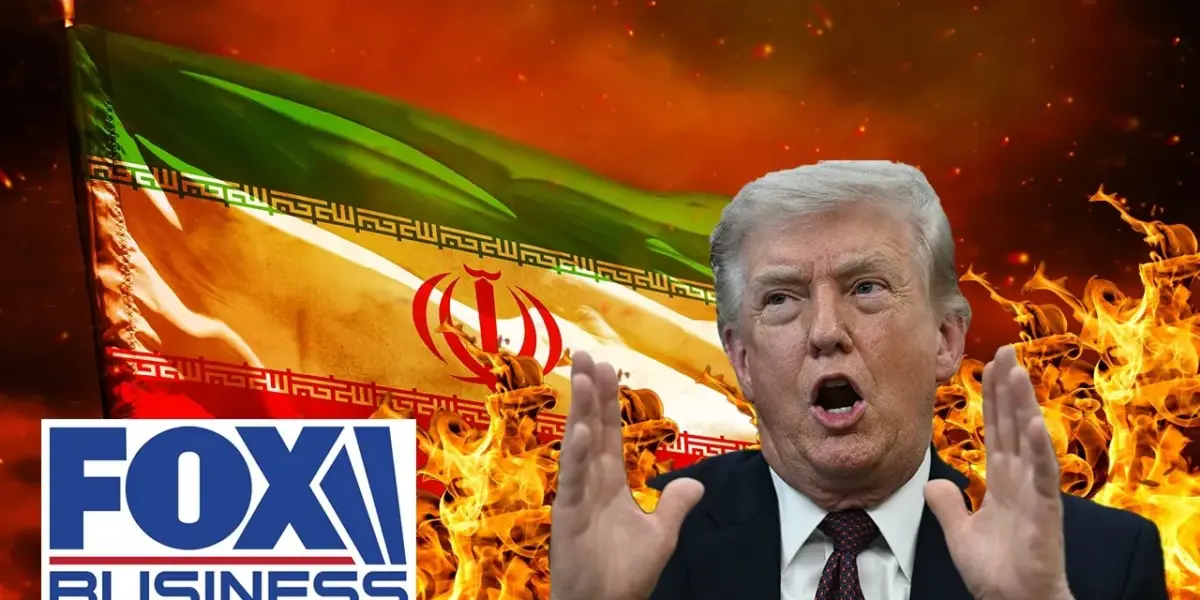
Trump Threatens ‘Bigger and Better’ Response if Iran Violates Cease-Fire
President Trump has issued strong warnings to Iran, signaling a potential for massive escalation if the nation fails to comply with a newly established cease-fire. The President stated on Truth Social that if Iran violates the agreement for any reason, the U.S. response would be “bigger and better and stronger than anyone has ever seen before.” This warning comes as tensions remain high, particularly concerning the critical Strait of Hormuz.
Strait of Hormuz Key to Global Trade, Under Iranian Pressure
The Strait of Hormuz is a vital waterway for global oil and commerce. Reports indicate that Iran has been charging ships significant fees, reportedly up to one million dollars, to pass through. This practice is seen as a leverage point by Iran, but one that the U.S. believes is unsustainable and harmful to the global economy.
Victoria Coates, a former Vice President for National Security, emphasized the economic importance of the strait. She noted that around 150 ships carrying 200 million barrels of product daily typically pass through the Gulf Coast. “That needs to get out of the Gulf Coast and go on to the market,” Coates stated, explaining that it would take about a month for the market to fully recover once normal trade resumes. This is what President Trump negotiated for.
Iran’s Economy on Life Support, U.S. Holds Leverage
The Iranian economy is described as being on “life support.” Reports suggest the country has experienced over a thousand hours without internet access, effectively shutting down 10% of its economy. Major financial markets, including the Tehran Stock Exchange, Commodity Exchange, and Mercantile Exchange, have been closed for over a month. This economic distress gives the United States significant leverage in negotiations.
“The Americans have all the leverage,” Coates explained. “They can tell the Iranians if they want the sweeping sanctions relief that they’re asking for, that’s the only thing that can save them.” The condition for this relief is clear: Iran must open the Strait of Hormuz and cease imposing tolls on shipping.
Broader Deal Conditions and Regional Concerns
Beyond opening the strait, the U.S. has outlined broader conditions for a potential deal. These include Iran giving up highly enriched uranium and dismantling parts of its nuclear program. Additionally, Iran must surrender any missiles it possesses and cease reconstituting them. The U.S. also wants Iran to abandon its regional proxies, such as Hezbollah in Lebanon.
The situation in Lebanon, with Hezbollah’s presence, is noted as a critical regional concern. Israeli officials have stressed the need to eradicate Hezbollah from Lebanon. The U.S. has also made it clear that it views Iran’s support for such groups as a destabilizing factor in the region.
Communication Challenges and Direct Negotiations
Negotiations with Iran are complicated by communication challenges. Reports suggest that Iran’s Supreme Leader, Ali Khamenei, communicates through handwritten notes, a method unusual for international diplomacy. This, coupled with the internet blackout within Iran, makes it difficult to ascertain the true situation on the ground and assess the sincerity of negotiations.
For years, Iran has refused direct negotiations with the U.S., preferring to use intermediaries like Pakistan. This indirect approach makes it hard to understand each side’s true intentions. A move towards direct talks would be a significant concession from Iran and could signal a stronger commitment from its leadership to reach a deal.
U.S. Re-evaluating NATO Commitments
In parallel to the Iran situation, President Trump has expressed dissatisfaction with NATO allies. He has threatened to withdraw U.S. support from countries that are not perceived as helpful to American interests. NATO Secretary General Mark Rutte acknowledged the essential role of American leadership in the alliance and stated that Iran should not acquire nuclear or ballistic missile capabilities.
Politico reported that President Trump had berated NATO leaders for what he perceived as a lack of support. The U.S. has indicated that allies who have not met their defense spending pledges or supported U.S. operations can expect repercussions. The President’s stance highlights a broader re-evaluation of U.S. commitments to international alliances based on perceived fairness and burden-sharing.
Market Impact
The escalating tensions with Iran and the potential disruption to the Strait of Hormuz pose significant risks to global oil supply and prices. Any further escalation could lead to increased volatility in energy markets. Investors should monitor developments closely for potential impacts on energy stocks, shipping companies, and broader market sentiment. The ongoing discussions around NATO also introduce uncertainty regarding international security and trade relationships, which could affect global economic stability.
What Investors Should Know
Investors should be aware that geopolitical instability in the Middle East can directly impact energy prices and global markets. The U.S. stance on Iran, including sanctions and military posture, plays a crucial role. Additionally, shifts in U.S. foreign policy regarding alliances like NATO can influence international trade and economic cooperation. Diversification and a focus on geopolitical risk assessment are advisable during periods of heightened global uncertainty.
Source: ‘BETTER AND STRONGER': Trump threatens MASSIVE escalation (YouTube)

Related Articles
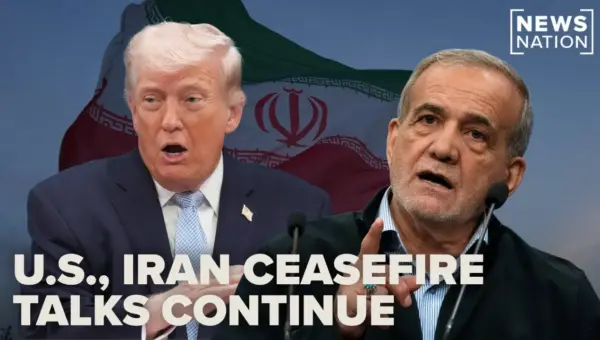
Iran Threatens Strait of Hormuz Amid Lebanon Strikes
Iran threatens to close the vital Strait of Hormuz in response to ongoing strikes in Lebanon. The US is trying to de-escalate, but actions on the ground remain a concern, potentially impacting global oil markets and future negotiations.
Senator Slams Jeffries’ Iran Stance, Cites Nuclear Threat
Senator Rick Scott sharply criticized House Democratic Leader Hakeem Jeffries over his stance on Iran, calling him an "idiot" for seeking to limit the President's authority. Scott highlighted the threat of Iran developing nuclear weapons. The discussion also covered President Trump's stance on NATO and the ongoing DHS funding shutdown.

Iran’s Hormuz Threat: A Known Tactic, Not New
Recent conflict did not teach Iran a new tactic by threatening to close the Strait of Hormuz. Experts and Iranian planners have long understood this strategic leverage. The effectiveness of the recent shutdown was tied to global perceptions of the preceding conflict's instigator, not a newfound Iranian capability.