Trump Disses NATO, Hints Iran War Nears End
President Trump is considering leaving NATO, calling it a 'paper tiger,' and suggests the war in Iran is nearing its end. He also attended a historic Supreme Court hearing on birthright citizenship.

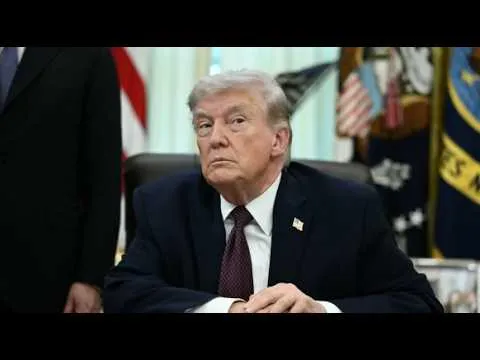
President Trump Signals Shift in Global Alliances and Iran Conflict
President Trump is preparing to address the nation, bringing news that the conflict in Iran may soon conclude. He is also openly considering withdrawing the United States from NATO, the long-standing military alliance. This comes as the White House prepares for a significant announcement regarding the situation in Iran.
Key Updates on Iran Conflict
Sources indicate President Trump expects the operation in Iran to wrap up within two to three weeks. He believes a formal deal may not be necessary for U.S. troops to withdraw. The President stated that a key goal, preventing Iran from obtaining nuclear weapons, has been achieved. He also mentioned that the U.S. has targeted over 11,000 sites, significantly weakening Iran’s military capabilities, including its navy, air force, and army. The U.S. and Israel continue to strike targets in Iran, with more U.S. troops deploying to the region to provide additional options. A deadline set by President Trump for Iran to reopen the Strait of Hormuz is still in effect. Failure to comply could lead to strikes on Iran’s power and water facilities.
Criticism of NATO and Potential Withdrawal
President Trump has voiced strong criticism of NATO member countries, calling the alliance a “paper tiger.” He feels these nations have not provided enough assistance in securing the Strait of Hormuz, a vital route for global oil transport. The President suggested that countries relying on the Strait for their oil should secure it themselves, without U.S. help. He stated, “We’ll be leaving very soon and if France or some other country wants to get oil or gas they’ll go up through the straight and homo straight they’ll go right up there and they’ll be able to fend for themselves.” Meanwhile, the UK Prime Minister is organizing a meeting with other nations to discuss reopening the Strait, though concrete actions remain uncertain.
Historic Visit to the Supreme Court
In a separate, historic event, President Trump made a visit to the Supreme Court to observe oral arguments concerning his administration’s challenge to birthright citizenship. This marks the first time a sitting U.S. President has attended a Supreme Court hearing. The administration is arguing that the 14th Amendment’s citizenship clause was intended for the children of former slaves, not for children born to undocumented immigrants. The President has previously stated, “This was about slaves. It’s been so badly handled by legal people over the years.” An executive order signed by President Trump aims to end automatic citizenship for babies unless at least one parent is a U.S. citizen or legal resident. This order faced immediate legal challenges, leading to the Supreme Court hearing.
Why This Matters
President Trump’s strong rhetoric regarding NATO and his potential withdrawal signal a significant shift in U.S. foreign policy and its commitment to international security agreements. NATO, formed after World War II, has been a cornerstone of Western defense for decades. Any U.S. departure could drastically alter the global balance of power and leave allies vulnerable. His focus on the Strait of Hormuz also highlights the ongoing importance of energy security and the potential for conflict in the Middle East. The President’s actions and statements regarding NATO could encourage other nations to question their own security alliances and contributions. The Supreme Court visit and the administration’s push on birthright citizenship bring a contentious issue to the nation’s highest court, with potential long-term implications for immigration policy and the definition of citizenship in the United States.
Historical Context and Future Outlook
NATO was established in 1949 to provide collective security against the Soviet Union. For decades, it has served as a mutual defense pact, requiring member states to aid one another if attacked. President Trump’s criticism echoes concerns about burden-sharing that have been voiced by various U.S. administrations, but his direct threat to withdraw is a dramatic escalation. The conflict in Iran, while presented as nearing resolution, has been a complex and often tense situation for years, involving nuclear ambitions and regional stability. The debate over birthright citizenship is not new, but the current administration’s direct challenge through executive action and Supreme Court litigation represents a significant moment in American legal history. The future outlook suggests increased uncertainty in international relations and potential legal battles over the interpretation of the U.S. Constitution.
Source: Trump Says He’s Considering Quitting NATO, Calls Alliance ‘a Paper Tiger’ (YouTube)

Related Articles

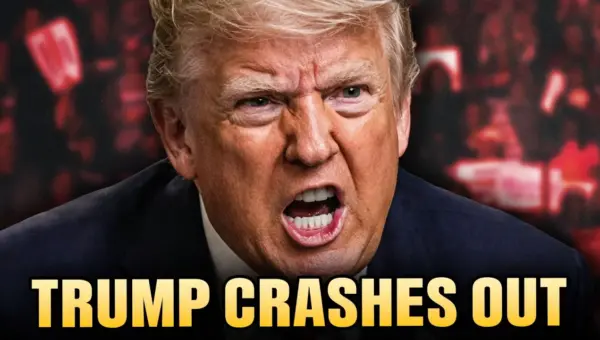
Trump’s Supreme Court Gamble Backfires Spectacularly
Donald Trump's strategy to influence the Supreme Court on birthright citizenship backfired. His personal appearance and subsequent social media comments met with skepticism from justices and legal experts alike. The incident highlights the importance of constitutional precedent and judicial independence.
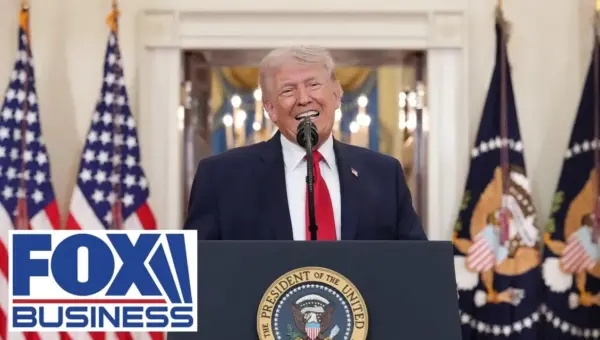
Trump Signals New World Order Amidst Iran Conflict
Former President Donald Trump has signaled a major shift in U.S. foreign policy, questioning NATO's role and proposing a "new world doctrine" that emphasizes self-reliance among allies. This comes as military operations in Iran near completion, but lingering uncertainty is causing market volatility and driving up oil prices.
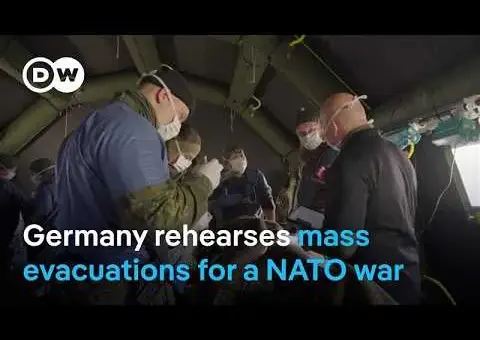
Germany Tests War Readiness: Can It Evacuate 1,000 Wounded NATO Soldiers Daily?
Germany recently held its largest medical exercise in decades, Quadriga 2026, to test its capacity to evacuate up to 1,000 wounded NATO soldiers daily from the alliance's eastern flank. The drill simulated real-world conditions, from battlefield injuries in Lithuania to hospital transfers across Germany, exposing both strengths and critical weaknesses in the nation's war readiness.