Trump Demands Texas Election Cancellation: A Political Power Play?
Donald Trump's demand to cancel the Texas Republican Senate primary elections reveals a deep-seated desire for control and a potential fear of damaging his endorsement record. This unprecedented call challenges electoral norms and raises questions about the future of democratic processes.

Trump Demands Texas Election Cancellation: A Political Power Play?
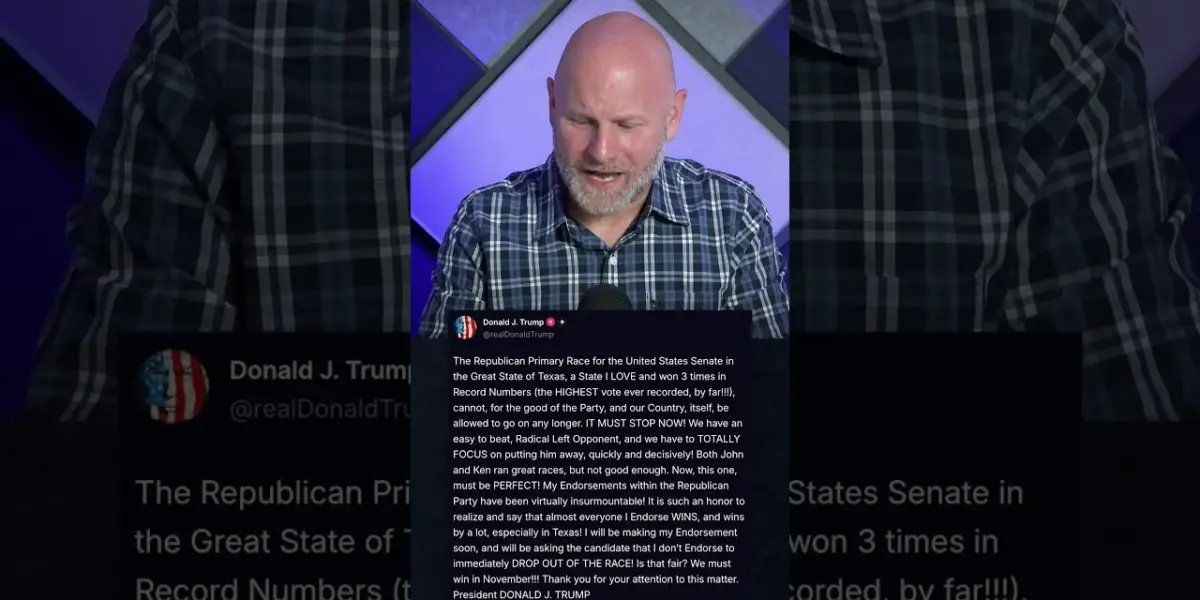
In a recent, fiery pronouncement on his Truth Social platform, former President Donald Trump has waded into the complexities of the Texas Republican Senate primary, issuing a startling demand: the cancellation of the state’s upcoming elections. The catalyst for this extraordinary call appears to be Trump’s dissatisfaction with the primary’s progression to a runoff, a situation that has apparently disrupted his perceived control over the party’s electoral destiny.
Trump’s Grievances and Demands
Trump’s statement, lengthy and laced with his characteristic rhetoric, expressed a clear desire to halt the ongoing Republican primary race in Texas. He argued that for the “good of the party and our country itself,” the election “cannot be allowed to go on any longer. It must stop now.” His rationale centers on the need to consolidate efforts against an “easy to beat radical left opponent” and to focus resources on the general election in November. He acknowledged the efforts of the candidates, John and Ken, but deemed their performance “not good enough.”
A core element of Trump’s demand involves his own endorsement power. He stated his intention to make an endorsement soon and then proceeded to suggest that the candidate he does not endorse should “immediately drop out of the race.” This implies a desire for a swift, pre-determined outcome, bypassing the democratic process of a runoff election. He concluded by emphasizing the necessity to “win in November.”
Questioning Trump’s Endorsement Record
The transcript directly challenges Trump’s assertion of his endorsement’s “insurmountable” success. The analysis presented points to a starkly different reality, suggesting that Trump’s endorsements have, in fact, often led to losses. It’s argued that “most of the candidates that you endorse lose,” citing a track record during his first term where endorsed candidates were “far more likely to lose, were far more likely to be outraised by their Democratic opponents,” with a success rate reportedly around “38 to 40%.” This critique serves to undermine Trump’s authority in dictating electoral outcomes and casts doubt on his motivations for wanting to end the runoff.
Historical Context of Endorsements and Party Control
The dynamic between party leaders, endorsements, and electoral outcomes is not new in American politics. Historically, prominent figures have wielded significant influence through their endorsements, often shaping primary battles and galvanizing party bases. However, the nature of Trump’s influence is unique, often characterized by a direct, almost personal loyalty demanded from candidates and voters alike. His pronouncements are not merely suggestions but are frequently perceived as commands, with significant consequences for those who defy them.
The current situation in Texas, however, highlights a potential friction point. When a primary doesn’t yield a clear, Trump-approved winner, and instead requires a runoff, it prolongs the internal party struggle, potentially weakens the eventual nominee, and complicates Trump’s ability to unilaterally anoint a candidate. His demand to cancel the election and force a dropout is an extreme measure, suggesting a deep-seated concern about losing control over the nomination process and the narrative surrounding his endorsements.
Analyzing the Motivation: Power, Control, and Strategy
Trump’s demand to cancel the Texas elections is multifaceted. On one level, it’s a demonstration of his desire for absolute control over the Republican party apparatus. He sees the Texas Senate race as a crucial battleground, and the runoff as an unnecessary complication that distracts from the ultimate goal: defeating the Democratic opponent. By forcing an immediate resolution, he aims to unify the party behind his chosen candidate (or, more accurately, the candidate he will eventually endorse) and pivot to the general election without further internal discord.
However, the critique within the transcript suggests an alternative interpretation: that Trump’s insistence on ending the race might stem from a fear of further damaging his endorsement record. If his chosen candidate were to lose the runoff, it would be another public blow to his claims of electoral invincibility. By attempting to preemptively end the race, he might be seeking to avoid another potential loss associated with his endorsement.
Furthermore, the timing of his intervention is notable. In a closely divided political landscape, every state and every race is critical. Trump’s focus on Texas, a large and influential state, underscores his continued efforts to shape the Republican party’s future and ensure its success in upcoming elections. His willingness to employ such aggressive tactics—demanding the cancellation of elections—reveals a willingness to push the boundaries of traditional political influence.
Why This Matters
This incident is significant because it raises fundamental questions about democratic processes, party leadership, and the influence of powerful individuals. Trump’s call to cancel an election, even a primary, is an unprecedented challenge to the established norms of electoral politics. It highlights the tension between the will of the voters expressed through the ballot box and the desires of a dominant political figure seeking to control outcomes.
The situation also underscores the ongoing debate within the Republican party about the extent of Trump’s influence and the direction of the party. While many Republicans remain loyal to Trump, others may be increasingly wary of his tactics and their potential to alienate voters or undermine party unity. The outcome of this Texas primary, and Trump’s continued involvement, will offer further insights into these internal party dynamics.
Implications, Trends, and Future Outlook
The implications of Trump’s actions are far-reaching. If successful in pressuring Texas officials or candidates to alter the electoral process, it could set a dangerous precedent for future elections. It normalizes the idea that electoral outcomes can be dictated by external pressure rather than by voter choice. This could embolden other political figures to employ similar tactics, further eroding trust in democratic institutions.
The trend towards personality-driven politics, where loyalty to a specific leader often supersedes adherence to traditional party platforms or processes, is amplified by this event. Trump’s continued ability to command such attention and exert such influence, even after leaving office, speaks volumes about the evolving nature of political leadership and voter engagement in the digital age. His platform, Truth Social, has become a direct conduit for his directives, bypassing traditional media filters and reaching his base instantaneously.
Looking ahead, this incident is likely a preview of the kinds of challenges and controversies that will continue to define American politics. The intersection of social media, direct appeals to a loyal base, and demands for absolute party control will remain a potent force. The ability of democratic institutions to withstand such pressures, and the willingness of voters and party members to uphold electoral integrity, will be critical in determining the future health of the political system.
Conclusion
Donald Trump’s call to cancel the Texas Senate primary elections is more than just a political maneuver; it’s a statement about power, control, and the future of electoral democracy. While framed as a strategic move to ensure a Republican victory in November, it also exposes the vulnerabilities of the electoral process to the demands of influential figures and raises critical questions about the balance between party leadership and the will of the electorate. The response from Texas officials, candidates, and voters will be closely watched, offering a glimpse into the ongoing struggle for the soul of the Republican party and the integrity of democratic elections in America.
Source: Trump threatening to CANCEL Texas elections (YouTube)

Related Articles


UK PM Must Court Trump Despite Party Backlash
British Prime Minister Keir Starmer faces a difficult balancing act, needing to maintain a crucial relationship with the US President despite domestic criticism. Rising global tensions and economic instability add further pressure, complicating the government's agenda and public finances.


GOP Shifts: Record Republicans Back Abolishing ICE
A new poll reveals a majority of Americans, including a record number of Republicans, now support abolishing ICE. The findings highlight widespread public concern over the agency's practices and a growing demand for reform or replacement.


GOP Faces Voter Anger Over Economy Ahead of Trump Rally
House Republicans are meeting amid growing voter anger over the economy, with former President Trump set to address the party. Analysts suggest economic anxieties could benefit Democrats, especially as polls show dissatisfaction with rising costs and market volatility.