Trump Demands Iran’s ‘Unconditional Surrender’ Amid Escalating Regional Conflict
The Middle East faces escalating conflict with intensified fighting and a communications blackout in Iran. Former President Trump has demanded 'unconditional surrender,' as international concern grows over the widening hostilities and significant civilian casualties.

Middle East on Edge as Iran Conflict Intensifies
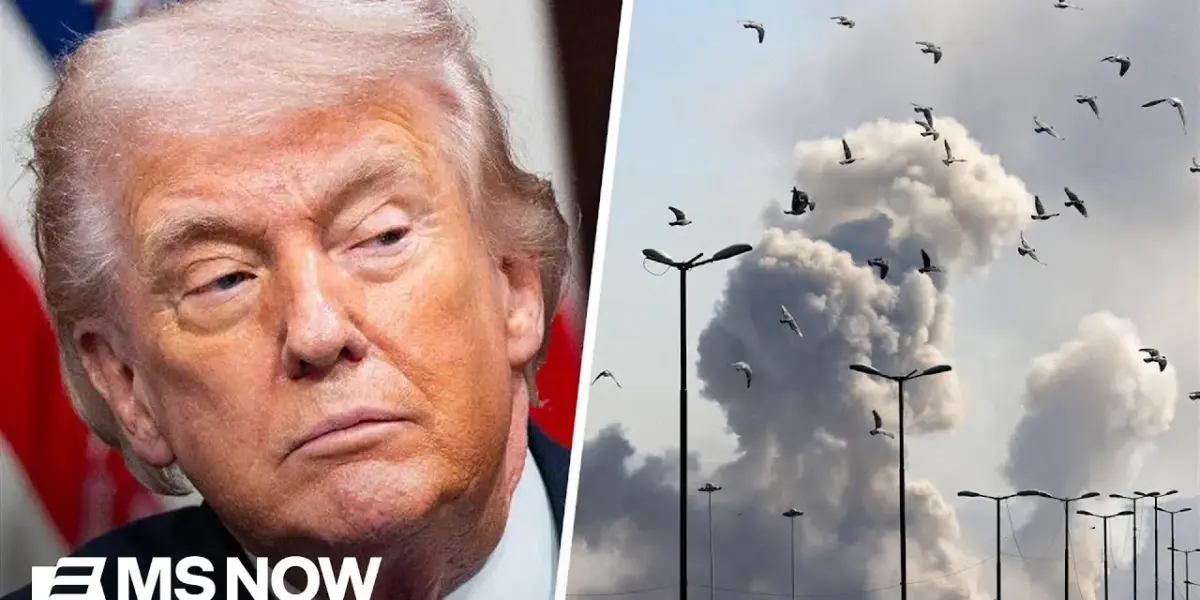
The Middle East is grappling with a rapidly escalating conflict, marked by intensified fighting, a severe communications blackout in Iran, and growing international concern. Amidst the turmoil, former President Donald Trump has issued a stark ultimatum, demanding “unconditional surrender” from Iran, a statement underscoring the high stakes and volatile nature of the ongoing crisis. The region is witnessing a significant surge in military activity, with Iran and its proxies launching attacks, while Israel responds with retaliatory strikes, pushing the conflict into new territories and raising fears of wider conflagration.
Escalating Hostilities and Civilian Impact
Reports from Jerusalem indicate a tense calm in some areas, juxtaposed with ongoing sirens in Tel Aviv, signaling the persistent threat of rocket attacks. Israel has intensified its military operations, striking Hezbollah strongholds in Lebanon, including Beirut and southern Lebanon. These actions have prompted calls for evacuations in affected areas. The human cost of the conflict is mounting, with over 1,300 reported deaths in Iran and UNICEF stating that at least 200 children have been killed across the Middle East since the conflict began. The full extent of casualties within Iran remains difficult to ascertain due to a pervasive communications blackout imposed following the death of President Ebrahim Raisi.
Internal Dynamics and Opposition Mobilization
The internal situation in Tehran is shrouded in uncertainty, with significant questions arising about the future leadership of Iran. Both former President Trump and Israeli officials have encouraged the Iranian people to seize the current moment. While the organization and scope of the opposition within Iran are unclear, reports suggest that resistance units have been active. A spokesperson for the National Council of Resistance of Iran claimed that their units have been targeting IRGC district command centers, setting them ablaze. However, the extent of support for such groups and the current regime’s stability remain subjects of intense speculation. The government’s suppression tactics, including a heavy police presence on street corners and warnings against protests, further complicate the situation for citizens seeking to express dissent.
Internationalization of the Conflict and Strategic Concerns
The conflict’s potential to draw in other nations is a growing concern. European powers are bolstering their military presence in the region, with France deploying a nuclear aircraft carrier and jets, and Britain also sending aircraft. Both nations have offered their bases to the U.S. for operations, a move that raises worries about these locations becoming targets. A specific incident involving an Iranian warship torpedoed by a U.S. submarine, which had three Australian nationals on board, has heightened tensions. The presence of Australians has sparked fears of their potential involvement or becoming targets themselves, adding another layer of complexity to the already volatile geopolitical landscape.
Dubai’s Response to Aerial Attacks and Evacuations
In the United Arab Emirates, particularly Dubai, authorities are bracing for continued aerial assaults. Despite launching over 1,000 missiles and drones at the UAE, the nation has seen its air defense systems intercept the majority. The situation at Dubai’s airport, a major international hub, has been chaotic, with many travelers stranded at the onset of the conflict. Emirates, the national airline, has made significant progress in evacuating passengers, moving approximately 30,000 people and aiming to restore 60% of its schedule. Over 1,100 flights have departed Dubai in recent days. The logistical challenges are immense, with flight paths being rerouted significantly westward and southward to ensure safety. Despite these efforts, the situation remains unpredictable, as evidenced by a recent flight experiencing missile alerts upon approach to Dubai, requiring inbound traffic to hold patterns while the UAE Air Force neutralized the threat.
U.S. Military Readiness and Financial Strain
Retired Marine Colonel Mark Cancian highlighted concerns regarding U.S. military readiness, particularly the limited inventories of critical air defense munitions like the Patriot and THAAD systems. While the U.S. can rely on allies like Israel and Gulf nations for support, there is a risk of depleting U.S. stockpiles to a point that creates vulnerabilities elsewhere, especially in the context of potential conflict with China. The financial cost of the war is also substantial. An analysis indicated that the first four days of the conflict cost approximately $3.7 billion, largely due to the use of expensive long-range ground attack missiles. Although transitioning to less costly short-range munitions due to air superiority helps, the overall expense is expected to be significant, necessitating further funding requests from Congress.
Investigating a Tragic School Attack
Investigative reporter Nilou Tabrizi shed light on a deeply concerning incident involving a girls’ school that reportedly suffered a missile attack or bombing, resulting in a death toll potentially exceeding 150. The Pentagon is investigating the event, which occurred on the first day of airstrikes. While misinformation circulates, satellite imagery and expert analysis suggest precision strikes rather than an errant missile. The severe damage observed and the presence of bright murals on the school, visible even eight years prior, indicate it was clearly identifiable as a civilian educational facility. This raises serious questions about mistargeting and the responsibility to thoroughly investigate such egregious attacks, especially given its proximity to a former Revolutionary Guard Navy base.
Looking Ahead
As the conflict continues to unfold, international attention will remain fixed on diplomatic efforts to de-escalate tensions, the humanitarian impact on civilians, and the potential for further internationalization. The ability of Iran’s internal opposition to mobilize effectively amidst severe repression, and the long-term implications of the U.S.’s military expenditures and readiness, will also be critical factors to monitor in the coming weeks and months.
Source: Trump: No Iran deal except 'unconditional surrender' (YouTube)

Related Articles


Russia Blames US for Ukraine Peace Talk Failure
Russia is reportedly using Middle East conflicts to deflect blame for potential Ukraine peace talk failures, according to the Institute for the Study of War. Meanwhile, Ukraine is assisting the U.S. with drone defense, and controversy has arisen over the misrepresentation of Ukrainian drone technology on U.S. television.

Trump’s War Sparks Public Outrage, Questions Nation’s Strength
President Trump's initiation of a war with Iran, lacking public support, has sparked widespread concern and damaged national morale. Critics argue the conflict is weakening the U.S. and is driven by a performative display of strength rather than strategic necessity.


Iran War: Regime Change, Not Nukes, Fuels US Conflict
The stated reason for the U.S. war with Iran centers on nuclear threats, but a deeper analysis of recent history and strategic shifts suggests regime change is the primary, unstated objective. This distinction has profound implications for the conflict's duration and global impact.