Trump Defies Supreme Court Tariff Ruling, Vows New Duties Amidst Escalating UAP Disclosure Push
Former President Donald Trump has vowed to impose new global tariffs using a separate authority, defying a Supreme Court ruling that asserted Congress holds the power over such duties. Simultaneously, a bipartisan congressional effort, spearheaded by figures like Congressman Jared Moskowitz, is intensifying its push for government transparency regarding Unidentified Aerial Phenomena (UAPs), alleging the government is withholding crucial information from the American public.

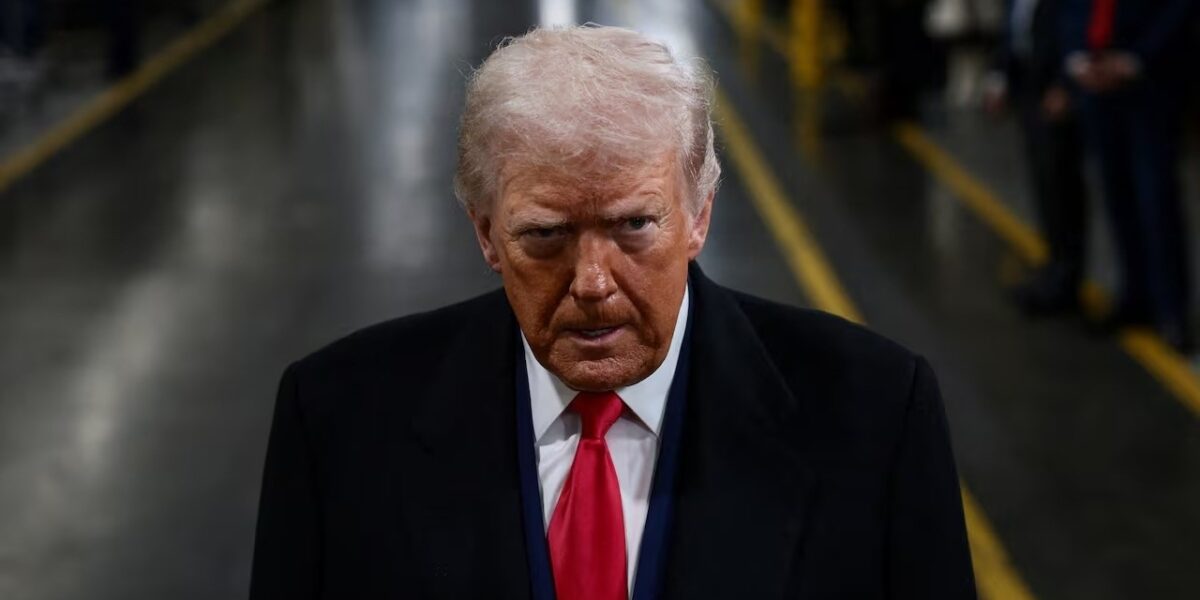
Supreme Court Rejects Trump’s Tariff Authority, President Vows to Double Down
In a significant legal setback, the Supreme Court delivered a 6-3 ruling against former President Donald Trump, asserting that the authority to impose tariffs rests with Congress, not the executive branch. The decision, a reaffirmation of Article One of the Constitution, quickly prompted a defiant response from Trump, who, in an emergency press conference, declared his intention to implement a new 10% global tariff using a separate statutory authority.
A Major Legal Setback and Defiant Response
The Supreme Court’s ruling underscored a fundamental principle of American governance: the power to tax and regulate commerce is explicitly granted to the legislative branch. This constitutional division of powers was at the heart of the dispute, with the Court clarifying that a president cannot unilaterally impose broad tariffs without congressional approval. For critics of Trump’s trade policies, the decision was a vindication of constitutional checks and balances, limiting what they perceived as an overreach of executive power.
However, the former president, known for his confrontational style, quickly dismissed the ruling’s implications. Instead of conceding, he announced plans to impose a fresh round of 10% global tariffs, this time citing Section 122 of the Trade Act of 1974. Congressman Jared Moskowitz, speaking on the matter, noted that while Section 122 could grant the president temporary authority for 150 days, any extension beyond that period would still necessitate congressional approval. This immediate pivot suggests a strategy to circumvent the Supreme Court’s decision, potentially setting the stage for further legal challenges and political battles over trade policy.
Unpopular Policies and Republican Dilemma
The tariffs previously imposed by the Trump administration have been widely unpopular with a significant segment of the American public and various industries. Critics argue that these duties raise the cost of imported goods, from everyday items like toys, food, and sneakers to various types of clothing, ultimately burdening American consumers and contributing to inflation. Congressman Moskowitz highlighted this impact, stating, "It raised the prices on the American people, period." He further contended that far from easing inflation, the tariffs exacerbated the situation, making goods more unaffordable for many households.
The Supreme Court’s decision, in this context, initially appeared to offer a political "gift" to Republicans. It provided them an opportunity to distance themselves from unpopular trade policies without directly confronting Trump, as the tariffs were now deemed unconstitutional. However, this reprieve was short-lived. Trump’s immediate declaration of new tariffs snatched away that political escape route, forcing Republicans to once again grapple with supporting a policy that many find economically detrimental in an election year. Moskowitz challenged the former president, asking, "Why not bring it to Congress?" He questioned Trump’s assertion of Republican unity if he was unwilling to put his tariff proposals to a vote in the legislative branch, where Speaker Mike Johnson would likely facilitate such a vote given his past deference to Trump.
Attacking the Justices: A Pattern of Disregard?
Adding another layer of controversy to his response, Trump used his press conference to rail against the Supreme Court justices who ruled against him. This criticism raised eyebrows, particularly given that the same Court has, in other instances, issued rulings perceived as favorable to him, such as those concerning presidential immunity from criminal acts or the applicability of the 14th Amendment’s Section 3 regarding insurrection. The perceived inconsistency in his reactions – praising the Court when it rules in his favor and attacking it when it doesn’t – underscores a transactional approach to legal institutions.
Moskowitz remarked on Trump’s characteristically defiant stance, sarcastically noting, "What have you done for me lately, Brian? You may have given me immunity, but you took away my tariff authority." This sentiment reflects a broader concern about the former president’s respect for judicial independence and the rule of law, suggesting that loyalty, in his view, is a one-way street, demanded from others but not necessarily reciprocated.
From Tariffs to "Aliens": Congressional Push for UAP Transparency Gains Momentum
In a surprising shift during the discussion, the conversation veered sharply from constitutional law and trade policy to the enigmatic world of Unidentified Aerial Phenomena (UAPs) and the ongoing push for government transparency.
An Unexpected Turn: Obama, Trump, and UAP Buzz
The catalyst for this unexpected detour was a recent public comment by former President Barack Obama regarding "aliens," which subsequently prompted Donald Trump to declare his intention to "declassify" information on the subject. This exchange, which many viewed as a diversion, quickly captured public attention, with some speculating it was a deliberate attempt to distract from other pressing issues, such as the release of the Epstein files.
Congressman Moskowitz’s Involvement and Belief in Government Secrecy
Congressman Moskowitz revealed his deep involvement in the UAP disclosure movement, having participated in the UAP task force and numerous congressional oversight hearings. His conviction on the matter is unequivocal: "I do believe that the American government is lying to the American people about these UAPs." He specifically referenced the All-domain Anomaly Resolution Office (AARO), suggesting that it possesses information that is not being shared with the public. This belief in government secrecy fuels a bipartisan effort in Congress to compel greater transparency.
Evidence and Eyewitness Accounts
Moskowitz elaborated on the nature of the evidence, confirming the existence of "plenty of video evidence" and "documentary evidence." However, he emphasized that the critical questions revolve around the origin and nature of these phenomena: "Are they ours? Are they adversaries? Are they private companies? Is it technology that was found here that we’ve reverse-engineered?"
Crucially, he highlighted the credibility of the witnesses. Unlike the stereotypical "conspiracy theorists" of the past, current testimonies come from "decorated military people with stellar records," former pilots, high-ranking military officials, and physicists. These individuals, often graduates of prestigious military institutions, recount firsthand experiences of objects defying known physics and exhibiting capabilities far beyond current human understanding. "I saw it. It defied gravity. It didn’t move in ways that we can possibly understand," Moskowitz quoted from their testimonies, underscoring the shift in the discourse from fringe theories to serious national security and scientific inquiry.
Global Programs and Funding Obscurity
The congressman further disclosed intriguing claims about international involvement, stating there is "evidence that the Russians, the Chinese, and the Americans all have crash retrieval programs" dating back decades. He referenced figures like David Grusch, who has publicly discussed such programs, and individuals involved in the "Disclosure" movie, many of whom are decorated professionals bound by non-disclosure agreements. While acknowledging he couldn’t personally confirm claims of "biologics," he maintained that the U.S. government is withholding significant information about UAPs.
A particularly concerning aspect Moskowitz raised was the funding mechanism for these undisclosed programs. He suggested that the Pentagon, which has historically struggled with audits, might be "overcharging for certain programs and misappropriating those funds" to secretly finance UAP-related initiatives. This circumvention of congressional oversight mirrors historical precedents, such as the stealth helicopters used in the Osama bin Laden raid, which emerged from Area 51 without public knowledge or specific congressional appropriation, only becoming known after one crashed.
Congressional Barriers and Bipartisan Calls for Action
The struggle for transparency is compounded by active resistance from within the government. Moskowitz stated that the executive branch has "kept it from us" and actively tried to stop congressional efforts to include disclosure language in bills. He cited the difficulties faced by prominent figures like Harry Reid, Chuck Schumer, and Marco Rubio in their attempts to mandate greater openness, questioning, "If there’s nothing there, why are people from the government trying to stop the language?"
Despite these obstacles, a bipartisan coalition in Congress is intensifying its efforts. Moskowitz anticipates a press conference this week where members from both sides of the aisle will unite to demand more disclosure. Their objective is to transform the president’s recent rhetoric into concrete action, compelling the Pentagon and other defense departments to release withheld documents to the American people. This sustained push highlights a growing consensus that the public has a right to know about these phenomena, irrespective of their origin.
The intertwining narratives of presidential power, constitutional limits, and the quest for government transparency – whether concerning tariffs or UAPs – paint a vivid picture of contemporary political struggles. Both demonstrate the ongoing tension between executive authority and legislative oversight, and the persistent public demand for accountability and unvarnished truth.
Source: Trump hit with BAD NEWS after Supreme Court loss (YouTube)

Related Articles
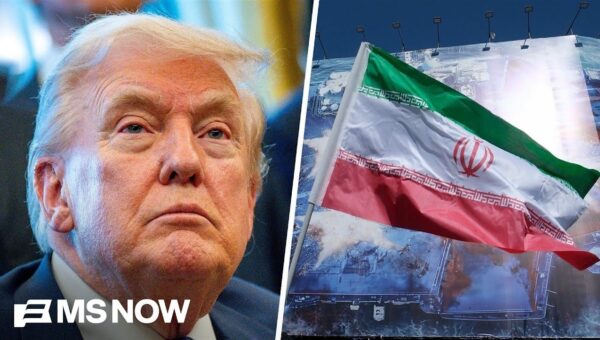
Trump Open to Iran Talks After Attacks, Shifts on Regime Change
President Trump has agreed to negotiate with Iran's new leadership following recent U.S. and Israeli attacks, signaling a potential shift from his regime change objective. The move has drawn scrutiny from former officials who question the strategic coherence of U.S. policy.
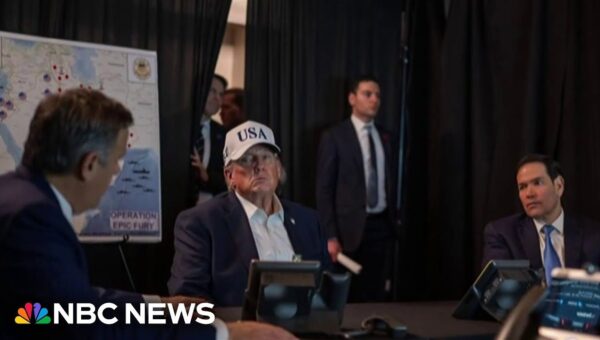
Trump: Iran Strikes Ahead of Schedule, Expects ‘Great Deal for World’
Three U.S. service members have been killed amid escalating conflict with Iran, President Trump confirmed. He stated that strikes are ahead of schedule, with senior Iranian leaders killed, and expressed optimism for a "great deal for the world" despite ongoing talks with Iranian officials.
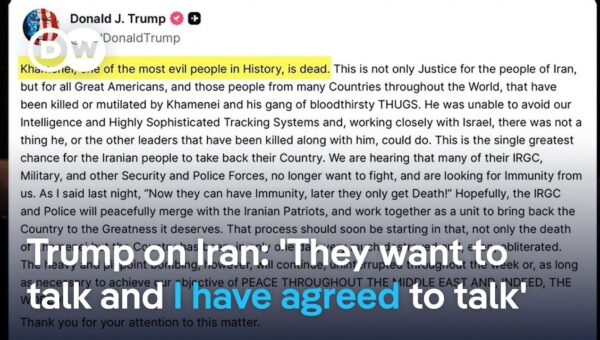
Trump Agrees to Talks with Iran After Major Strikes
President Donald Trump has agreed to talks with Iran's leadership following coordinated strikes that reportedly killed key figures, including the Supreme Leader. While Trump claims significant military successes, U.S. strategy remains unclear, and public opinion shows limited support for the actions amid rising American casualties.