Trump Defies Supreme Court Tariff Ruling, Escalating Economic and Political Tensions
Former President Donald J. Trump has publicly defied a Supreme Court ruling that struck down his tariffs as unconstitutional, announcing an immediate increase from 10% to 15% worldwide. This move, seen as retribution against the judiciary, escalates trade tensions and is projected by economists like Goldman Sachs and the Federal Reserve to primarily burden American consumers through higher prices and increased inflation.

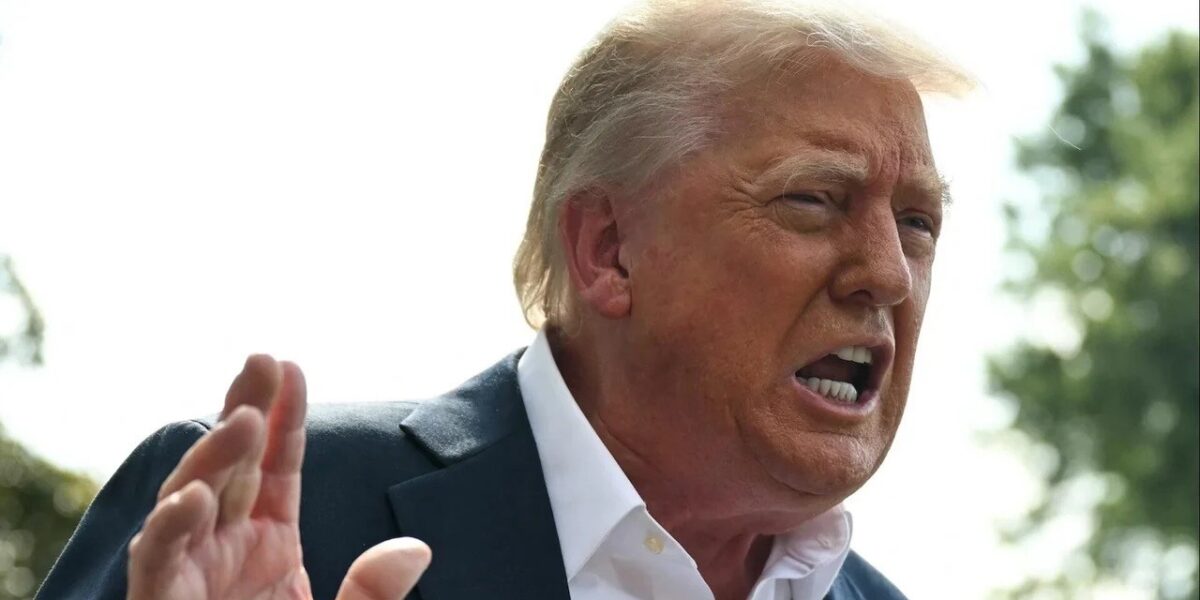
Trump Defies Supreme Court Tariff Ruling, Escalating Economic and Political Tensions
In a move that has sent ripples through Washington and raised alarms among economists, former President Donald J. Trump has publicly defied a recent Supreme Court decision striking down his previously imposed tariffs. Following the Court’s ruling that his use of specific authority for tariffs was unconstitutional and that such power rests with Congress, Trump announced an immediate increase in global tariffs, escalating a contentious trade policy that experts warn will primarily burden American consumers.
The former president’s announcement, characterized by critics as a “temper tantrum” and a direct act of retribution against the judiciary, signals a renewed commitment to a protectionist trade agenda. His declaration to raise tariffs from 10% to 15% worldwide, effective immediately, bypasses legislative channels and sets the stage for further clashes over the separation of powers and the economic well-being of the nation.
The Supreme Court’s Stance and Trump’s Defiance
The controversy stems from a Supreme Court decision that found Trump’s imposition of tariffs under a particular authority, referred to as AIPA in the transcript, to be unconstitutional. The Court clarified that the power to levy such tariffs belongs to the U.S. Congress, not the executive branch. This ruling underscored a fundamental principle of American governance: the legislative branch’s constitutional authority to regulate commerce.
However, rather than accepting the judicial check on his executive power, Trump responded with a strong statement, doubling down on his tariff policy. He declared:
“Please let this statement serve to represent that I, as president of the United States of America, will be effective immediately raising the 10% worldwide tariff on countries, many of which have been ripping the US off for decades, without retribution until I came along, to the fully allowed and legally tested 15% level. During the next short number of months, the Trump administration will determine and issue the new and legally permissible tariffs, which will continue our extraordinarily successful process of making America great again, greater than ever before. Thank you for your attention to this matter, President Donald J. Trump.”
This statement, issued via his social media platform, signals an intention to find an alternative legal basis to impose tariffs, effectively circumventing the Supreme Court’s judgment. Critics argue this maneuver is less about national interest and more about a personal vendetta against an institution that, despite perceived past deference, dared to challenge his authority.
Tariffs: A Tax on American Consumers
A central point of contention and concern among economists is the fundamental nature of tariffs. While often presented as a measure to make foreign countries pay, experts widely agree that tariffs are, in practice, a tax borne by domestic consumers and businesses.
“The US government cannot force other countries to pay taxes,” explains a critical analysis. “So they impose tariffs on foreign countries, but those tariffs are actually paid by companies that import goods. And those companies aren’t going to simply eat the costs. And so instead, they pass those higher costs on to consumers, which is why prices are rising.”
Research consistently supports this view. A recent analysis by global investment firm Goldman Sachs, cited by Harvard Business School, found that U.S. consumers bear the overwhelming economic burden of tariffs. By the end of this year, consumers are projected to absorb 55% of tariff costs, with American businesses absorbing 22% and foreign exporters only 18%. A mere 5% would be evaded. Looking ahead, Goldman Sachs projected that by the end of next year, consumers could be paying as much as 70% of the cost.
Exacerbating Inflation and Economic Strain
Beyond direct consumer costs, tariffs have a measurable impact on broader economic indicators, particularly inflation. This is a crucial point, as rising prices have been a significant concern for American households and a key political issue.
A report from the Federal Reserve Bank of St. Louis highlighted that tariffs were already “exerting measurable upward pressure on consumer prices, particularly on durable goods.” The Federal Reserve’s Beige Book, which summarizes economic outlooks across all 12 Federal Reserve districts, echoed these concerns about inflation in its October report. Further analysis by the Budget Lab at Yale University and the Peterson Institute for International Economics reinforced these findings, concluding that tariffs have an inflationary impact. The Peterson Institute added a stark warning: if tariffs remain in place over the coming decade, they would result in “less US economic output, higher US prices, and lower American wages than if they had not been adopted.”
These economic projections directly contradict the former president’s assertion that tariffs contribute to “making America great again,” suggesting instead a pathway to increased financial strain for average Americans and a potential drag on economic growth.
A Pattern of Personal Battles and Discarded Allies
Critics view Trump’s response as characteristic of a leadership style that prioritizes personal victory and ego over institutional norms or even the welfare of his own political allies. The transcript suggests a “two-day meltdown” over the Supreme Court’s decision, despite the institution’s perceived history of rulings favorable to Trump.
The article notes the irony of Trump’s anger at a Supreme Court that, in the eyes of some observers, has “bent over backwards for Trump for years,” citing controversial decisions or interpretations related to presidential immunity, the 14th Amendment’s insurrection clause, and even the involvement of Justice Clarence Thomas’s wife in efforts to overturn the 2020 election results. “Even despite destroying their reputation in blind deference to Trump, it’s clearly not enough,” the analysis suggests, emphasizing a demand for “total 100% fealty” in “Trump world.”
This behavior is framed within a broader pattern of discarding individuals and institutions once they lose their “usefulness” or fail to demonstrate absolute loyalty. The transcript lists former associates and political figures such as Michael Cohen, George Papadopoulos, Rex Tillerson, Mike Pence, and others, as examples of those summarily dismissed by Trump.
The Republican Quandary: A ‘Gift’ Rejected
The former president’s defiance has placed the Republican Party in an unenviable position, particularly in an election year. Congressman Jared Moskowitz, speaking on the issue, highlighted the political tightrope Republicans must walk.
“One thing that I thought was particularly funny about all of this was obviously these tariffs are super unpopular and not to mention unconstitutional, but they’re unpopular,” Moskowitz observed. He argued that the Supreme Court’s ruling was, in effect, a “massive gift” to Republicans. It offered them a legitimate “out” from having to publicly defend unpopular tariffs and explain their economic impact to constituents facing rising prices, without directly incurring Trump’s wrath.
However, Trump’s immediate decision to double down and seek alternative means to impose tariffs nullified this political reprieve. “He gave them the Supreme Court gave these Republicans a gift that lasted all of five minutes before Trump said, ‘No, no, I’m going to go out and figure out some other way to impose these tariffs,'” Moskowitz stated. He lamented the resulting “more chaos, more uncertainty” for businesses and consumers.
Moskowitz challenged Trump to bring the tariff issue to Congress, as the Supreme Court’s ruling effectively directed. “Why not bring it to Congress? The Supreme Court says bring it to Congress,” he questioned. He noted that if Trump truly believes in Republican unity behind his policies, a congressional vote would be the appropriate test, allowing elected representatives to vote on a policy that directly impacts American households.
The dynamic underscores the ongoing challenge for Republican leadership. House Speaker Mike Johnson, for instance, has demonstrated a willingness to align with Trump’s agenda. If Trump were to demand a vote on tariffs, it is plausible that the Speaker would facilitate it, potentially forcing many Republicans to take a difficult public stance on a policy widely seen as detrimental to their constituents’ pocketbooks.
The Broader Implications for Governance
This latest episode transcends mere trade policy; it touches upon fundamental questions of governance, the rule of law, and the balance of power in American democracy. Trump’s willingness to openly challenge a Supreme Court ruling and seek alternative routes to implement policies deemed unconstitutional raises concerns about executive overreach and a disregard for established legal frameworks.
The escalating tariff dispute highlights a political environment where personal will can seemingly override institutional checks and balances. As the nation approaches a critical election cycle, the economic consequences of such policies, coupled with their impact on governmental norms, will undoubtedly remain at the forefront of public debate.
Ultimately, the analysis concludes that Trump’s actions are driven by a personal imperative: “making sure he wins for the sake of winning.” This approach, it argues, means that the potential for higher costs for everyday goods and an “expensive and unpopular consumption tax” on Americans are secondary to the protection of Donald J. Trump’s ego. The long-term implications for the U.S. economy and its constitutional framework remain a significant concern.
Source: Trump SNAPS in UNHINGED weekend announcement (YouTube)

Related Articles
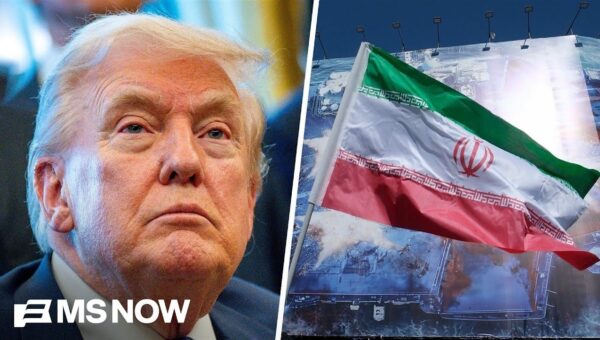
Trump Open to Iran Talks After Attacks, Shifts on Regime Change
President Trump has agreed to negotiate with Iran's new leadership following recent U.S. and Israeli attacks, signaling a potential shift from his regime change objective. The move has drawn scrutiny from former officials who question the strategic coherence of U.S. policy.

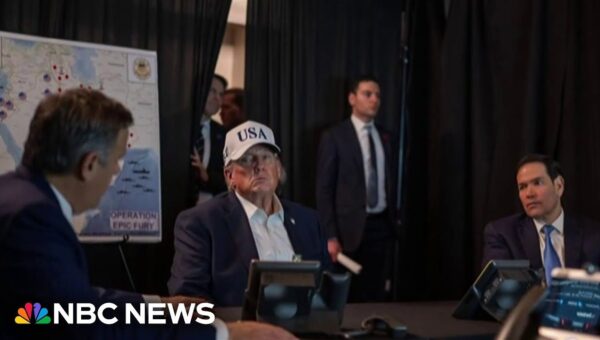
Trump: Iran Strikes Ahead of Schedule, Expects ‘Great Deal for World’
Three U.S. service members have been killed amid escalating conflict with Iran, President Trump confirmed. He stated that strikes are ahead of schedule, with senior Iranian leaders killed, and expressed optimism for a "great deal for the world" despite ongoing talks with Iranian officials.
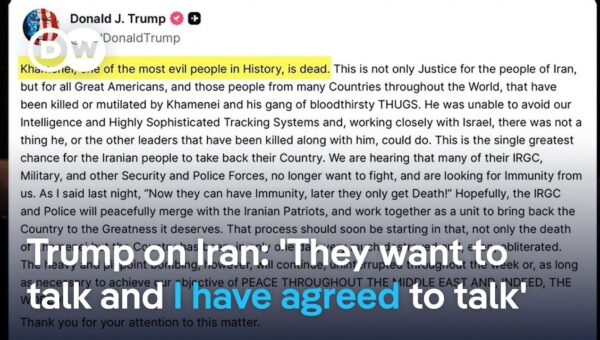
Trump Agrees to Talks with Iran After Major Strikes
President Donald Trump has agreed to talks with Iran's leadership following coordinated strikes that reportedly killed key figures, including the Supreme Leader. While Trump claims significant military successes, U.S. strategy remains unclear, and public opinion shows limited support for the actions amid rising American casualties.