Trump Declares ‘War’ on Supreme Court After Tariff Ruling, Igniting Constitutional Firestorm
Former President Donald Trump has launched a scathing attack on the Supreme Court following a ruling that struck down his tariffs, accusing justices of lacking courage and using rhetoric likened to his January 6th pronouncements. This unprecedented assault on the judiciary, including his own appointees, raises alarms about constitutional checks and balances and the erosion of respect for democratic institutions.

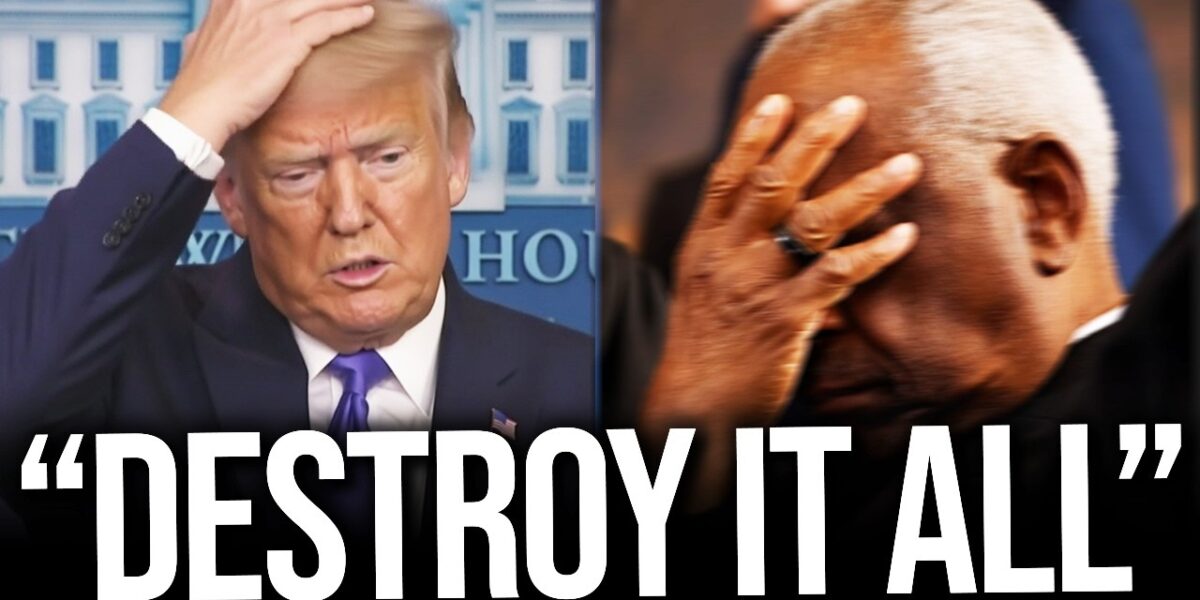
Trump Declares ‘War’ on Supreme Court After Tariff Ruling, Igniting Constitutional Firestorm
In a stunning rebuke of the nation’s highest judicial body, former President Donald J. Trump has launched an unprecedented verbal assault on the Supreme Court, expressing profound disappointment and ‘shame’ following a ruling that struck down his administration’s widespread tariffs. The former commander-in-chief, who appointed three of the nine justices currently serving, accused members of the court of lacking the ‘courage to do what’s right for our country,’ escalating concerns about the erosion of institutional respect and the delicate balance of power within American democracy.
The fiery rhetoric, which critics have likened to his pronouncements leading up to the January 6th Capitol riot, underscores a dangerous pattern of undermining established governmental checks and balances when decisions do not align with his political agenda. The former president’s response has not only reopened debates about executive authority in trade policy but also raised alarms about the potential for further destabilization of democratic norms.
A Direct Challenge to Judicial Authority and Appointees
The genesis of Trump’s latest broadside lies in the Supreme Court’s decision to invalidate a series of tariffs imposed during his presidency. These tariffs, which critics argued functioned as taxes on American consumers and businesses, were a cornerstone of his ‘America First’ trade policy. Trump’s reaction was immediate and visceral. He declared himself "absolutely ashamed" of certain justices, particularly those he appointed, for their perceived lack of "courage."
This sentiment echoes his past criticism of former Vice President Mike Pence, whom he similarly accused of lacking courage for not overturning the 2020 election results on January 6th. The parallel drawn by observers highlights a consistent pattern in Trump’s political playbook: to attack and delegitimize any institution or individual, even his own appointees, who do not adhere to his demands or interpretations of power.
The implications of a former president, especially one who appointed a significant portion of the court, directly attacking the judiciary are profound. It risks eroding public trust in the impartiality and independence of the judicial branch, a cornerstone of a functioning democracy. When a president, or former president, labels judges as "political" or "disgraceful" for rulings he dislikes, it fosters an environment where judicial decisions are viewed through a partisan lens rather than as interpretations of law and constitution.
The Constitutional Bedrock: Congress’s Power to Tax
At the heart of the Supreme Court’s ruling, and Trump’s subsequent outrage, lies a fundamental principle of American constitutional law: the power to tax. Article I, Section 8, Clause 1 of the U.S. Constitution explicitly grants Congress the power "To lay and collect Taxes, Duties, Imposts and Excises." Tariffs, by definition, are duties or taxes levied on imported goods, making them squarely within the legislative purview.
This division of power is not arbitrary; it is a deliberate design by the nation’s founders to prevent the concentration of authority in any single branch of government. By vesting the power to tax and regulate commerce primarily in Congress, the framers ensured that such significant economic decisions would be subject to the deliberative process of elected representatives, accountable to the people, rather than the unilateral decree of an executive.
The Supreme Court, in its role as the ultimate interpreter of the Constitution, reaffirmed this foundational principle. Its decision underscored that while the President possesses significant authority in foreign policy and trade negotiations, this authority is not boundless and must operate within the constitutional framework established for taxation and commerce.
Justice Gorsuch’s Affirmation of Legislative Process
Even before the full implications of the ruling were widely discussed, Justice Neil Gorsuch, one of Trump’s own appointees, offered a succinct and powerful summary of the constitutional rationale. "For those who think it is important for the nation to impose more tariffs, I understand that today’s decision will be disappointing," Gorsuch wrote, in a statement widely quoted and praised for its clarity. "All I can offer them is that most major decisions affecting the rights and responsibilities of the American people are funneled through the legislative process for a reason."
Gorsuch’s statement is a testament to the principle of judicial independence, demonstrating that justices, once appointed, are bound by the Constitution and legal precedent, not the political whims of their appointing president. He emphasized that "legislating can be hard and take time" and that "it is tempting to bypass Congress when some pressing problems arise." However, he firmly concluded that "the deliberative nature of the legislative process is the whole point of its design. Through that process, the nation can tap into the combined wisdom of the people’s elected representatives, not just that of one faction or man."
This articulation serves as a crucial civics lesson, reminding all branches of government and the public of the wisdom inherent in the separation of powers. It highlights that the "hardness" and "time" involved in legislative debate are not inefficiencies but essential safeguards against arbitrary rule and the potential for a single individual to dictate national policy without broad representation and consensus.
The "Destroy the Country" Paradox: A President’s Unchecked Ambition?
Perhaps the most alarming statement from Donald Trump in the wake of the ruling was his assertion: "I am allowed to destroy the country, but I can’t charge a fee." He elaborated, claiming, "I can embargo. I can do anything I want, but I can’t charge $1 because that…" This statement, made in apparent frustration, suggests a profound misunderstanding or deliberate disregard for the limits of presidential power. The idea that a president is constitutionally permitted to "destroy the country" through trade actions, but not to impose a minor fee, is a dangerous distortion of executive authority.
The presidency, while powerful, is not a license for unconstrained action. Every presidential power is enumerated or implied within the Constitution and subject to checks and balances from Congress and the judiciary. The ability to declare war, for instance, is vested in Congress, not the President. The power to negotiate treaties requires Senate consent. The power to issue executive orders is limited by existing law and constitutional principles.
Trump’s rhetoric, suggesting a right to "destroy the country" in the absence of specific economic leverage, reveals a troubling willingness to test the boundaries of executive power and a potential disregard for the welfare of the nation’s economy and citizens in pursuit of a specific policy outcome. Such statements, particularly from a former head of state, can foster a dangerous perception of executive omnipotence, undermining the very concept of limited government.
The New Tariff Gambit: Section 122 of the Trade Act of 1974
Undeterred by the Supreme Court’s ruling, Trump immediately pivoted, announcing his intention to impose a new 10% global tariff using a different legal authority: Section 122 of the Trade Act of 1974. This move signals a continued commitment to an aggressive tariff strategy, despite judicial and economic setbacks.
Section 122 is a lesser-known and rarely invoked provision. It allows the President to issue temporary tariffs to address "large and serious United States balance of payments deficits or other situations that present fundamental international payment problems." Its historical context traces back to President Richard Nixon, who in 1971 imposed a 10% global tariff to address a financial balance crisis, effectively ending the convertibility of the U.S. dollar to gold.
The application of Section 122 by a future Trump administration would represent a significant and potentially controversial expansion of presidential trade authority. Legal scholars and trade experts have noted that the provision has "never been used before" in the specific manner Trump intends, and its interpretation by courts remains "unclear." The ambiguity surrounding its scope and limits could lead to another protracted legal battle, further entangling trade policy in judicial review.
Moreover, the economic efficacy of such tariffs remains a subject of intense debate. While Trump’s previous tariffs were intended to address trade deficits, studies have shown that they often resulted in increased costs for American consumers and businesses, and in some cases, even worsened trade imbalances. The unilateral imposition of broad tariffs can trigger retaliatory measures from other countries, leading to trade wars that harm global economic stability and domestic industries.
Congressional Pushback and the Defense of Legislative Prerogative
Republican Representative Don Bacon, appearing on CNN, underscored the importance of congressional authority in the wake of the Supreme Court’s ruling. "Having this ruling now that so clearly puts the power back in Congress’s hands, the House’s hands, we have to stand up on our own two feet and use these authorities because that’s what the founders intended," Bacon stated. His comments reflect a bipartisan constitutional imperative for Congress to assert its role in trade policy.
Bacon’s concern was amplified by Trump’s announcement of a new 10% global tariff. "Hearing the president just now say he was going to do a 10% global tariff and he was going to try to use other authorities for tariffs means that we got to keep voting on this and having the majority position heard," he asserted. This highlights the ongoing tension between executive ambition and legislative oversight. Congress, even when controlled by the same party as the President, has a constitutional duty to legislate, not merely rubber-stamp executive actions.
The historical context of trade policy in the U.S. demonstrates a long-standing pattern of Congress delegating specific, often time-limited, authorities to the President. However, these delegations are not absolute and are typically accompanied by mechanisms for congressional oversight and potential revocation. Trump’s persistent attempts to bypass or reinterpret these established processes force Congress to re-evaluate the scope and limits of presidential trade powers.
Rhetoric and the Erosion of Democratic Institutions
Beyond the legal and economic arguments, Trump’s attack on the Supreme Court carries significant implications for the health of American democracy. His labeling of judicial dissent as "insurrection" and his dismissive attitude towards the justices, including his "barely invited" comment regarding their attendance at a State of the Union, are not merely political jabs; they are direct assaults on the legitimacy of a co-equal branch of government.
The term "insurrection" has taken on a particularly charged meaning in American political discourse since January 6th. To apply it to a Supreme Court ruling, which is the very embodiment of the rule of law and the peaceful resolution of constitutional disputes, is to fundamentally distort its meaning and weaponize it against legitimate institutional functions. Such rhetoric risks normalizing contempt for the judiciary and encouraging a view that legal decisions are merely partisan acts, rather than principled interpretations.
Furthermore, Trump’s blanket condemnation of "Democrats on the court" as "a disgrace to our nation" and "automatic no" votes, regardless of the merits of a case, undermines the ideal of an impartial judiciary. While justices may have ideological leanings, the expectation is that they adjudicate cases based on law, not partisan allegiance. To suggest otherwise is to sow deep distrust in the judicial process itself.
This pattern of attacking institutions that challenge his authority – be it the electoral system, the Department of Justice, or the judiciary – represents a dangerous trend. It weakens the checks and balances designed to prevent authoritarian tendencies and encourages a political culture where loyalty to a single figure supersedes loyalty to the Constitution and its foundational principles. The long-term consequence could be a public that loses faith in the fairness and integrity of its own governmental structures, making the nation more vulnerable to instability.
Conclusion: A Test of Institutional Resilience
The former President’s declaration of "war" on the Supreme Court after the tariff ruling is more than a policy disagreement; it is a profound challenge to the constitutional order and the resilience of America’s democratic institutions. It forces a critical examination of the separation of powers, the role of judicial independence, and the boundaries of executive authority, particularly in the realm of trade policy.
As the nation navigates these complex constitutional waters, the response of Congress, the judiciary, and the public will be crucial. Upholding the principles articulated by Justice Gorsuch – that major decisions affecting the American people should flow through the deliberative legislative process – is paramount. The judiciary’s continued commitment to interpreting the Constitution without fear or favor, and Congress’s willingness to assert its constitutional prerogatives, will ultimately determine whether these attacks on institutional legitimacy erode or strengthen the foundations of American democracy.
The ongoing struggle over tariffs, presidential power, and judicial review serves as a stark reminder that the health of a democracy is not guaranteed; it is a constant endeavor requiring vigilance, respect for the rule of law, and an unwavering commitment to the checks and balances designed to protect the nation from the unchecked ambition of any single faction or man.
Source: 🚨 Trump DECLARES WAR on Supreme Court (YouTube)

Related Articles
Trump Open to Iran Talks After Attacks, Shifts on Regime Change
President Trump has agreed to negotiate with Iran's new leadership following recent U.S. and Israeli attacks, signaling a potential shift from his regime change objective. The move has drawn scrutiny from former officials who question the strategic coherence of U.S. policy.
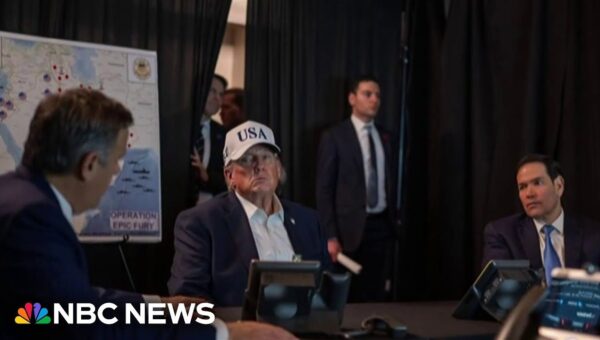
Trump: Iran Strikes Ahead of Schedule, Expects ‘Great Deal for World’
Three U.S. service members have been killed amid escalating conflict with Iran, President Trump confirmed. He stated that strikes are ahead of schedule, with senior Iranian leaders killed, and expressed optimism for a "great deal for the world" despite ongoing talks with Iranian officials.
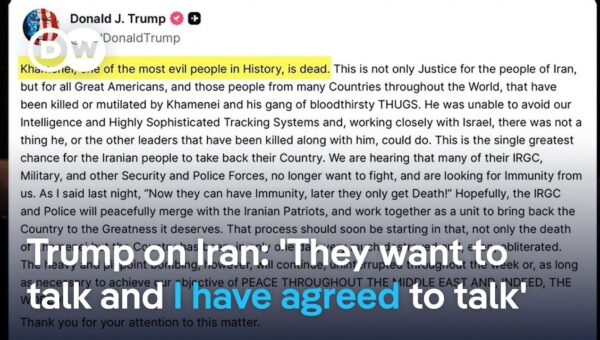
Trump Agrees to Talks with Iran After Major Strikes
President Donald Trump has agreed to talks with Iran's leadership following coordinated strikes that reportedly killed key figures, including the Supreme Leader. While Trump claims significant military successes, U.S. strategy remains unclear, and public opinion shows limited support for the actions amid rising American casualties.