Trump Declares ‘Strong’ Union Amidst Public Doubt
President Trump declared a "strong" State of the Union amidst a record-breaking speech, but polls indicate a majority of Americans disagree with his assessment. The address touched on economic successes, controversial tariff policies, and global peacemaking efforts, though experts question the validity and impact of his claims.

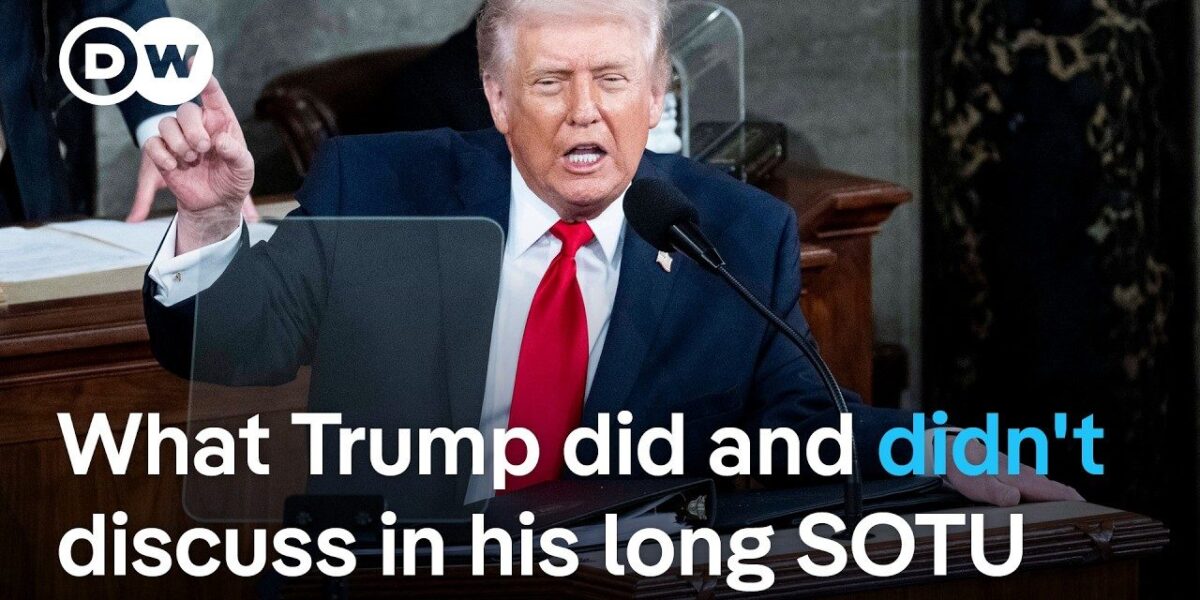
Trump Claims Strong State of the Union, But Polls Suggest Otherwise
In a marathon address that set a new record for length, President Donald Trump declared the “State of the Union is strong,” painting a picture of a nation in a “golden age.” The speech, lasting an unprecedented 1 hour and 48 minutes, aimed to highlight a perceived successful return to prominence for the United States, despite lagging opinion polls and significant domestic and international challenges. The address came just days after a Supreme Court ruling that dealt a blow to his sweeping tariff policies.
Economic Optimism vs. Public Skepticism
Trump’s rhetoric during the address was one of unbridled optimism. “Our spirit is restored. Inflation is plummeting. Incomes are rising fast. The roaring economy is roaring like never before. And our enemies are scared. Our military and police are stacked. And America is respected again, perhaps like never before,” he stated. However, this optimistic assessment sharply contrasts with public sentiment. According to political scientist Katherine Clever Ashbrook, a senior adviser at the Battlesman Foundation, “57% of Americans disagree” with the notion of a strong union, believing the president has the “wrong priorities for this moment economically, but also politically.” This divergence suggests a challenging midterm period ahead for the Republican party if public opinion does not shift.
Tariff Policies Face Legal and Economic Hurdles
A significant portion of the speech addressed the president’s controversial tariff program, which recently faced a setback from the Supreme Court. Trump defended his use of tariffs, claiming they brought in “hundreds of billions of dollars” and made “great deals for our country, both economically and on a national security basis.” He asserted that countries “ripping us off for decades are now paying us hundreds of billions of dollars,” and criticized Nobel laureates in economics for misinterpreting the economic impact. He referred to the Supreme Court’s ruling as “unfortunate.”
Ashbrook characterized the Supreme Court’s decision as a “significant blow to how this president has defined his own power,” particularly concerning his attempts to bypass congressional authority. She noted that Trump indicated a determination to continue pursuing tariff authorities through presidential powers, potentially utilizing provisions of the Trade Act of 1930 and Section 232 authorities on national security grounds. This approach signals an intent to circumvent Congress, a move Ashbrook suggests might offer a “massive note of relief” to congressional Republicans.
“The tariffs as Ghat you said opening this question have been so wildly unpopular particularly with American citizens and American companies. On average, American families are paying a premium for these tariffs of about $1,200 to $1,700 per American family. These tariffs have done nothing but to serve as a tax on the American public.”
The economic burden of these tariffs, estimated at an additional $1,200 to $1,700 per American family, makes them “wildly unpopular.” Ashbrook highlighted that the administration plans to use other presidential powers to continue imposing tariffs, shifting liability away from Congress, but the underlying message remains that these measures are financially detrimental to Americans.
Peacemaker Claims Questioned on Global Stage
President Trump also presented himself as a global peacemaker, asserting, “We’re proudly restoring safety for Americans at home and we are also restoring security for Americans abroad. Our country has never been stronger.” He cited a list of eight conflicts he claimed to have ended, including those involving Cambodia, Thailand, Pakistan, India, Kosovo, Serbia, Israel, Iran, Egypt, Ethiopia, Armenia, Azerbaijan, the Congo, and Rwanda, as well as the conflict in Gaza. He notably claimed, “35 million people said the prime minister of Pakistan would have died if it were not for my involvement.”
However, Ashbrook expressed skepticism regarding these claims. “He’s failed to end, I think, the most obvious and most hot sort of kinetic conflict right in the heart of Europe, which he thought he would end within 24 hours, which is Russian invasion of a free and sovereign Ukraine.” She also pointed out misstatements in his list of peace deals, suggesting he “overstated his international hand.” The situation regarding Iran’s nuclear program remains a point of volatility, with negotiations ongoing but Trump’s intentions – whether regime change, nuclear program dismantling, or military action – remaining unclear.
Ukraine Conflict and Iran Nuclear Ambitions
Regarding the war in Ukraine, Trump stated that “25,000 soldiers are dying each and every month” and reiterated his belief that the conflict “would have never happened if I were president.” Ashbrook criticized Trump’s approach, suggesting he has “put pressure on the wrong party” by focusing on Ukraine rather than Russia. She linked this to his past impeachment proceedings stemming from a call with President Zelenskyy and a perceived desire to “rehabilitate the Russian Federation in the international economic system.” Ashbrook argues that the pressure has not been equally distributed, hindering progress toward peace.
On Iran, Trump declared, “We wiped it out and they want to start all over again and are at this moment again pursuing their sinister ambitions. We are in negotiations with them. They want to make a deal, but we haven’t heard those secret words. We will never have a nuclear weapon.” Ashbrook described the strategy as “as clear as mud.” She noted the tragic consequences of economic pressure on the Iranian population and questioned the clarity of the administration’s objectives, whether it be regime change or nuclear program dismantling. The deployment of military assets around Iran, coupled with a lack of clear communication on intentions, places the president in a difficult position, especially given his promise not to start new wars.
Looking Ahead
As President Trump navigates domestic economic concerns and complex international relations, the public’s perception of his administration’s strength and priorities will be crucial. The effectiveness of his continued use of presidential authority, particularly concerning trade, and his ability to de-escalate global conflicts will be closely watched in the coming months.
Source: Trump says the 'State of the Union is strong' — do most Americans believe him? | DW News (YouTube)

Related Articles
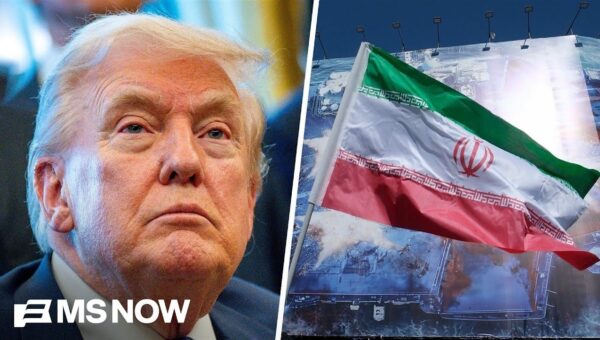
Trump Open to Iran Talks After Attacks, Shifts on Regime Change
President Trump has agreed to negotiate with Iran's new leadership following recent U.S. and Israeli attacks, signaling a potential shift from his regime change objective. The move has drawn scrutiny from former officials who question the strategic coherence of U.S. policy.

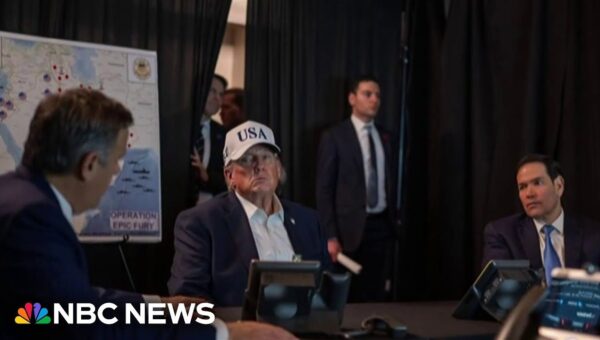
Trump: Iran Strikes Ahead of Schedule, Expects ‘Great Deal for World’
Three U.S. service members have been killed amid escalating conflict with Iran, President Trump confirmed. He stated that strikes are ahead of schedule, with senior Iranian leaders killed, and expressed optimism for a "great deal for the world" despite ongoing talks with Iranian officials.
Trump Agrees to Talks with Iran After Major Strikes
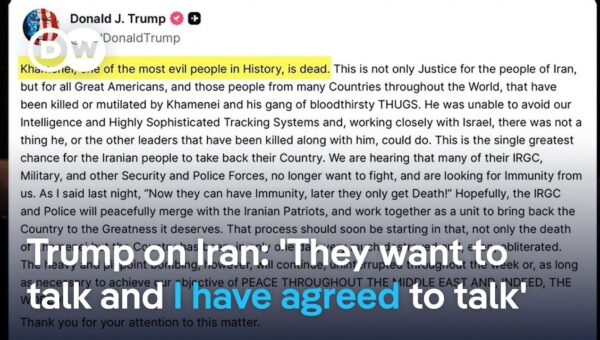
President Donald Trump has agreed to talks with Iran's leadership following coordinated strikes that reportedly killed key figures, including the Supreme Leader. While Trump claims significant military successes, U.S. strategy remains unclear, and public opinion shows limited support for the actions amid rising American casualties.