Trump Declares Iran War Over, Markets Rally Amidst Conflicting Signals
Donald Trump's declaration of the Iran conflict being "pretty much complete" has coincided with market rallies, but faces stark contradictions from within his own past administration and from international actors. The analysis delves into potential market manipulation, the implications of Trump's call with Putin, and the conflicting narratives surrounding the war's objectives and duration.

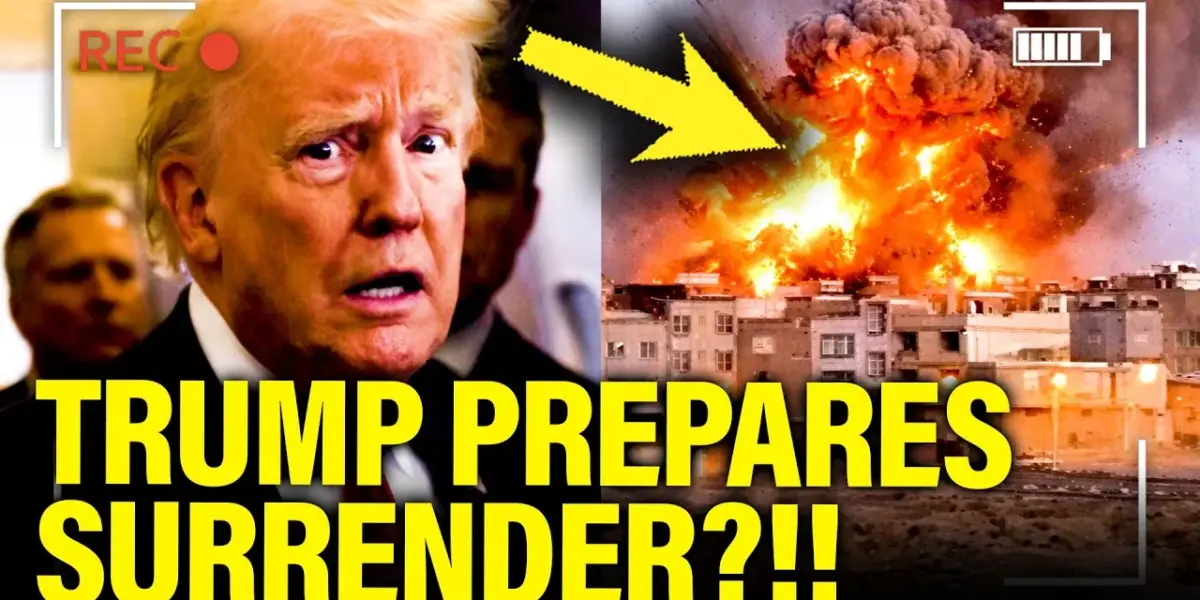
Amidst a swirling geopolitical landscape, former President Donald Trump has declared the conflict with Iran “pretty much complete,” a statement that has coincided with a notable uptick in financial markets. However, this assertion stands in stark contrast to remarks from his own former Secretary of Defense and signals from international allies, raising questions about the true state of the conflict and its potential trajectory.
Conflicting Declarations on the Battlefield
In a recent interview, Donald Trump asserted that the United States is “very far ahead of its initial four to five week estimated time frame” in its engagement with Iran, adding, “They have no navy, no communications. They’ve got no air force.” He dismissed the new Iranian supreme leader, Mojaba Kamini, stating, “We won. I have no message for him.” Trump also indicated a consideration of “taking over” the Strait of Hormuz himself and issued a stern warning to Iran, suggesting they had “shot everything they have to shoot.”
This declaration of near-victory, however, is met with a markedly different perspective from within his own administration’s past statements. On a previous occasion, then-Secretary of Defense Mark Esper (referred to as “Hegsith” in the transcript) stated on 60 Minutes that the conflict was “only just the beginning” and that the US would have “a lot more options over time on critical waterways.” He emphasized that Iran’s “ability to project any power in that area in a naval sense is diminishing and will be increasingly diminished.” This stark divergence highlights a potential disconnect in the administration’s messaging and strategic assessment.
Market Manipulation or Genuine Confidence?
The timing of Trump’s pronouncements has not gone unnoticed. The transcript suggests that Trump’s call to CBS was a deliberate attempt to “manipulate the markets, which were crashing.” Following his statement that the war was “pretty much complete,” the S&P erased its losses, and oil prices reportedly declined significantly from a high of $115 per barrel. This correlation has led to speculation that Trump’s public statements are strategically employed to influence economic indicators, a tactic some observers have dubbed “taco” when markets perform better after a declaration of a “surrender” or victory.
The transcript quotes journalist Julia Love, who appears to suggest that Trump’s call was timed to allow markets to rally and erase the day’s losses. The impact on oil prices, in particular, is significant, as a decrease in oil prices can be seen as beneficial to consumers but potentially detrimental to oil-exporting nations, including Russia, which has benefited from high energy prices amidst global sanctions. Trump’s desire for declining oil prices aligns with his broader economic objectives.
The Putin Connection and Shifting Alliances
Adding another layer of complexity, the transcript reveals that prior to Trump’s public declaration, he spoke with Russian President Vladimir Putin. According to the transcript, Putin shared his proposal for a swift end to the war. The Kremlin’s readout of the call, which has not been disputed by Trump’s team, indicates that Trump and Putin will be working together to find a solution to the conflict. This collaboration with Putin, especially given Russia’s perceived gains from the ongoing global instability and surging oil prices, raises significant concerns.
Furthermore, the transcript suggests that following this call with Putin, the Trump administration is considering lifting additional sanctions against Russia, potentially allowing Russia to sell more oil. This development, coupled with Trump’s previous calls with Putin and his current statements on the Iran conflict, suggests a potential realignment of foreign policy priorities and a complex interplay between international actors.
International Concerns and Unresolved Objectives
Beyond the pronouncements from Washington, international allies and Iranian officials present a different narrative. French President Macron has reportedly expressed expectations for the war to last several more weeks. Iranian officials, including their foreign minister and national security advisors, have indicated no intention of ceasing their regional actions in response to the US and Israeli actions.
The transcript also highlights significant material losses for the US, reporting the loss of two additional MQ9 Reaper drones during operations against Iran, bringing the total to 11. These are described as “massively expensive” assets. Israeli officials, according to the Washington Post, are reportedly growing concerned about the escalating war and are discussing “exit ramps,” with some officials questioning the US interest in fighting until the regime is toppled. The decision on the war’s endgame, they suggest, ultimately rests with Trump.
Moreover, the transcript notes that the US has not achieved stated goals such as toppling the Iranian regime, eliminating their ballistic missile threat, or preventing uranium enrichment. In fact, the transcript alleges that a more extreme leader, Mojaba, has been installed. The Department of Defense’s own messaging, “We have only just begun to fight,” directly contradicts Trump’s claims of completion.
Trump’s Rhetoric and Shifting Narratives
Trump’s public statements have been characterized by a volatile and often contradictory tone. He has referred to the conflict as a “short-term excursion” and claimed that without US intervention, Iran would have deployed nuclear weapons across the Middle East within a week, a claim that appears to be unsubstantiated by the provided context. He has also made inflammatory remarks about Iranian people, calling them “quite nasty,” and mischaracterized political opponents, such as Chuck Schumer, as “registered Palestinian.”
Regarding the leadership in Iran, Trump has expressed confusion about who is in charge, despite clear public statements from Iranian officials. He has stated, “We had leaders and they’re gone. Then we had new leaders and they’re gone. And now nobody has any idea who the people are that are going to be the head of the country.” This assertion contradicts readily available information about Iran’s current leadership structure.
The “Golden Age” and the Future Outlook
Amidst these conflicting narratives and potential market manipulations, figures like House Speaker Mike Johnson (referred to as “Magga Mike Johnson”) have declared the current era a “new golden era in America,” attributing this to Trump’s tireless energy and perceived success. Johnson’s description of Trump as the “most active president, the most energized president” is juxtaposed with the complex and potentially escalating conflict in Iran.
The Iranian perspective, as articulated by Kamal Kharrazi, a foreign policy advisor to the supreme leader, paints a different picture. Kharrazi dismisses the US narrative of degraded Iranian military capabilities as a “false narrative,” asserting that the Iranian military is “quite strong” and self-sufficient in arms production. He views the conflict as an “existential threat to the Islamic Republic” and sees “no room for diplomacy anymore” due to perceived deception by Trump. He suggests that a resolution would require external intervention to guarantee an end to aggression, possibly through increased economic pressure.
Marco Rubio, in his own statements, has outlined mission goals focused on destroying Iran’s missile capabilities, factories, and navy, but notably omits objectives like regime change or destroying Iran’s nuclear program. This suggests a shifting or perhaps ill-defined set of war aims.
Why This Matters
The discrepancy between Donald Trump’s declarations of victory and the on-the-ground realities, coupled with his alleged market manipulation and controversial international dealings, raises critical questions about transparency, strategic objectives, and the stability of global affairs. The potential for miscalculation in a conflict involving nuclear-capable nations, especially when combined with shifting alliances and conflicting narratives, poses a significant risk. The economic implications, both domestically and internationally, are profound, particularly concerning energy markets and the potential for further sanctions or de-escalation. Understanding these dynamics is crucial for assessing the true state of international security and the potential consequences of political rhetoric on global stability.
Implications, Trends, and Future Outlook
The current situation suggests a trend towards a more fragmented and unpredictable international relations landscape. Trump’s approach, characterized by bold pronouncements and apparent disregard for conventional diplomatic norms, seems to prioritize short-term gains and personal influence, potentially at the expense of long-term strategic stability. The reliance on market reactions as a measure of success, as implied in the transcript, is a concerning development that blurs the lines between governance and speculative trading. The engagement with Putin, while framed as a path to de-escalation, could also signal a broader geopolitical realignment that undermines existing international frameworks. The future outlook likely involves continued volatility, with potential for both sharp escalations and abrupt shifts in policy, heavily influenced by the personal and political calculations of key leaders.
Historical Context and Background
The current tensions with Iran are a continuation of decades of complex relations, marked by events such as the 1979 Iranian Revolution, the Iran hostage crisis, the Iran-Iraq War, and the ongoing nuclear program disputes. US policy towards Iran has oscillated between sanctions, diplomatic engagement, and military posturing. The Trump administration, in particular, withdrew from the Joint Comprehensive Plan of Action (JCPOA) nuclear deal in 2018, reimposing strict sanctions and adopting a policy of “maximum pressure.” This withdrawal and subsequent escalation have significantly altered the regional dynamics and contributed to the current state of heightened tension, making the current conflict a critical juncture in this long-standing adversarial relationship.
Source: 🚨Trump PLANS SURRENDER to Iran after PUTIN CALL!! (YouTube)

Related Articles
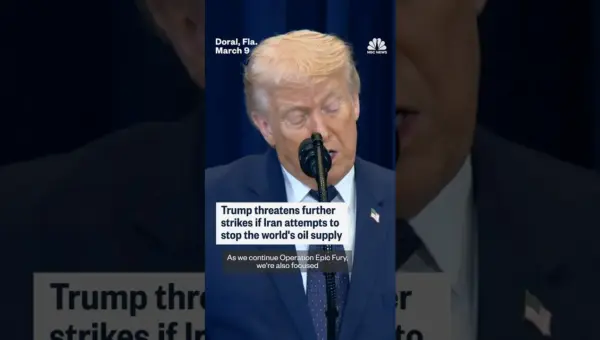
Trump Warns Iran: ‘Hit Harder’ if Oil Supply Threatened
President Donald Trump has issued a strong warning to Iran, threatening severe retaliation if the regime attempts to disrupt global oil supplies. Citing "Operation Epic Fury," Trump vowed to "hit them so hard" that recovery would be impossible, emphasizing the security of the Strait of Hormuz.


Markets Reeling as Biden’s Mideast Strategy Faces Scrutiny
Global financial markets experienced sharp volatility as investor confidence wavered amid perceived shifts in the Biden administration's Middle East strategy. The stock market saw significant fluctuations, with analysts advising caution for individual investors seeking to trade on geopolitical headlines.
Trump Claims Putin Wants to ‘Help’ in Middle East
Former President Donald Trump reported a "very good call" with Russian President Vladimir Putin, discussing Ukraine and the Middle East. Trump stated Putin expressed a desire to be "helpful" in the Middle East, but Trump urged him to prioritize ending the Ukraine war.