Trump Declares Iran War Nears End; SCOTUS Weighs Citizenship
President Trump announced the nearing end of U.S. military operations in Iran, targeting its military infrastructure and nuclear ambitions. The Supreme Court heard arguments on Trump's executive order affecting birthright citizenship, with a ruling expected soon. NASA also launched Artemis II, sending astronauts on a historic four-day trip around the moon.

Trump Declares Iran War Nears End; SCOTUS Weighs Citizenship
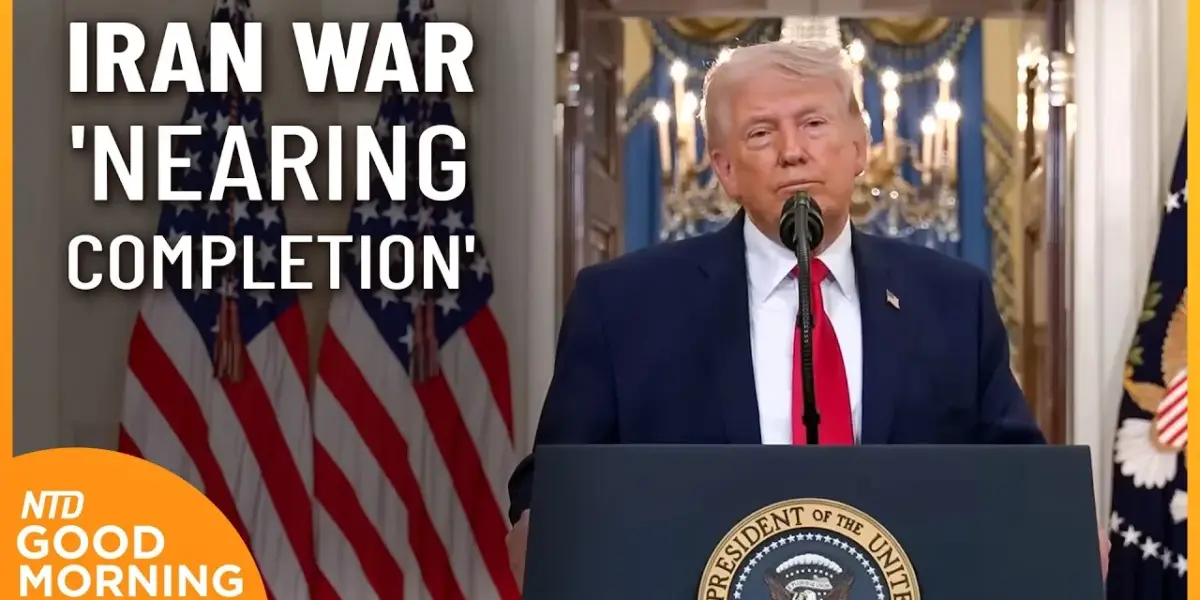
President Trump announced Wednesday that the United States is nearing the end of its military operations in Iran. This campaign, known as Operation Epic Fury, has focused on disabling Iran’s military capabilities. U.S. forces have targeted key assets like vessels, missile systems, and networks that support Iran’s military actions. A major goal of this operation has been to stop Iran from developing nuclear weapons. The President stated that the operation will continue until all its objectives are fully met.
The Supreme Court also heard arguments on a significant executive order from President Trump. This order aims to change the rules for birthright citizenship. The President himself attended the court session, a rare event for any sitting U.S. president. While the justices did not reveal their decision, some appeared hesitant to alter a constitutional amendment that has been in place for over a century. A ruling is expected by late June or July.
In space news, NASA is sending astronauts around the moon for the first time in over 50 years. The Artemis II mission launched Wednesday from the Kennedy Space Center. Four astronauts are on board for a journey expected to last about four days. This mission will mark the farthest any human has traveled in space. The astronauts are scheduled to return to Earth, splashing down off the U.S. west coast.
Why This Matters
These events highlight significant policy decisions and national endeavors. The potential end of military operations in Iran could signal a shift in U.S. foreign policy and global engagement. It raises questions about the long-term strategy for regional stability and the effectiveness of the recent military actions. The Supreme Court’s decision on birthright citizenship could have profound implications for immigration policy and the interpretation of constitutional rights. It touches upon fundamental ideas of who is a citizen and how that status is determined. Meanwhile, NASA’s Artemis II mission represents a bold step forward in space exploration. It fuels scientific advancement and inspires future generations by pushing the boundaries of human travel beyond Earth.
Historical Context and Background
The U.S. has a long history of involvement in the Middle East, with various administrations engaging in military and diplomatic efforts to shape the region. The focus on preventing Iran from acquiring nuclear weapons is a continuation of concerns that have spanned decades. Regarding birthright citizenship, the Fourteenth Amendment, ratified after the Civil War, granted citizenship to all persons born or naturalized in the United States. The current legal challenge questions its application to children of parents who are not U.S. citizens and are not legally present in the country. This echoes historical debates about citizenship and national identity. The return to lunar missions is part of a renewed interest in space exploration, building upon the legacy of the Apollo program that first landed humans on the moon in 1969.
Implications, Trends, and Future Outlook
If the Iran operations conclude successfully, it could lead to a reduction in U.S. military presence and a greater emphasis on diplomatic solutions. However, the long-term stability of the region will depend on many factors, including Iran’s future actions and the cooperation of international partners. The Supreme Court’s ruling on citizenship could either uphold established interpretations or set a new precedent, potentially impacting millions of families and the national discourse on immigration. The success of Artemis II is expected to pave the way for more ambitious space missions, including future crewed landings on the moon and potential journeys to Mars. This renewed focus on space exploration could drive technological innovation and international collaboration in the coming years.
Source: Trump: Iran War Nearing Completion; SCOTUS Hears Citizenship Arguments | NTD Good Morning (April 2) (YouTube)

Related Articles


Artemis IV: Humans to Land on Moon First Time Since 1972
Humans are set to return to the Moon with the Artemis IV mission, marking the first lunar landing since 1972. Goonhilly Earth Station is a key player, supporting crucial test flights and future endeavors. The program emphasizes technological advancement and the growing role of private companies in space exploration.


Trump’s Iran Strategy Risks Global Instability
Former Ambassador John Bolton criticizes President Trump's Iran strategy, citing contradictory statements and a lack of clear objectives. Bolton argues that without regime change, the U.S. faces a cycle of conflict, potentially leading to a major strategic defeat and empowering rivals like China and Russia.


Artemis II Blasts Off, Igniting New Space Race Era
NASA's Artemis II mission has successfully launched, sending a four-person crew on a historic journey around the Moon. The mission marks a significant step towards lunar exploration and potential Mars missions. Meanwhile, global markets react to escalating tensions with Iran, and a new, more convenient weight loss pill gains FDA approval.