Trump Declares Iran War Near End, Critics See Strategic Loss
President Trump declared the war with Iran is nearing its end, vowing intensified strikes while claiming domestic success. Analysts, however, view the conflict as a strategic loss, questioning Trump's definition of regime change and criticizing his harsh rhetoric. The speech also saw a shift in responsibility for global oil security.

Trump Claims Victory Amidst Iran Conflict
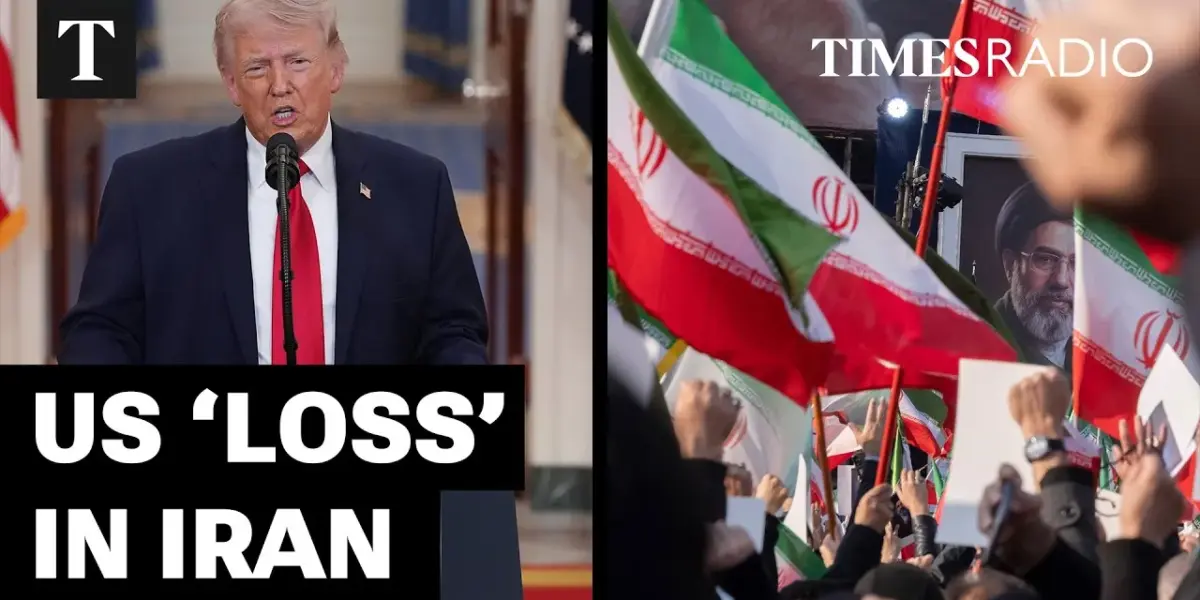
President Donald Trump addressed the nation regarding the ongoing conflict with Iran, stating the war is nearing completion and military objectives are on track to be met shortly. In a speech that echoed his recent public statements, Trump asserted that the United States would intensify its actions against Iran over the next two to three weeks, aiming to force the country into a subservient position. “We’re going to hit them extremely hard over the next two to three weeks,” Trump declared. “We’re going to bring them back to the stone ages where they belong.” He also claimed that regime change had effectively occurred due to the death of original leaders, suggesting the new leadership was less radical.
Analysis Questions Trump’s ‘Regime Change’ Claim
However, analysts point out that the Iranian regime remains in power, questioning Trump’s definition of regime change. The argument presented is that by referring to a new group of leaders as a ‘new regime,’ Trump is redefining the term to fit his narrative. This perspective suggests a deliberate messaging strategy, emphasizing a change in leadership dynamics rather than a complete overthrow of the government.
Global Oil Security: A Shifting Responsibility?
Trump also shifted the focus to international responsibility for securing oil supplies, specifically mentioning the Strait of Hormuz. He urged countries reliant on Gulf oil to take charge of protecting this vital passage, suggesting they should lead the effort with U.S. support. “The countries of the world that do receive oil through the Hormone Strait must take care of that passage,” Trump stated. He encouraged these nations to purchase oil from the United States, which he claims has abundant supply, and to actively defend the strait themselves.
Economic Fallout and Diplomatic Concerns
Following Trump’s address, oil prices saw an increase, and Asian stock markets experienced a decline. Brent crude oil was reported at $107 a barrel. Steven Erlanger, chief diplomatic correspondent in Europe for The New York Times, offered his perspective, noting that Trump’s speech appeared primarily aimed at a domestic audience. Erlanger observed that the speech did not introduce significant new information but rather compiled previous statements, presenting a mix of messages about the war’s objectives. He also highlighted Trump’s apparent withdrawal from the idea of a ground operation in Iran, which would likely be costly in terms of American lives.
Strategic Setbacks Amid Military Successes
Erlanger described the conflict as a military success, stating it has significantly set back Iran’s capabilities, including its nuclear program and missile production. However, he characterized the overall strategy as a failure. “Strategically, to me, it feels like a failure. It feels like a loss,” Erlanger commented. He elaborated that the core U.S. and Israeli objective of regime change and fostering a less threatening Iran had not been achieved and was unlikely to be met in the near future.
Brutal Rhetoric Sparks Controversy
The language used by Trump, particularly the threat to bomb Iran “back to the stone ages,” drew criticism for its brutality. Erlanger described the rhetoric as crude, noting that Trump’s public statements have become increasingly harsh. While acknowledging that Trump might intend to target the regime, Erlanger pointed out that such threats against civilian infrastructure, like power and desalination plants, could be considered war crimes, drawing parallels to actions in Ukraine.
Transatlantic Relations and Britain’s Role
The discussion also touched upon the evolving relationship between the U.S. and Europe, particularly concerning NATO. Trump’s silence on threats to withdraw from NATO during his speech was noted. Erlanger suggested that a re-evaluation of the U.S. commitment to NATO might be underway. He also discussed the potential for closer ties between Britain and the European Union, especially if the U.S. continues to distance itself from European security. Erlanger emphasized the value of a well-trained British military, including its nuclear deterrent, as a crucial component of European defense, particularly in the face of Russian aggression.
Looking Ahead
As the conflict with Iran enters its final stages, attention will be on whether Trump’s administration can achieve its stated objectives and how global powers will respond to the shifting dynamics in oil security and international alliances. The effectiveness of Trump’s diplomatic strategy and the long-term implications for regional stability remain critical points to watch.
Source: Iran War Is A Strategic Loss Despite Trump Portraying A Win Domestically (YouTube)

Related Articles

Trump Weighs War Exit Amid Iran Strikes and Internal Debate
President Trump is reportedly facing internal debate over how to end the escalating conflict with Iran, according to a new Time Magazine report. While publicly vowing to increase strikes, privately Trump seeks an "off-ramp" to declare victory and avoid domestic backlash, even as advisors express surprise at Iran's retaliatory attacks.


Trump Ousts AG Bondi, Eyes Zeldin as Successor
Pam Bondi is out as Attorney General after one year, with Deputy AG Todd Blanche serving as Acting AG. President Trump confirmed the departure, praising Bondi and hinting at a new private sector role. Lee Zeldin is reportedly being considered as Bondi's permanent replacement, amid ongoing speculation about other cabinet changes.


US Pilot Feared Lost in Iran; Search Underway
The U.S. military is conducting a search operation inside Iran for an American pilot whose fighter jet may have been downed. Details are limited, with uncertainty over whether the plane was shot down or suffered mechanical failure. The operation highlights the complexities of rescue missions in hostile territory and occurs amid heightened regional tensions.