Trump Courts Farmers with Trade, Tax Promises
President Trump hosted a large gathering of American farmers, pledging trade deals, tax cuts, and deregulation to boost farm income. He highlighted efforts to end the estate tax and increase soybean exports to China, while also promising to lower equipment costs through reduced regulations. Analysts, however, raised concerns about the impact of tariffs and the true origin of manufactured goods.

Trump Courts Farmers with Trade, Tax Promises
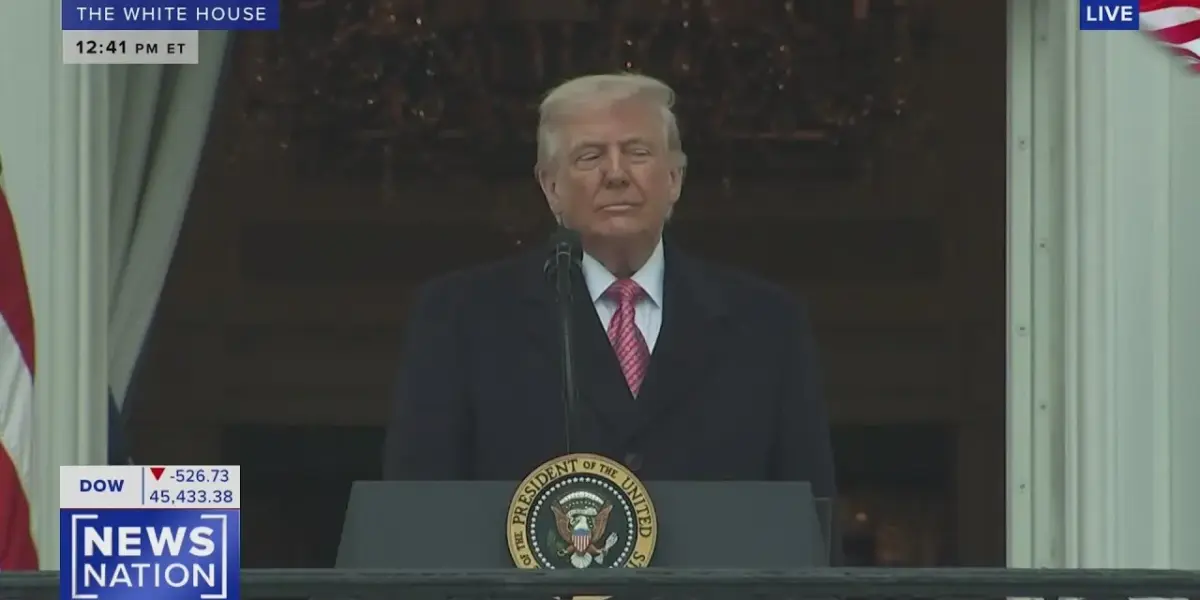
President Trump recently hosted a large gathering of American farmers at the White House, emphasizing his administration’s support through trade deals, tax cuts, and deregulation. Speaking to a crowd on the South Lawn, Trump highlighted his efforts to boost farm income, which he claimed has risen by 20% during his first year back in office. He presented himself as a champion for agriculture, contrasting his policies with those of the Biden administration, which he described as causing the worst inflation in the country’s history.
Key Policy Promises for Agriculture
A central theme of Trump’s address was his administration’s economic policies aimed at benefiting farmers. He pointed to the $12 billion in farm relief provided, funded by tariffs, and pledged further support. He also emphasized tax cuts, stating that 45% of filers received an average refund of nearly $5,000. For farmers, specific tax benefits included making small business tax reductions permanent and allowing 100% bonus depreciation on new tractors and equipment in the first year. This allows farmers to deduct the full cost of new purchases immediately, rather than over several years.
Trump also celebrated the end of the estate tax, often called the “death tax.” He argued this change allows family farms to stay within families, preventing heirs from facing massive tax bills that could force them to sell the farm. He contrasted this with Democrats, who he claimed voted against these provisions.
Trade Deals and Market Access
Trade was another significant focus. Trump specifically thanked Chinese President Xi Jinping for agreeing to purchase $40 billion in American soybeans, doubling the previous amount. He also mentioned expanding markets for American beef in Asia, Europe, and South America. Trump stated that farmers don’t want handouts but a “level playing field,” and he believes his policies provide that, even going further to give them an advantage.
Deregulation and Cost Reduction
Deregulation was presented as a key strategy to lower costs for farmers and consumers. Trump highlighted new rules allowing farmers to repair their own equipment, potentially saving them up to $30,000 on major repairs. He also announced new guidelines limiting restrictive diesel exhaust fluid (DEF) rules, which he claimed were a disaster and cost farmers billions. Furthermore, he discussed efforts to reduce environmental regulations on tractors, arguing that complex, costly equipment with excessive environmental add-ons does not work well and drives up production costs. He expressed a desire to return to simpler, more reliable tractor technology and urged manufacturers like John Deere and Caterpillar to lower prices.
Renewable Fuels and Consumer Impact
The Trump administration also announced an emergency order to allow year-round sales of E15 fuel, a blend of gasoline with 15% ethanol. He stated he was seeking congressional action to make this permanent. This policy is expected to generate billions in rural economic benefits, create jobs, and increase the nation’s energy supply, while also potentially lowering grocery costs. He also announced an update to renewable fuel standards for 2026-2027, calling environmentalists “terrorists” who have caused problems for the country.
Criticism from Analysts
However, some analysts offered a different perspective. One commentator pointed out that tractors are often made in Germany, questioning the administration’s claims about domestic manufacturing. Concerns were also raised about the impact of tariffs on trade relationships, particularly with China and Mexico, and how this affects market access for American soybeans and corn. The reliance on subsidies, like the $12 billion in farm relief, was also questioned, with some suggesting farmers are afraid to speak out against policies that might harm their long-term market development, even as they accept the financial assistance.
Global Impact
The focus on agriculture highlights its importance to the U.S. economy and Trump’s strategy to appeal to a key voting bloc. His promises of trade deals, tax relief, and reduced regulation aim to position him as a protector of American farming interests. However, the effectiveness of these policies, especially concerning trade disputes and their impact on global markets, remains a subject of debate. The administration’s approach to environmental regulations also signals a broader trend of prioritizing economic development over environmental concerns, which has significant implications for both domestic industries and international climate agreements.
Source: Trump speaks to farmers at White House | NewsNation Live (YouTube)

Related Articles
Trump Promises Farmers 20% Income Boost, Tax Relief
Former President Donald Trump addressed a large gathering of American farmers, highlighting a 20% surge in farm income and detailing tax cuts and regulatory relief. Key policies discussed include bonus depreciation for equipment, elimination of the estate tax, and expanded trade deals. The administration also announced new loan guarantees and efforts to reduce equipment repair costs.


Trump’s Fury Erupts as Iran Vows Retaliation Amidst Escalating Tensions
Former President Donald Trump has reportedly reacted with intense anger following U.S. and Israeli strikes on Iranian steel plants. Iran has vowed massive retaliation, raising concerns about regional stability and potential escalation. This event draws on a long history of U.S.-Iran tensions.


Trump’s Iran War Fails to Win Public Support
New polls reveal a significant drop in public approval for Donald Trump's handling of Iran, with 64% disapproval. This low starting point contrasts sharply with past conflicts and suggests potential challenges ahead for the administration.