Trump Claims Victory Amidst Escalating Middle East Conflict
Donald Trump's declaration of "We've won" sharply contrasts with the escalating conflict in the Middle East. Thousands of troops are being sent, billions are requested for war, and Iran is mobilizing forces, painting a picture far removed from claims of victory.


Trump Claims Victory Amidst Escalating Middle East Conflict
In a striking contrast, former President Donald Trump has declared “We’ve won,” even as the conflict in the Middle East appears to be worsening. This statement creates a stark divide between the narrative presented by his supporters and the grim reality unfolding on the ground.
Supporters within the MAGA universe often echo Trump’s declarations, suggesting that victory has been achieved and the conflict is over. However, this perspective clashes sharply with observable events. Thousands of troops are being sent to the Middle East, and a significant request for $200 billion has been made to sustain the ongoing war efforts. Furthermore, Iran is reportedly mobilizing over a million fighters, signaling a potential response to a possible U.S. ground invasion.
The Disconnect: Narrative vs. Reality
This situation highlights a significant disconnect between political rhetoric and on-the-ground realities. While Trump’s words suggest a definitive end to hostilities, the deployment of military resources and the mobilization of opposing forces paint a different, more concerning picture.
It’s important to note that the exact intentions behind these troop movements and financial requests remain unclear. There is uncertainty about whether an invasion is planned, or even if the current administration has a definitive plan for the immediate future. This ambiguity adds another layer of concern to an already tense situation.
Historical Context: Echoes of Past Conflicts
This kind of situation, where official pronouncements seem to diverge from observable actions, is not entirely new in international relations. Leaders have historically used strong rhetoric to shape public perception, sometimes even when events suggest a more complex or dangerous reality. The desire to project strength and control can lead to narratives that don’t always align with the facts on the ground.
During various conflicts, political figures have often framed situations in terms of victory or progress, even while the human and financial costs continued to mount. This can create confusion for the public and make it difficult to assess the true state of affairs. The current situation in the Middle East, with its escalating tensions and significant military deployments, bears some resemblance to periods where official optimism masked growing challenges.
Why This Matters
The discrepancy between Trump’s claims of victory and the reality of troop deployments and financial commitments is significant. It raises crucial questions about transparency, strategic clarity, and the public’s right to accurate information during times of international crisis. When leaders declare victory while resources are being poured into prolonged conflict and potential escalation, it can undermine public trust and create a false sense of security.
Understanding this disconnect is vital for citizens to form informed opinions. It requires looking beyond simple declarations and examining the actions and commitments being made. The stakes are high, involving human lives, vast financial resources, and regional stability. A clear-eyed assessment, separate from political spin, is essential for navigating these complex challenges.
Implications, Trends, and Future Outlook
The trend of political leaders using strong, often triumphant, language to describe ongoing or escalating conflicts can have several implications. It may embolden adversaries by suggesting a lack of resolve or a premature declaration of success. It can also lead to complacency among allies and the domestic population, who may not grasp the full extent of the challenges or the resources required to address them.
Looking ahead, the situation in the Middle East remains highly uncertain. The mobilization of forces on both sides suggests a potential for further escalation, regardless of any claims of victory. The significant financial commitment requested indicates a long-term engagement, contradicting any notion of an immediate end to the conflict.
The future outlook depends heavily on diplomatic efforts, de-escalation strategies, and the ultimate decisions made by the key players involved. The current trajectory, however, points towards continued uncertainty and potential for further conflict, making the divergence between rhetoric and reality a critical point of analysis.
Source: Trump Says “We’ve Won” as War Gets Worse #politics #fyp #new (YouTube)

Related Articles

Stocks Ignore War Risks, Focus on “Taco Moments”
Stock markets appear to be overlooking the severe supply chain risks stemming from the Iran conflict, focusing instead on potential diplomatic de-escalations. While the S&P 500 shows resilience, bond and commodity markets signal deep concern over disruptions to critical resources like LNG, helium, and fertilizers.
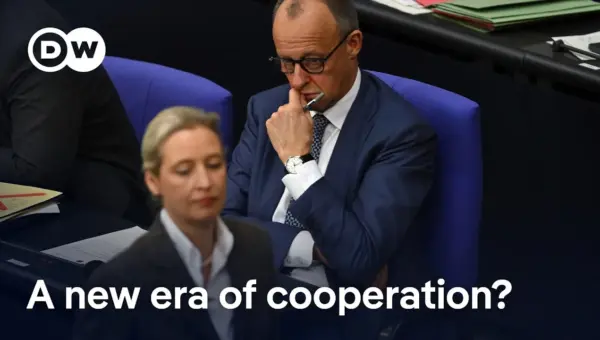
Germany’s Anti-AfD Firewall Crumbles Amidst Shifting Politics
Germany's political 'firewall' against the far-right AfD party is showing significant cracks due to rising AfD popularity and recent instances of cooperation. Historically rooted in Germany's experience with Nazism, the firewall aimed to prevent extremist parties from gaining power. However, shifts in the AfD's rhetoric and increased AfD strength, especially in eastern Germany, are challenging this long-standing political norm.
US Strikes Cripple Iran’s Military Might, CENTCOM Reports
U.S. Central Command reports ongoing strikes inside Iran are significantly weakening its military power. This direct action aims to reshape regional security dynamics, but carries risks of escalation. The long-term impact depends on Iran's response and ability to adapt.