Trump Claims Iran’s Leader Dead After US-Israel Strikes
US President Donald Trump has claimed Iran's Supreme Leader Ayatollah Ali Khamenei is dead following coordinated US-Israel strikes. Prime Minister Netanyahu confirmed the targeting of senior Iranian officials, promising further operations. The news has reportedly sparked widespread celebration within Iran.

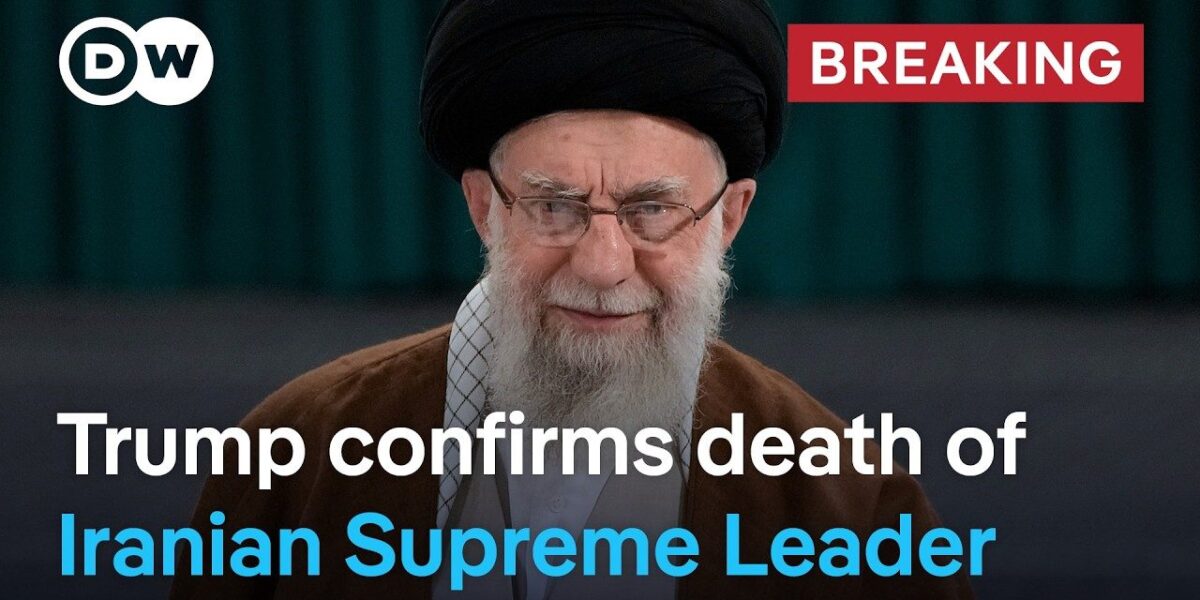
US President Donald Trump announced the death of Iran’s Supreme Leader Ayatollah Ali Khamenei, claiming he was killed in coordinated strikes by the United States and Israel. The announcement, made via Trump’s social media platform, stated that “bombing will continue for as long as necessary to reach peace in the Middle East.” Iran has not yet officially responded to the claim of Khamenei’s death.
The statement from the former US President marks a significant escalation in regional tensions, with Israel’s Prime Minister Benjamin Netanyahu confirming that the strikes targeted and killed “further senior Iranian officials.” Netanyahu indicated that Israel would continue its military operations, targeting “thousands of targets in the coming days.” The US has deployed significant military assets, including the USS Gerald R. Ford aircraft carrier, to the region, signaling a determined posture.
Confirmation and Justification of Strikes
Speaking to DW News from Washington, correspondent Benjamin Alvarez Gruber confirmed President Trump’s statement, which described Khamenei as “one of the most evil people in history.” Gruber noted that Trump’s announcement followed reports from unnamed Israeli officials and included references to satellite imagery of the location where Khamenei was reportedly killed, along with other senior Iranian officials. Trump’s post also emphasized that the “heavy and pinpoint bombing will continue uninterrupted throughout the week,” framing the operation as “the single greatest chance for the Iranian people to take back their country.”
The US Ambassador to the United Nations, Mike Waltz, reportedly addressed the UN Security Council, asserting the lawfulness of the strikes. However, Gruber anticipates significant criticism from various nations, characterizing the actions as a dangerous escalation in the Middle East.
US Strategy and Internal Debate
President Trump’s call for the Iranian people to “take back their country” raises questions about the extent of US support for internal dissent and regime change. The sustainability of the military campaign, involving extensive air power and naval assets, is also a key consideration. Domestically, Trump faces the challenge of defending these policies, particularly given his past rhetoric on ending “never-ending wars.” Despite his recent statement prioritizing a diplomatic solution, the decision to proceed with strikes suggests a shift driven by intelligence or advisors.
The potential removal of Khamenei shifts the focus to other powerful entities within Iran, such as the Islamic Revolutionary Guard Corps (IRGC). A Democratic member of Congress, identified as the first Iranian-American in Congress, cautioned that dismantling the regime requires more than just eliminating its leader. She advocated for a comprehensive strategy that includes robust support for democracy in Iran, arguing that military force alone is insufficient to secure a democratic future. Comparisons have been drawn to the situation in Venezuela, where attempts to remove an authoritarian leader did not lead to the dismantling of the regime.
Regional and International Reactions
The death of Khamenei, if confirmed, could alter the trajectory of the US-led military campaign, potentially shortening or complicating the conflict. Experts suggest the Trump administration may have been emboldened by earlier strikes, hoping for a swift resolution similar to hypothetical scenarios involving other leaders. However, the continued bombing throughout the week and heightened alert levels across the region indicate a prolonged engagement. Reports suggest that the timing of the attack was deliberately shifted from nighttime to morning hours in Iran.
Iranian Public Reaction and Future Prospects
DW’s Persian service correspondent, Nufar Golami, reported that the news of Khamenei’s death has been met with widespread public celebration in Iran, despite severe internet disruptions. Videos circulating online depict jubilant scenes in various cities, particularly following recent crackdowns on protesters. Golami described Khamenei’s over 36-year rule as one characterized by repression, the suppression of popular will, and responsibility for thousands of deaths, both domestically and through regional interventions in conflicts like those in Syria and Yemen. Many across the Middle East are reportedly also expressing happiness, viewing Khamenei’s demise as a potential turning point.
Succession and Democratic Hopes
The removal of Khamenei is seen by many as eliminating a major obstacle to change in Iran. However, the rapid pace of events makes definitive analysis challenging. Key questions remain regarding the full scope of the attacks, the duration of the conflict, and the regime’s next steps. There is hope that the situation will not devolve into further instability or replicate scenarios like Venezuela, where regime insiders retained power. The ultimate aspiration for many Iranians is a truly democratic government.
Speculation about Khamenei’s successor is rife. Reports suggest his son, Mojtaba, may have been killed, potentially disqualifying him. Other names circulating include Hassan Khomeini, grandson of Ayatollah Ruhollah Khomeini, and Ali Larijani, who was reportedly mentioned in prior instructions from Khamenei. However, Larijani’s name has also been mentioned among senior figures reportedly killed, pending confirmation.
The prospect of genuine freedom or democracy in Iran remains uncertain. Critical days lie ahead, with the potential for further chaos or a rise of another authoritarian figure. Many hope for a new starting point, particularly if the attacks significantly weaken the regime or lead to the surrender of its military forces. This, many believe, could present the best opportunity for the Iranian people to push for a democratic government. However, concerns are also raised about the opposition’s preparedness, with a perceived missed opportunity to form a unified coalition prior to these rapid developments.
Source: Iran Supreme Leader Ali Khamenei dead, Trump says | DW News (YouTube)

Related Articles
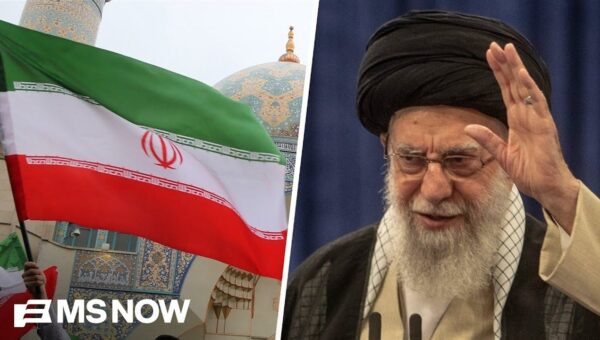
Iran Celebrates After Israeli Strikes Eliminate Top Leaders
Following Israeli airstrikes that reportedly killed Iran's Supreme Leader and top staff, celebrations have erupted among the Iranian diaspora. While a "monumental event," analysts caution against immediate expectations of a smooth democratic transition due to the IRGC's power and a divided opposition.
Dem Rep. Gomez: Trump Was Never Truthful About Peace
California Congressman Jimmy Gomez criticized the Trump administration's handling of intelligence regarding Iran, stating the President was "never truthful" about his intentions. Democrats plan to force a vote on a War Powers resolution, arguing the recent military actions lacked justification and congressional approval.
Trump Open to Iran Talks After Attacks, Shifts on Regime Change
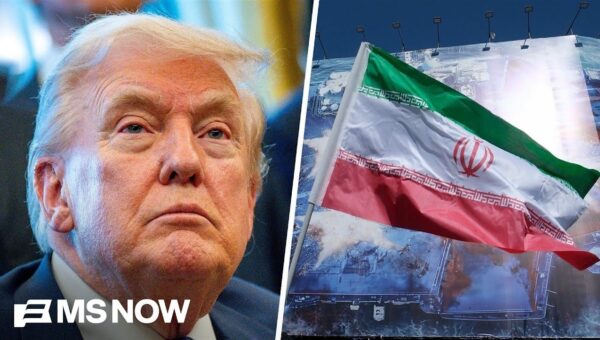
President Trump has agreed to negotiate with Iran's new leadership following recent U.S. and Israeli attacks, signaling a potential shift from his regime change objective. The move has drawn scrutiny from former officials who question the strategic coherence of U.S. policy.