Trump Claims Iran War Nearing End, But Questions Linger
President Trump declared the U.S. military campaign against Iran is nearing completion, assuring Americans the conflict could end within weeks. However, his address left key questions unanswered, particularly regarding the Strait of Hormuz and the true impact on Iran's capabilities. Analysts and international observers are scrutinizing the claims amidst ongoing concerns about regional stability and global oil prices.

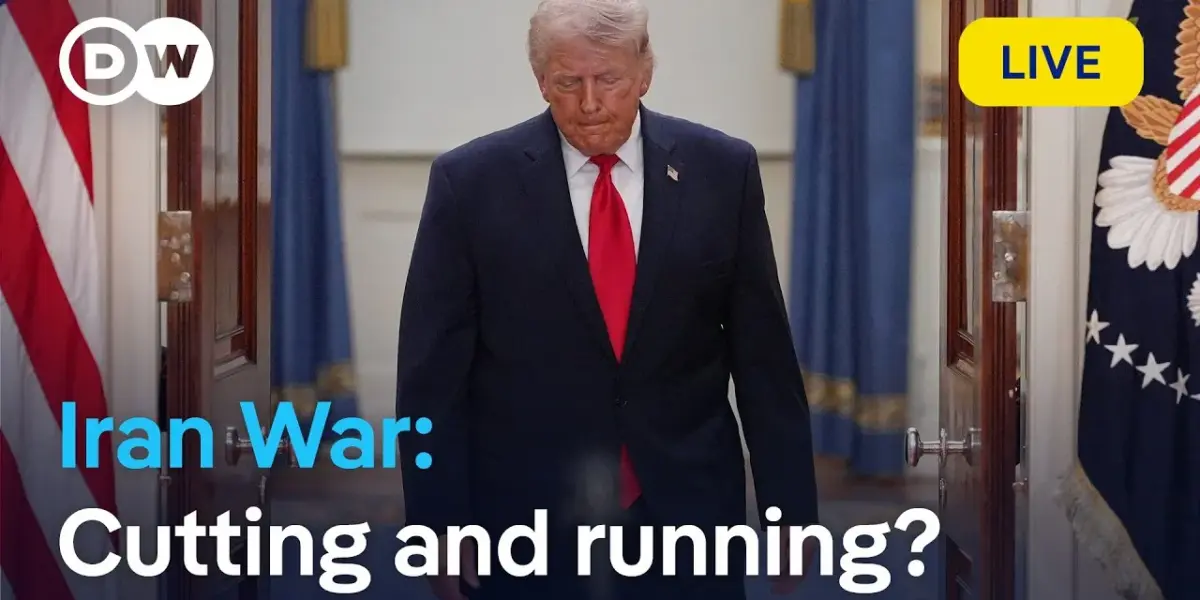
Trump Declares Victory in Iran Conflict
President Donald Trump announced Wednesday that the U.S. military campaign against Iran is nearing completion, assuring Americans that the conflict could end within weeks. During a prime-time address, Trump stated that U.S. forces have systematically dismantled Iran’s ability to threaten America or project power abroad. He claimed Iran’s navy is “destroyed,” its air force and missile program severely degraded, and its defense industrial base annihilated.
“Our objectives are very simple and clear,” Trump said. “We are systematically dismantling the regime’s ability to threaten America or project power outside of their borders.” He asserted that these actions have crippled Iran’s military, crushed its ability to support terrorist groups, and prevented it from building a nuclear bomb. “Our armed forces have been extraordinary,” he added, “and tonight I’m pleased to say that these core strategic objectives are nearing completion.”
Unanswered Questions and Doubts Emerge
Despite the president’s confident assessment, his White House address left many significant questions unanswered, according to analysts. One key point of confusion is Trump’s insistence that reopening the Strait of Hormuz, a vital global oil shipping route, is not America’s responsibility. This stance raises concerns about whether the U.S. is preparing to withdraw without securing the waterway, potentially leaving allies to manage the fallout.
Journalist and analyst Gordon Robinson noted that while the U.S. has indeed degraded many of Iran’s offensive capabilities, the situation is not as clear-cut as Trump suggested. “It’s very clear that the United States has degraded a lot of Iran’s offensive capabilities,” Robinson explained, citing the operation of U.S. B-2 bombers over Iran as evidence of weakened air defenses. However, he pointed out that attacks on Gulf states and by Iranian proxies like the Houthis in Yemen have continued, suggesting Iran’s capabilities may not be as crippled as claimed.
“There are elements of truth in that, but it’s far from as comprehensive as the president would make it sound.”
Iran, through a spokesman for its Central Military Command, offered a starkly different perspective, vowing to continue the war and promising “even stronger, more crushing, broader and more destructive actions.” The spokesman dismissed U.S. strikes as “insignificant” and claimed Iran’s strategic military production occurs in secret locations beyond U.S. reach.
Nuclear Ambitions and Economic Ramifications
Trump also reiterated his claims about Iran’s nuclear program, stating that the U.S. had “totally obliterated” key nuclear facilities during an operation called “Midnight Hammer.” He suggested that Iran’s attempts to rebuild at new locations and its development of long-range missiles showed a clear intent to acquire nuclear weapons. “They were right at the doorstep,” Trump declared, emphasizing that words are meaningless without action.
However, analysts questioned the extent of the damage and Iran’s proximity to a nuclear weapon. Robinson noted that the long-standing assessment is that Iran has been “two months away from having a nuclear bomb for 20 years.” While Iran’s ability to build an operable bomb may have been hindered, he suggested that Iran could still possess the capability to become a “threshold state” – one that can build a bomb quickly if it chooses. The effectiveness of repeated strikes in permanently dismantling such a program remains a subject of debate.
The conflict has had a significant impact on global oil prices. Oil prices spiked again immediately following Trump’s address, as markets sought concrete answers about the future of the Strait of Hormuz. The strait, through which a significant portion of the world’s oil passes, is only about two and a half to three kilometers wide in its main shipping channel, which lies within Iranian territorial waters, giving Iran considerable leverage.
Allies and Political Pressure
Trump’s call for allies to take responsibility for securing the Strait of Hormuz highlights a potential shift in U.S. regional policy. While thanking Middle Eastern allies like Saudi Arabia, Qatar, and the UAE, he implied the U.S. would not bear the primary burden of ensuring freedom of navigation. This could leave Gulf states in a precarious position, especially if Iran retaliates by further disrupting shipping.
Domestically, political analysts suggest that Trump’s emphasis on ending the war quickly may be driven by pressure from plunging approval ratings and high gas prices. Democratic Congressman Lloyd Doggett criticized Trump’s address as a “desperate” attempt to justify a “reckless war,” pointing to claims of no inflation as particularly misleading given rising costs at the pump and in grocery stores.
Katherine Klover Ashbrook, a political analyst, noted that while Americans want the war to end, Trump’s speech offered little clarity. She highlighted testimony from U.S. intelligence officials suggesting no imminent threat from Iran, contrasting with the president’s narrative. The potential for cyberattacks and economic repercussions, including impacts on the agricultural sector due to fertilizer shortages, adds further complexity to the situation.
The Road Ahead
With the U.S. military campaign declared to be nearing its end, the focus now shifts to the geopolitical and economic consequences. The stability of the Strait of Hormuz remains a critical concern, and the potential for future conflict looms if no lasting agreement is reached. The effectiveness of U.S. strategy in permanently deterring Iran and the willingness of allies to step up their security commitments will be key factors to watch in the coming months.
Source: Donald Trump assures Americans the Iran war will end soon, but what's the plan? | DW News (YouTube)

Related Articles

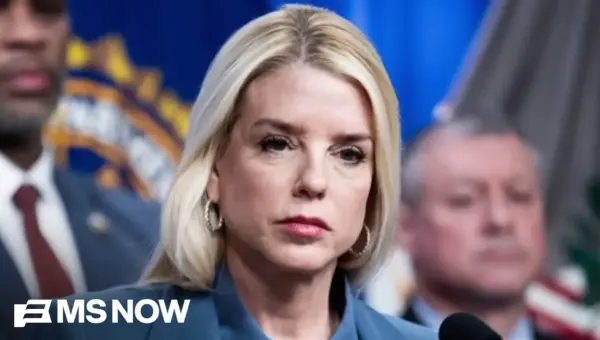
Trump Fires Bondi: Loyalty Not Enough, Scalps Now Required
Pam Bondi has reportedly been fired by President Trump, who is now demanding "scalps" from loyalists instead of mere loyalty. The shift signals a tougher stance, with candidates now needing to deliver on Trump's personal retribution list. Bondi's departure is linked to her inability to satisfy these new, demanding expectations.

US Army Leadership Shakeup Signals Strategic Uncertainty
U.S. Army Chief of Staff General Randy George has been asked to immediately step down by Secretary of the Army Pete Hegseth, citing a loss of trust. This unexpected leadership shakeup introduces uncertainty into the Army's command structure and could have implications for global security perceptions.
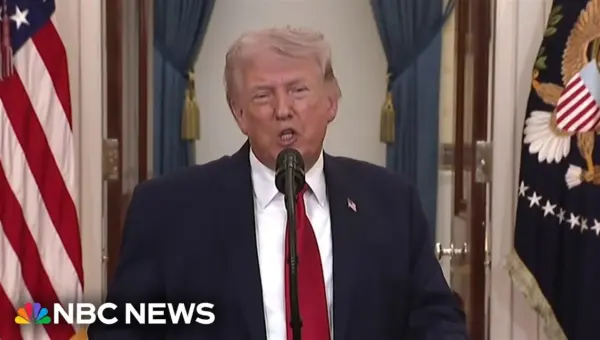
Trump Addresses War with Iran, Offers Few Details on Exit
President Trump addressed the nation regarding the ongoing war with Iran, offering praise for U.S. military actions but providing few concrete details on an exit strategy. He reiterated threats against Iran's civilian infrastructure and placed responsibility for securing the Strait of Hormuz on allied nations, while market indicators show continued oil price volatility.