Trump Claims Iran Talks, But Tehran Denies Deal Progress
President Trump claims productive talks with unnamed Iranian leaders have led him to postpone attacks, a statement Iran denies, calling it 'fake news' aimed at manipulating oil markets. Experts question the legitimacy of these negotiations, suggesting Trump may be prioritizing market stability over genuine diplomatic progress.

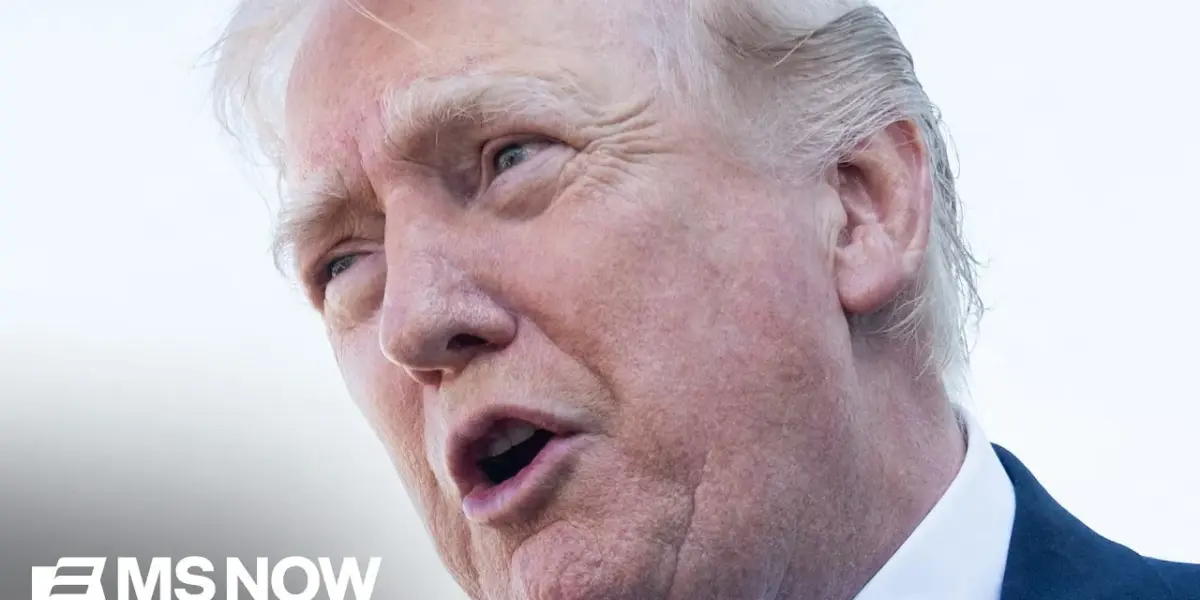
U.S. President Claims Progress in Secret Iran Negotiations
President Donald Trump announced a significant shift in his approach to Iran, stating that ongoing, albeit unnamed, talks have led him to postpone planned attacks on the country’s power plants. Trump revealed this decision on the 24th day of what he termed his “war on Iran,” indicating a willingness to negotiate a “good deal” that would end wars and prevent Iran from acquiring nuclear weapons.
The President suggested he was speaking with “very reasonable, very solid” individuals within Iran, whom he believed were empowered to make decisions. He implied that these conversations were productive enough to warrant a five-day pause on military action against vital infrastructure.
Iran Denies Talks, Cites Market Manipulation
However, Iran has publicly refuted the U.S. President’s claims. Iranian officials took to social media to label the announcement of talks as “fake news.” They suggested the motivation behind Trump’s statements was to manipulate global oil markets, a move that indeed saw oil prices drop following the announcement.
This stark contradiction highlights a significant communication gap and raises questions about the true nature and progress of any potential negotiations. The Trump administration has been notably vague about the specific individuals or entities they are reportedly engaging with in Iran.
Experts Question Legitimacy of Alleged Negotiations
Luke Broadwater, White House correspondent for The New York Times, noted that while Jared Kushner and Steve Whitcomb are reportedly in contact with Iranian representatives, the crucial question remains whether these contacts are with individuals who hold the authority to negotiate and finalize agreements. Broadwater suggested that the Trump administration itself seems uncertain about the internal communication lines within Iran.
“This may all be Trump puffing up some very, very minor conversations into something to drive down the price of oil,” Broadwater stated, suggesting a potential political motivation linked to Trump’s concern over economic pressures, particularly rising gas prices and volatile stock markets.
National Security vs. Market Pressure
David Drucker, a senior writer at The Dispatch, emphasized the gravity of the situation, noting that “words mean a lot more during a war.” He pointed out that while Trump might be less susceptible to political pressure from Republicans or Democrats, he is highly responsive to financial market fluctuations. The President’s actions, such as announcing talks and postponing attacks, successfully triggered a market rally and lowered oil futures, a tactic he has employed when facing political binds.
Drucker questioned the legitimacy of the talks, stating, “The Iranians are claiming that no such talks existed. They’re not credible. But the president is not necessarily credible in this regard.” He concluded that the coming days would reveal the true picture of the situation, suggesting the President is attempting to balance military objectives with short-term financial repercussions.
Military Posture and Unclear End Goals
Amidst the diplomatic ambiguity, reports from The Wall Street Journal indicated the deployment of thousands of Marines. However, retired Army Lieutenant Commander and author, who preferred to be identified by his military role, expressed skepticism about the scale and purpose of these deployments. He argued that the numbers are insufficient for a large-scale military campaign and that the administration lacks a clear end state for any military action.
“The end state is based on the politics, and that’s a combination of national power, diplomacy, economics, military and information. We haven’t seen that,” the commander stated. He contrasted the President’s pronouncements with Iran’s denials, calling the situation one where “two sides that really we’re not getting any information or that we can trust.” He likened the President’s statements to a child trying to avoid trouble, lacking solid answers.
Concerns Over Escalating Threats and Homeland Security
The commander also voiced concerns about escalating threats, noting the State Department’s recent worldwide security warning for Americans traveling abroad. He expressed surprise that significant attacks by proxies or homeland security threats have not yet materialized, attributing this in part to the Department of Homeland Security’s focus on issues like airport security.
“I’m very concerned that threat levels probably are rising, both overseas and in the continental United States. We just don’t know what they are,” he warned. These threats could range from cyberattacks to terrorist acts or disruptions of essential services, leaving a sense of unease despite the current lack of major incidents.
Homeland Security Funding Stalemate Affects Travel
Separately, the U.S. Senate confirmed Senator Mark Wayne Mullen as the new Secretary of Homeland Security. However, the department remains embroiled in a shutdown that has lasted over five weeks, significantly impacting public services, particularly at airports. Long lines at major airports have become a common sight due to the ongoing funding dispute.
President Trump reportedly rejected a proposal from Senate Republicans that would have funded most of the Department of Homeland Security, excluding ICE, which would have restored funding for the TSA. The President has instead linked any deal on DHS funding to the passage of the “Save America Act,” which requires voter ID and proof of citizenship for voter registration, a measure with no clear path to becoming law.
ICE Deployed to Airports Amidst TSA Woes
In an attempt to address the TSA backlog, the President has deployed ICE (Immigration and Customs Enforcement) agents to numerous airports. Tom Homan, identified as the “Border Czar,” confirmed that ICE is already present at 14 major airports, with plans for further deployment.
Looking Ahead
The coming days will be critical in determining the legitimacy and impact of the alleged U.S.-Iran talks. The world will be watching to see if diplomatic channels can de-escalate tensions or if the conflict will escalate, while also keeping an eye on the ongoing domestic struggles to fund the Department of Homeland Security and ensure smooth travel operations.
Source: 'Unclear': Just WHO in Iran is Trump's team apparently talking to? (YouTube)

Related Articles
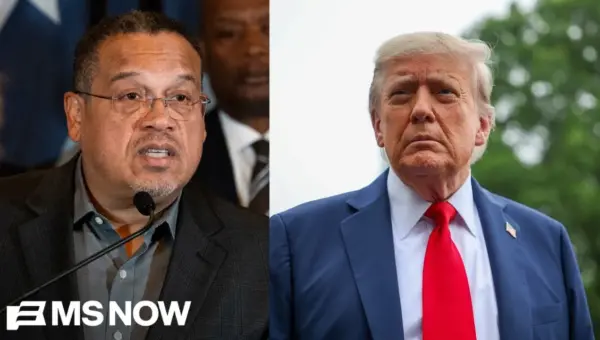
MN AG Blasts Trump’s ‘Wicked’ Insults Amid ‘No Kings’ Protests
Thousands protested President Trump's policies nationwide, with Minnesota AG Keith Ellison condemning his "wicked" and "corrupt" nature. Ellison also discussed a state lawsuit against the federal government over withheld evidence in officer-involved shootings.
Trump’s War Strategy Faces Skepticism Amidst Shifting Goals
President Trump's strategy in the ongoing Middle East conflict is facing increasing skepticism, even from his own base. While military actions have seen success, strategic goals are unclear and diverging from allies like Israel. The prolonged war and shifting public perception are creating a sense of uncertainty and doubt.
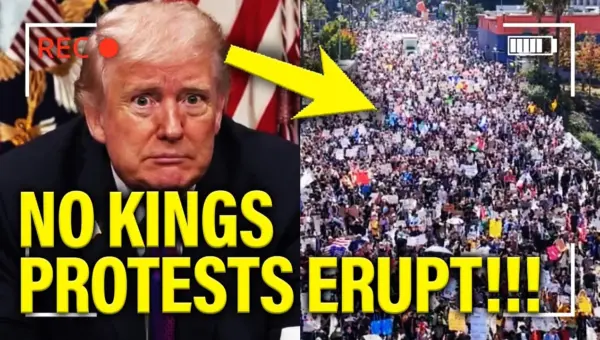
Protests Challenge Trump’s Grip as ‘No Kings’ Movement Grows
Massive 'No Kings' protests swept the nation, challenging the Trump administration and advocating for democratic values. Organizers highlighted growing support and a shift in protest tactics, positioning the movement as a force for positive change.