Trump Blasts NATO as ‘Foolish’ Over Iran Standoff
President Trump criticized NATO as 'foolish' for not assisting the U.S. in the Iran standoff. The U.S. is focusing on regime change in Iran, while European allies cite domestic politics for their reluctance to help secure vital oil shipping lanes.

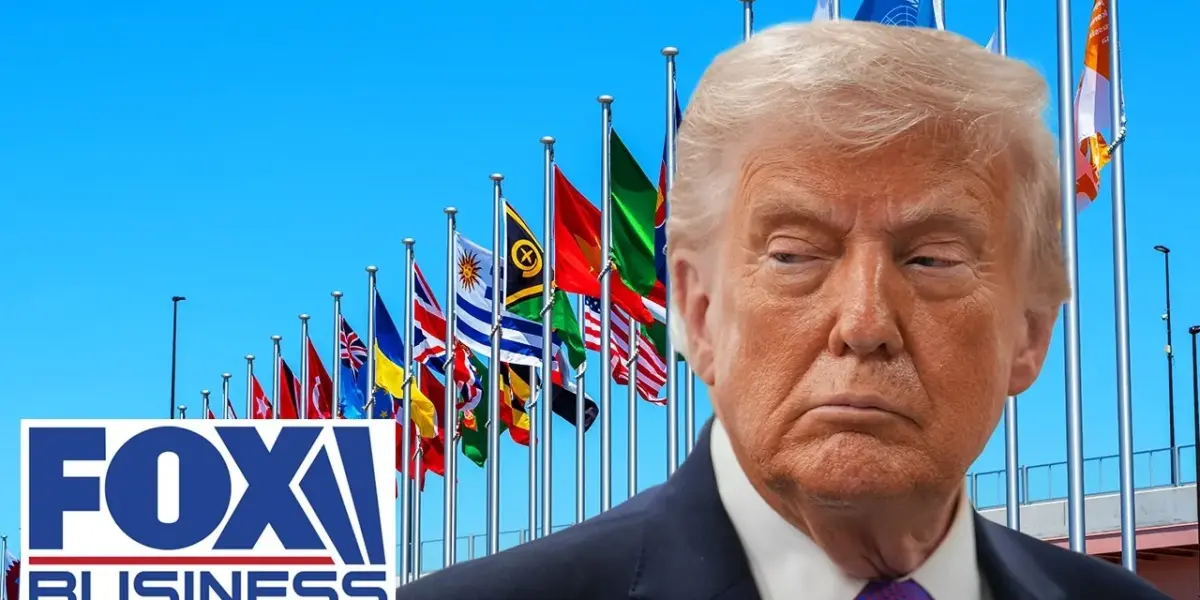
Trump Blasts NATO as ‘Foolish’ Over Iran Standoff
President Trump has sharply criticized the North Atlantic Treaty Organization (NATO) for its refusal to assist the United States in the escalating tensions with Iran. The comments come as the U.S. faces challenges in the Strait of Hormuz, a critical waterway for global oil and natural gas shipments.
“I think NATO’s making a very foolish mistake,” Trump stated, questioning the alliance’s commitment to the U.S. He emphasized that while the U.S. does not strictly need NATO’s help in this specific instance, their absence represents a significant test of the alliance’s reliability.
“This was a great test because we don’t need them, but they should have been there,” he added. “So everyone agrees with this, but they don’t want to help.” Trump suggested the U.S. must remember this stance, calling it “pretty shocking.”
Iran Policy Focuses on Regime Change
The criticism of NATO occurs against a backdrop of shifting U.S. policy towards Iran. Darrell Issa, a member of the House Foreign Affairs Committee, highlighted the strategy of targeting Iranian leadership. He noted that since World War II, eliminating enemy leaders has been seen as a way to create opportunities for negotiation.
Issa referenced recent actions, including an Israeli strike that reportedly killed an Iranian intelligence minister. “To me it seems like good policy, decapitate your enemy,” Issa commented. He explained that after 47 years of working with the existing Iranian leadership without success, President Trump and allies understand the need to change the top ranks of the regime.
This approach aims to alter the regime’s direction or even achieve full regime change. Issa believes this strategy could encourage a local revolt within Iran. “The Iranian people… have wanted a change, they’ve wanted the freedom,” he stated.
Wall Street Journal Report Highlights Israeli Actions
A Wall Street Journal article reportedly details Israeli efforts to disrupt Iranian security forces. The suggestion is that these actions could destabilize the regime and open the door for internal dissent. Issa believes the Iranian people are ready to revolt if given the chance.
“They’ve tried before and they’ve been killed on the streets,” Issa said. “This may give an opportunity for them to succeed.” He argued that many people, both inside and outside Iran, would benefit from a change in leadership.
European Hesitation Linked to Domestic Politics
When asked why European allies like Britain, France, and Germany are not offering more support, the issue of domestic politics was raised. It was suggested that these countries have significant Muslim minority populations who may object to taking action against any Muslim state.
Issa acknowledged this as a consideration but argued that European leaders are looking too narrowly. He believes they are focusing on a small segment of the population rather than recognizing that many Muslim countries outside the Arab world are also negatively affected by Iran’s actions. “So many of those people, quite frankly, would benefit from a change in Iran,” Issa asserted.
Call for European Support in Strait of Hormuz
Despite the current hesitation, Issa believes it is not too late for European nations to offer assistance. He stated that any country with the capability to help, particularly from a defensive standpoint, is free to do so now. The U.S. needs help in the Strait of Hormuz, and allies must be willing to share the risks associated with securing the vital shipping lanes.
“We’re not asking them to come in and fight the war for us, but to join in support for their own best interest, particularly with their need for oil and natural gas,” Issa urged. He concluded that European nations should be actively participating in ensuring the safety of these critical routes.
What Investors Should Know
The escalating tensions in the Middle East, particularly involving Iran, create uncertainty for global markets. The Strait of Hormuz is a crucial chokepoint for oil transportation, and any disruption could lead to higher energy prices. This impacts transportation costs for businesses and consumer spending.
NATO’s perceived lack of support could signal a potential shift in alliances or a weakening of collective security. Investors should monitor how these geopolitical developments affect energy markets, defense stocks, and overall global economic stability. The focus on regime change in Iran also introduces long-term geopolitical risk and potential shifts in regional power dynamics.
Source: 'VERY FOOLISH MISTAKE': Trump UNLOADS on NATO in escalating Iran drama (YouTube)

Related Articles
Trump’s Oil Market Influence Wanes Amidst Global Instability
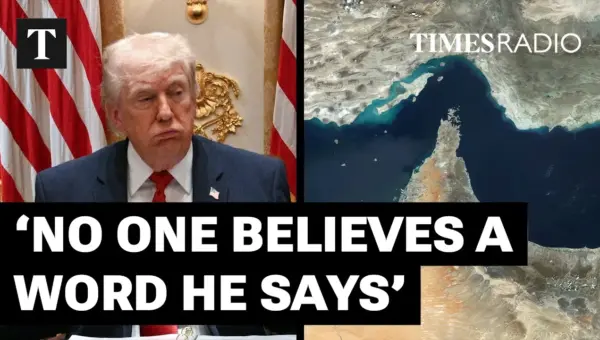
Former President Donald Trump's attempts to influence oil markets have reportedly failed, raising concerns about his diminishing credibility. Analysts compare his approach to "the boy who cried wolf," suggesting a loss of trust among market participants. The discussion also touched upon the use of personal devices for government communication and the vetting of political candidates amidst controversial remarks.

Trump’s War Talk Distracts as World Burns
As global conflicts escalate and economic pressures mount, Donald Trump's focus on past grievances and symbolic wins overshadows pressing issues. His rhetoric, including questionable claims about ending wars and strategic use of terminology to bypass Congress, raises concerns about leadership and national priorities.

Iran Extends Strait of Hormuz Deadline Amid Global Oil Tensions
The U.S. has granted Iran a 10-day extension to reopen the Strait of Hormuz, a critical global oil route. This move comes amid complex negotiations, military actions, and concerns over Iran's strategic leverage and resilience. Lawmakers express frustration over the lack of a clear strategy and potential escalation.