Trump Backs Funding Plan Amid DHS Shutdown Fears
Former President Trump has endorsed a plan to fund the Department of Homeland Security, aiming to prevent a shutdown. The move comes as Congress debates a legislative strategy that includes using reconciliation to bypass the Senate filibuster. Divisions among Republicans and ongoing debates over crypto regulation and filibuster rules add complexity to the legislative push.

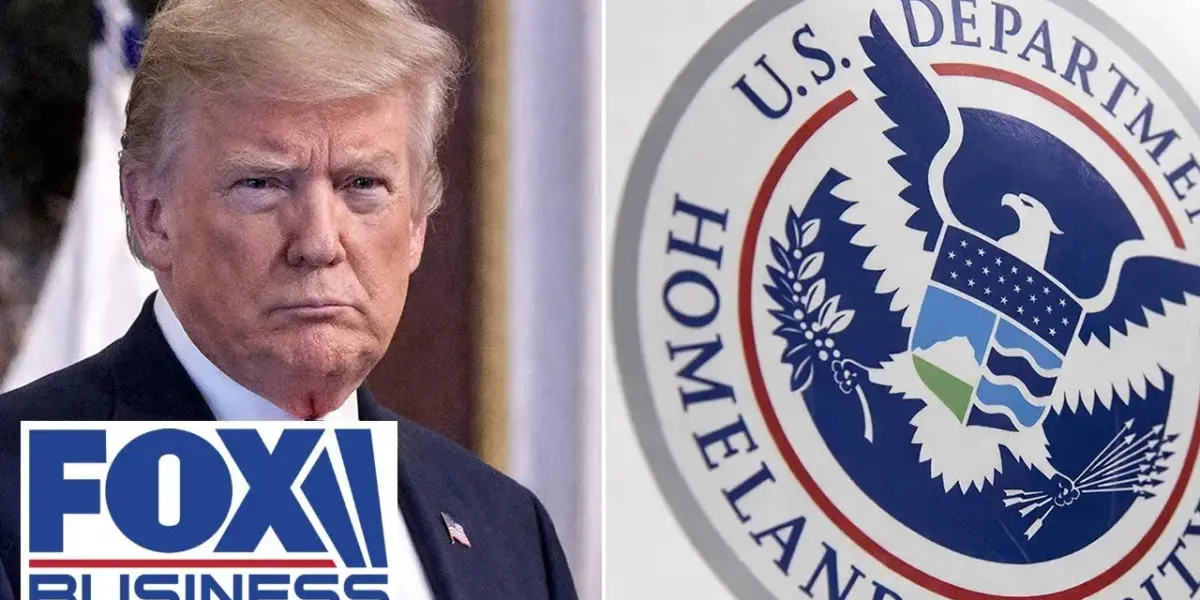
Trump Backs Funding Plan Amid DHS Shutdown Fears
In a significant move, former President Donald Trump has publicly endorsed a two-track plan aimed at preventing a shutdown of the Department of Homeland Security (DHS). The plan, spearheaded by Speaker Mike Johnson and Senate Majority Leader Thune, seeks to fund critical parts of DHS, including Customs and Border Protection (CBP) and Immigration and Customs Enforcement (ICE), through a legislative process known as reconciliation. This strategy allows for passage with a simple majority, bypassing the usual Senate filibuster, which requires 60 votes.
Trump took to Truth Social, his social media platform, to urge lawmakers to send the bill to his desk by June 1st. This intervention comes as the Senate is convening for pro forma sessions, signaling an effort to move the bipartisan deal to the House. The House is expected to meet shortly for its own session to vote on the measure.
A Contentious Path Forward
Senator Kevin Cramer of North Dakota, speaking on the matter, described the situation as “interesting.” He noted that the deal the House is set to vote on is similar to one rejected just last week. However, Cramer believes Trump’s strong endorsement will likely sway Republican support in the House. “I can’t imagine that there will be anybody, any Republicans at least in the House of Representatives, won’t support this deal,” Cramer stated. He sees this as the most viable path forward, given the obstruction faced in the Senate from Democrats.
The June 1st deadline, while seemingly distant, highlights the urgency. Cramer emphasized the need to get the bulk of DHS funding operating normally as quickly as possible. The reconciliation package is seen as a way to fund ICE and CBP not just for the current year, but well into the future, preventing similar funding crises. “The process of budget writing, reconciliation takes time, two or three-month delay working the process through,” Cramer explained.
Republican Divisions Surface
However, not all Republicans are on board. Representative Lisa McClain expressed strong reservations about relying on another reconciliation bill for national security. “I am not going to roll the dice on passing another reconciliation bill with our national security,” she said. McClain questioned why funding levels in the bill were set at zero, suggesting that too much authority had been removed from Homeland Security. She advocated for a clean Continuing Resolution (CR) for 30 days, allowing negotiations to continue while ensuring essential functions are funded. “Let’s stop taking hostages while we negotiate. Let’s pay the people. Let’s make sure that our borders are secure and American people are safe,” McClain urged.
Senator Cramer addressed these concerns, explaining that the proposed bill passed the Senate unanimously, with Trump’s support. He acknowledged the possibility of a 30-day CR but stressed the importance of securing funding for DHS now. “It is no different other than largely open DHS, and, by the way, still be able to fund with last year’s reconciliation package, the important law enforcement and ICE and Border Patrol,” he said.
The Filibuster Debate Looms
The discussion also touched upon the broader political climate and the potential use of the filibuster. Some Republicans fear that Democrats, if they regain power, would eliminate the filibuster, leaving Republicans without a crucial tool. Senator Cramer acknowledged the value of the filibuster, especially for smaller states, but suggested that Democrats might be trying to bait Republicans into abolishing it. “I think in some respects, the Democrats are trying to bait us into doing exactly that,” he noted. He expressed hope that some senators would resist calls to eliminate the filibuster to maintain the integrity of the Senate.
Focus Shifts to Crypto Regulation
Beyond homeland security funding, the conversation turned to cryptocurrency regulation, specifically the Clarity for Responsible Innovation Act. Senator Cramer highlighted ongoing disputes over stablecoin reserves and market structure. He indicated that the crypto industry has not yet fully embraced the proposed regulations, viewing them as too restrictive. “Our diversified system of financial services with guardrails that we have, I think, is an engine of democracy and an engine of capitalism in the United States. We have to protect that,” Cramer stated.
He stressed the need for protections for investors and consumers, warning against allowing the crypto industry to operate without the same safeguards as traditional banks. Cramer hopes a deal can be worked out soon, with plans for a public hearing to allow for greater transparency in the negotiations. “We really have to pass something that protects people, also encourages the investment that we want here in the United States, not other places,” he concluded.
Confirmation Hearings on the Horizon
The discussion concluded with a brief mention of upcoming confirmation hearings. The Banking Committee is targeting April 13th for a hearing for Kevin Warsh, a nominee for a position likely related to the Federal Reserve, though the transcript is unclear on the exact role. Senator Cramer emphasized the importance of holding the hearing for transparency, regardless of potential political hurdles. He noted that Warsh is impressive, with a strong background, and believes a public hearing will help build support for his confirmation.
Source: CONTROVERSIAL MOVE: Trump TAKES A SIDE in high-stakes immigration funding fight (YouTube)

Related Articles


Trump’s NATO Threats Spark Global Unease, Ex-Envoy Warns
Former Ambassador Kurt Volker warns that President Trump's questioning of NATO and the ongoing conflict with Iran are creating global instability. The war's unclear outcome benefits Russia and potentially China, while straining U.S. relations with European allies. Volker suggests Trump's NATO threats are a tactic to pressure allies, but legal and political hurdles make withdrawal difficult.

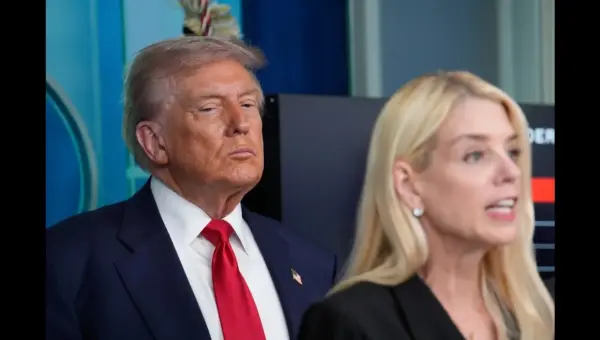
Trump Fires Bondi: A Loyalty Test Ends in Public Humiliation
Pam Bondi's dismissal as Attorney General by Donald Trump was reportedly a "dramatic showdown," not a quiet transition. Accusations of an "unforgivable offense" and alleged interference in the Epstein files controversy fueled the conflict. The incident highlights a pattern of demanding loyalty and then discarding allies when they are no longer useful.

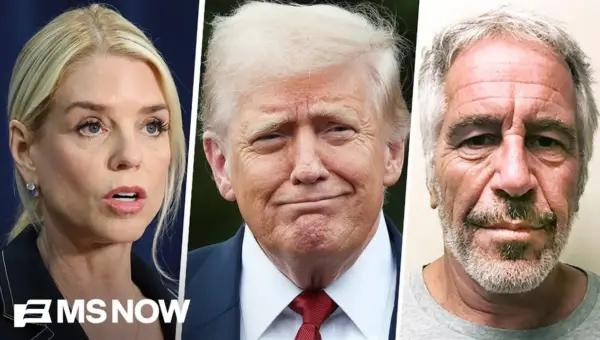
Trump Ousts Bondi Amid Epstein Probe, Congress Demands Answers
Congressman Seth Moulton claims President Trump removed Pam Bondi from her position due to her impending deposition in the Jeffrey Epstein case. The conversation also addressed the escalating conflict with Iran, with Moulton criticizing the administration's strategy and calling for transparency.