Trump Approval Dips Amid Iran Fumble, Election Fears
Donald Trump's approval ratings have seen a notable decline, while concerns mount over the administration's handling of international affairs and communication strategies. The article also delves into shifting political loyalties and a perceived "massive grift" within the U.S., raising questions about the integrity of future elections and the erosion of democratic values.

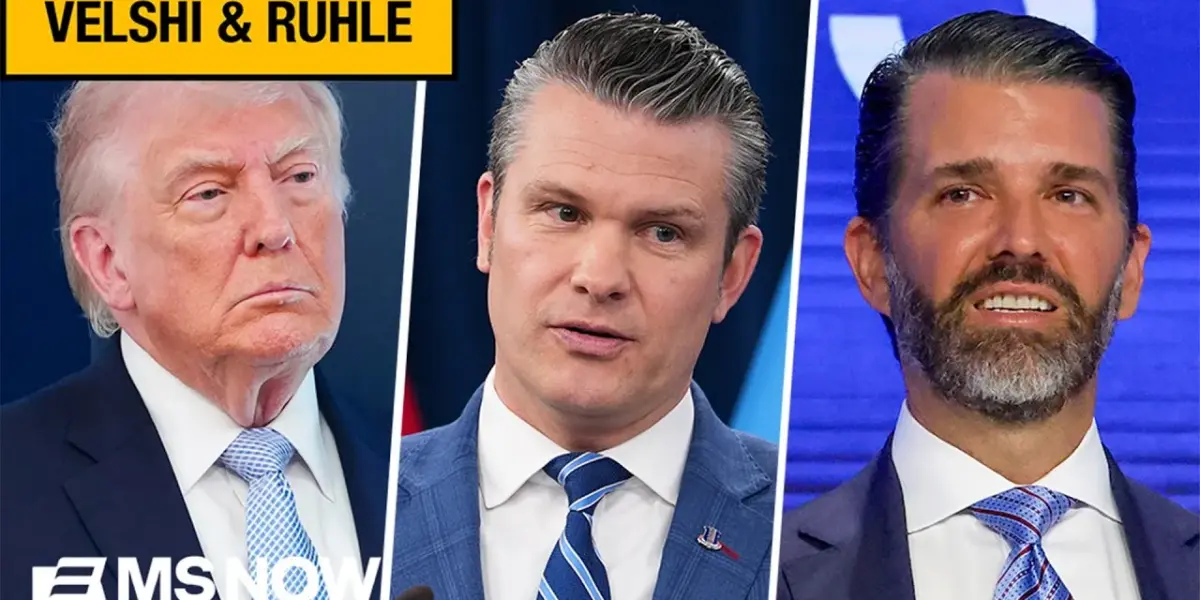
Trump’s Approval Ratings Decline as Media Questions Iran Strategy
Recent polling data indicates a significant drop in Donald Trump’s approval ratings, with disapproval significantly outweighing approval across multiple surveys. CNN reports 35% approval versus 64% disapproval, while The Economist/YouGov shows 35% approval and 58% disapproval. Quinnipiac polls put his approval at 38% and disapproval at 56%. These figures suggest that Trump’s core base, estimated around 33-38%, remains loyal, but his broader appeal has diminished.
The discussion also touched upon the effectiveness of the current administration’s communication regarding international conflicts, particularly concerning Iran. Critics argue that the administration’s actions and messaging have been a “fumble,” with intelligence suggesting a different outcome than what has transpired. The Strait of Hormuz, a vital oil transit route, is highlighted as a point of concern, with potential tolls imposed by Iran impacting global oil prices.
This situation raises questions about the administration’s strategic planning and its ability to manage global energy markets. The potential for increased oil prices, possibly reaching $150 a barrel, could lead to gas prices nearing $6 per gallon, significantly impacting consumers, especially during peak summer travel months.
Shifting Political Alliances and Election Integrity Concerns
The political landscape appears to be in flux, with some traditional Trump supporters expressing disillusionment. The example of Alex Jones, a long-time Trump ally, voicing criticism is cited as a potential indicator that even the most fervent base may be wavering. This shift is particularly notable in districts once considered solidly Republican, such as Marjorie Taylor Greene’s Georgia district, where the Republican margin of victory has narrowed considerably.
While the core MAGA base may not defect to Democrats, their potential non-participation in elections could significantly impact outcomes. The article explores the idea that voters are becoming frustrated with political gridlock and a perceived lack of focus on everyday issues like affordability and healthcare. Candidates who address these concerns, even if not ideologically aligned with traditional progressives, may find traction.
Furthermore, concerns about election integrity are being voiced by prominent figures, suggesting a potential strategy to undermine democratic processes. The idea that elections could be manipulated or compromised is presented not as a conspiracy theory but as a plausible scenario given the current political climate. The interconnectedness of various issues, from foreign policy to gas prices and election security, is emphasized as a critical factor in understanding the current political moment.
Economic Grift and the Erosion of Democratic Values
A significant portion of the discussion focused on what is described as a “massive grift” within the U.S., particularly concerning business dealings and political influence. The article suggests that close ties between political figures and wealthy business communities have led to policies that benefit a select few, potentially at the expense of democratic values. This is contrasted with traditional lobbying, suggesting a more direct and potentially corrupt exchange of favors.
Examples cited include the oil industry potentially influencing policy in exchange for campaign funds and the involvement of individuals connected to political figures in lucrative business ventures, such as drone companies. The article draws parallels to oligarchic systems, where wealth and power are concentrated, raising concerns about the erosion of fair competition and equal opportunity.
The piece concludes by emphasizing the importance of holding power accountable, even when it comes from one’s own government. The role of investigative journalism and leaks is highlighted as crucial for uncovering the truth and ensuring transparency. The interconnectedness of global markets, political strategies, and economic practices is presented as a complex web that citizens must navigate to understand the full picture.
“The price is global. So when there is a shortage of oil in the world, the price of oil goes up, our price of oil goes up and our price of gas goes up. We are not a closed loop.”
– Anonymous Analyst
“We are not meant to just take our government’s word for everything. We are there to bear witness and hold power to account.”
– Anonymous Analyst
Source: Trump’s approval drops | Iran communications ‘FUMBLE’ | Massive GRIFT in the U.S. (YouTube)

Related Articles
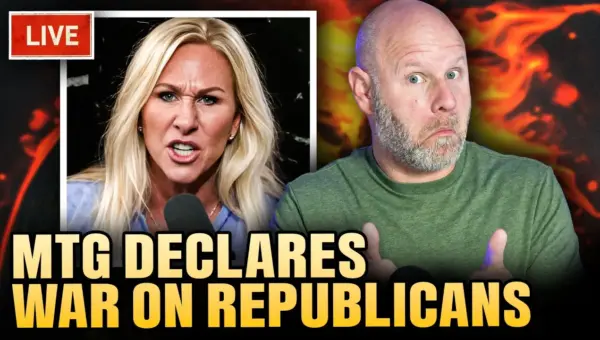
Greene Demands GOP Burning; Trump Followers in Cult?
Marjorie Taylor Greene recently called for the Republican Party to be 'burned to the ground' and described Donald Trump's MAGA followers as being part of a 'cult.' These strong statements highlight deep divisions within the GOP and raise questions about the nature of political loyalty and party identity.

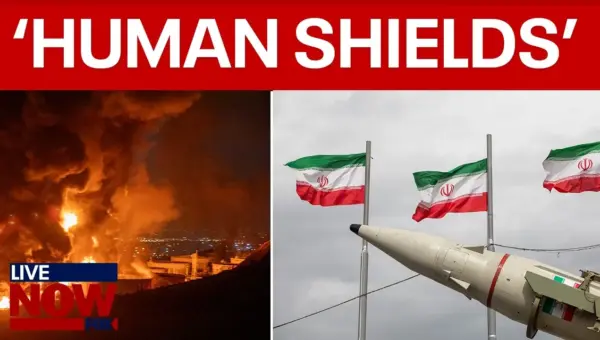
Iranians Face Dilemma: “Human Shields” Amidst Peace Talks
Iranian citizens are reportedly being ordered to serve as "human shields" around critical infrastructure as the U.S. prepares for high-stakes peace talks. Journalist Alina Shirazi highlighted the lack of clear safety guidance for ordinary Iranians, who feel caught between potential military strikes and government directives. The situation unfolds as top U.S. officials head to negotiations aimed at de-escalating tensions.

MAGA Stars Flee Trump as Movement Crumbles
Influential MAGA figures are publicly clashing with Donald Trump, leading to a visible fracturing of the movement. Allies like Megyn Kelly, Tucker Carlson, and Candace Owens are now facing Trump's criticism, with some even suggesting he should step down. This internal strife, coupled with Melania Trump's independent actions, signals a potential weakening of Trump's influence and raises questions about the future of the MAGA movement.