Trump Announces ‘Productive’ Iran Talks, Halts Strikes
President Trump announced productive talks with Iran and has halted military strikes for five days. Experts express caution, suggesting Iran may be buying time. The focus is shifting from regime change to addressing Iran's nuclear and missile programs.

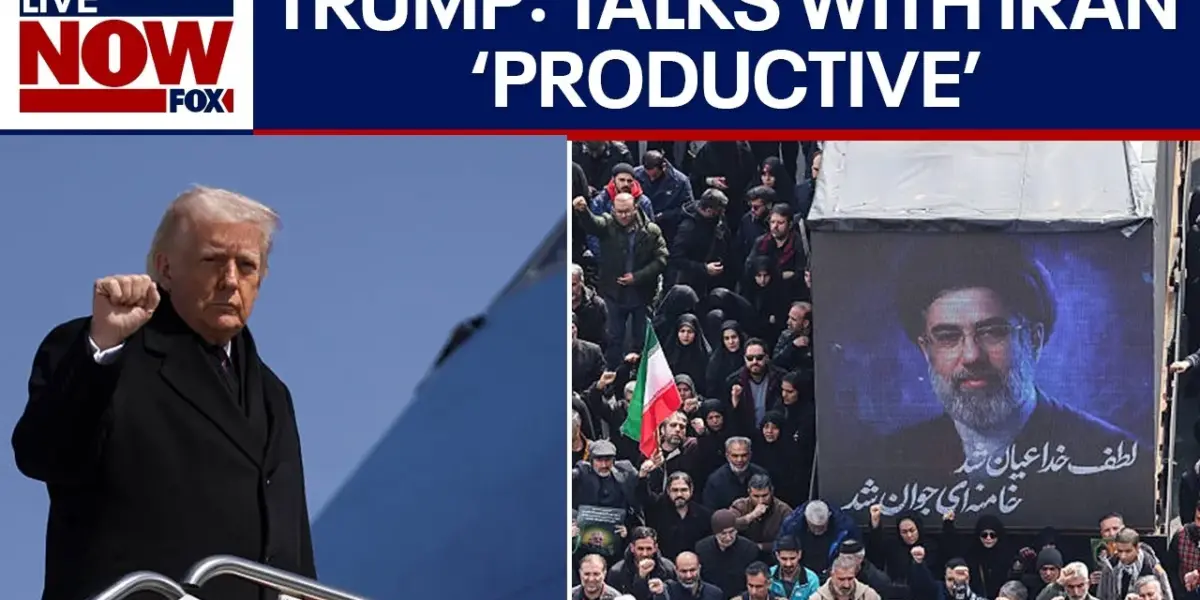
Trump Announces ‘Productive’ Iran Talks, Halts Strikes
President Donald Trump announced on Friday that the United States and Iran have held “very good and productive conversations” over the past two days, aiming for a “complete and total resolution of our hostilities in the Middle East.” Following these talks, Trump has instructed the Department of War to postpone all military strikes against Iranian power plants and energy infrastructure for a five-day period. This development comes amid ongoing global concerns over the situation in the Strait of Hormuz and continued fighting in various parts of the Middle East.
Behind the Scenes Negotiations
These discussions, described as “in-depth, detailed and constructive,” are expected to continue throughout the week. The announcement came via a post on Trump’s social media platform, Truth Social. While the details remain scarce, the move signals a potential de-escalation in the tense relations between the two nations.
“I am pleased to report that the United States of America and the country of Iran have had over the last two days very good and productive conversations regarding a complete and total resolution of our hostilities in the Middle East.”
– President Donald Trump
Expert Analysis on Iran’s Intentions
David Dawoud, a senior fellow at the Foundation for the Defense of Democracies, shared his insights on the implications of these talks. He noted that President Trump has consistently expressed a desire for a negotiated settlement with Iran, focusing on issues such as the nuclear program, ballistic missiles, and Iran’s regional activities through proxies.
However, Dawoud expressed caution, suggesting that Iran might be using these negotiations to buy time and ensure the survival of its regime. “My sense is that Iran is going for option two,” Dawoud stated, implying that Tehran may not be seeking a genuine long-term resolution but rather a temporary pause to await a more favorable international climate.
Identifying Negotiating Partners
A key question surrounding these talks is the identity of the Iranian officials involved. Dawoud’s assumption is that the U.S. is speaking with Foreign Minister Mohammad Javad Zarif, who remains alive and has been a primary contact for the Trump administration. The larger question, however, is who is directing Zarif’s actions and defining Iran’s red lines.
Despite the elimination of some prominent Iranian figures in recent strikes, Dawoud pointed out that Iran’s sophisticated organizational structure and chain of succession mean that other leaders are likely in place. The specific individuals making decisions remain unclear.
Shifting U.S. and Israeli Objectives
The initial objectives of the campaign against Iran, which included regime change, appear to have shifted. Both the U.S. and Israel initially seemed to be pushing for the overthrow of the Iranian government, encouraging internal uprisings.
However, this strategy has not materialized. Dawoud explained that there is neither the willingness nor the capability for a ground invasion by either the U.S. or Israel to force regime change. Consequently, there has been a quiet shift in emphasis. Prime Minister Netanyahu, for instance, has moved from prioritizing regime change to focusing on Iran’s nuclear and ballistic missile programs.
Dawoud suggested that any concessions Iran might make are likely to be tactical and temporary, aimed at buying time rather than enacting fundamental change. “I can’t see many concessions on the… support for proxies in the region,” he added.
Gulf States’ Cautious Stance
The Gulf Arab states are currently adopting a cautious approach, observing the unfolding situation. Reports indicate that the UAE has criticized the Arab and Islamic response to Iranian attacks.
While some Gulf nations have taken steps to dismantle Hezbollah cells operating within their borders, they appear to be preserving the option of establishing a modus vivendi with Iran should the current regime survive the conflict. This stance is influenced by the potential for a post-war Iran, even if weakened, to remain a significant regional power.
Focus on Hezbollah and Northern Front
Looking ahead, Dawoud highlighted Lebanon and the threat posed by Hezbollah as a critical area to watch. He described Hezbollah as the most powerful extension of the Iranian regime and a primary enemy of the United States.
Degrading Hezbollah’s capabilities is seen as crucial not only for Israeli security but also for U.S. interests, as the organization actively works to diminish American influence globally. Dawoud stressed that the conflict in Lebanon should not be considered a secondary theater but a central front in the broader confrontation with Iran and its regional expansionism.
The situation remains fluid, with ongoing fighting in various regions, including Beirut. The coming days will be critical in determining whether these diplomatic overtures lead to a lasting de-escalation or merely provide a temporary reprieve.
Source: Trump: U.S. has had "productive" talks with Iran (YouTube)

Related Articles


G7 Allies Clash Over Iran War Strategy, Urge Focus on Russia
G7 foreign ministers met in Paris, revealing deep divisions over the U.S. war with Iran. European allies urged the U.S. to pressure Russia, linking its actions to the conflict and fearing support for Ukraine will wane.

Iran Blocks China Ships, Exposing Beijing’s Weak Grip
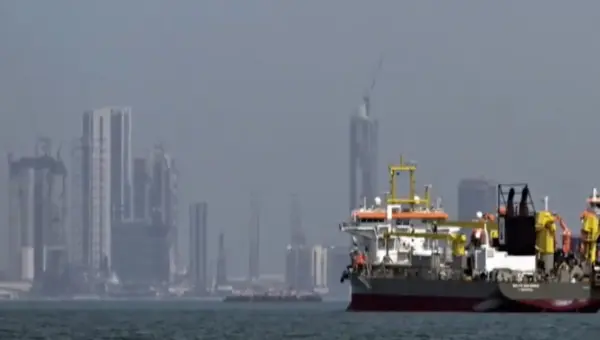
Iran's recent decision to block Chinese ships at the Strait of Hormuz is exposing the limits of Beijing's influence in the Middle East. This action is causing delays and cancellations for Chinese manufacturers, turning a perceived geopolitical win into an economic strain.
Rubio: US Can Achieve Iran War Goals Without Troops
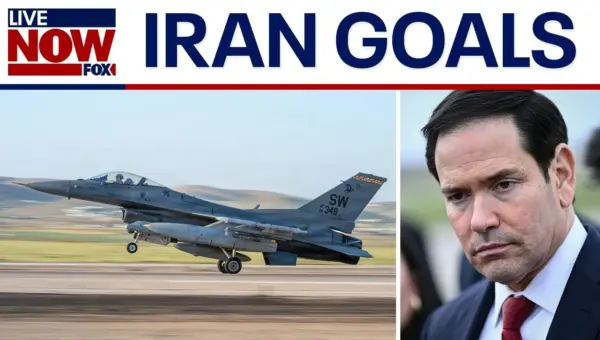
Senator Marco Rubio outlined a strategy to counter Iran without deploying U.S. ground troops, focusing on weakening the regime and enhancing maritime security. He also criticized Cuba's economic system and expressed concerns about West Bank violence.