Trump Administration Claims War Ahead of Schedule; Iran Rejects Deal
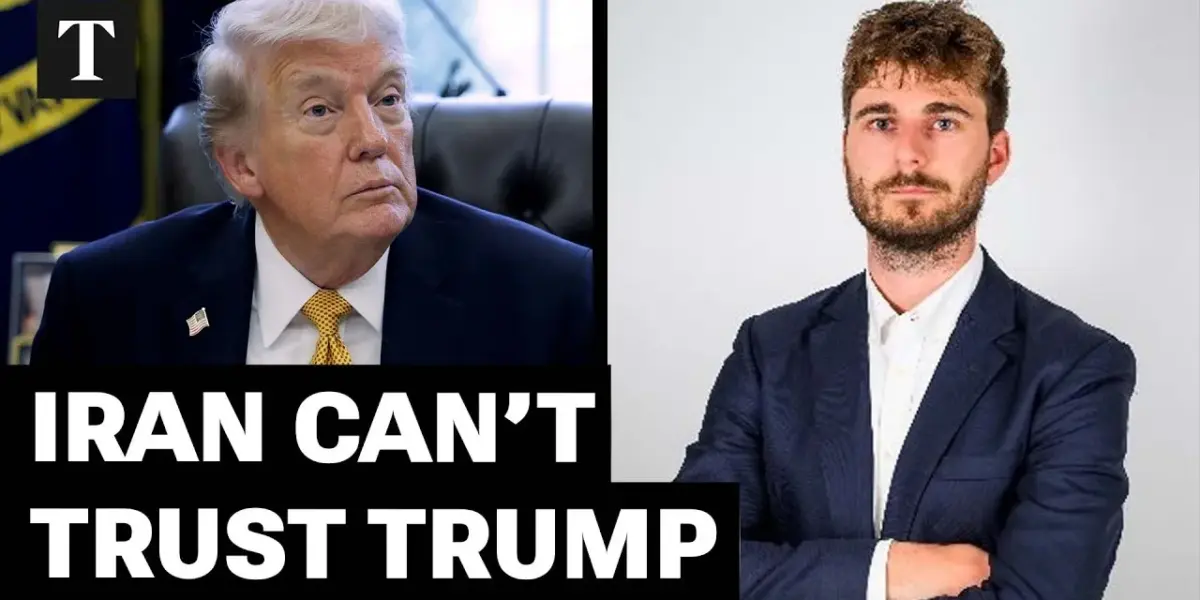
The Trump administration claims military operations against Iran are ahead of schedule, potentially concluding within weeks. However, Iran has rejected a US-proposed 15-point plan, creating conflicting signals about the conflict's trajectory. Analysts point to divergent aims between the US and Israel, alongside Iran's strategic diplomatic maneuvers, as key factors shaping the uncertain path forward.

US Claims Progress in Iran Conflict Amidst Conflicting Signals
The Trump administration is signaling that military operations against Iran are progressing faster than initially planned, with a White House spokesperson stating that the US is “ahead of schedule” on a four-to-six-week timeline. This announcement, made approximately 25 days into the operation, suggests a potential early conclusion to the conflict.
However, this optimistic outlook appears to contradict recent diplomatic developments. The US reportedly presented Iran with a 15-point plan, which Iranian officials have firmly rejected. This mixed messaging has created confusion regarding the true state of affairs and the path forward.
Iran’s Stance and Shifting Demands
The Iranian response to the US proposal has been a resounding “absolutely not.” This rejection comes after a period of intense diplomatic activity, including the presentation of the US plan and, simultaneously, significant military posturing by the US in the Middle East. This includes the deployment of paratroopers from the 82nd Airborne Division and two Marine Expeditionary Units, a force typically used for major operations.
Iranian officials are likely recalling past negotiations with US envoys Steve Wickoff and Jared Kushner. During those talks, promises of a deal were made, yet military action followed. This history has led to a deep mistrust, with Iran reportedly preferring to engage with figures like JD Vance over Wickoff and Kushner, whom they view as too closely aligned with Israel.
Iran has also presented its own set of demands. These include reparations for recent attacks, guarantees against future aggression, and the withdrawal of Israel from Lebanon. These counter-demands suggest a significant gap between the US and Iranian positions, making a swift resolution appear unlikely.
Divergent Aims Between US and Israel
Analysts suggest that the United States and Israel may have different objectives in the conflict. Israel, according to reports, aims for a more comprehensive dismantling of Iran’s capabilities, sometimes described as “mowing the grass.” In contrast, the US appears more inclined to find a quicker exit strategy, an “off-ramp,” to end the hostilities.
These differing timelines are influenced by domestic political pressures. Israeli Prime Minister Benjamin Netanyahu is reportedly looking to conclude the conflict favorably before an upcoming election, aiming to present a victory over Iran as a key achievement. For the US, particularly President Trump, the focus may be on voter sentiment regarding gas prices and his own political legacy, especially with midterm elections on the horizon.
Internal US Political Dynamics and Iranian Diplomacy
The Iranian strategy appears to be playing on internal divisions within the Trump administration and the broader MAGA movement. By suggesting a preference for negotiating with JD Vance, who has taken an anti-war stance, over Kushner and Wickoff, Iran aims to create friction between different factions.
This diplomatic maneuver highlights Iran’s awareness of US internal politics. It seeks to leverage voices within the MAGA movement that are more cautious about military intervention, contrasting them with more hawkish elements. Reports suggest that JD Vance’s potential travel for talks in Turkey or Pakistan is being closely watched.
Context: CPAC Gathering and Electoral Setbacks
The unfolding situation occurs against the backdrop of the Conservative Political Action Conference (CPAC) in Texas. This year’s gathering is expected to be more subdued than in previous years, with fewer high-profile cabinet members in attendance. The event is also overshadowed by internal Republican party disputes, including a contentious Senate race in Texas where Trump’s endorsement remains undecided.
Adding to the political complexities, recent special elections have seen Democratic gains. Notably, a district containing Trump’s Mar-a-Lago residence has elected a Democrat, a development that carries a certain irony given Trump’s rhetoric against mail-in voting. Ironically, Trump and his wife, Melania, cast their votes via mail-in ballots in that same election, while simultaneously advocating for stricter laws against such methods.
Looking Ahead
As the situation develops, all eyes will be on whether the Trump administration can reconcile its claims of rapid progress with Iran’s firm rejection of its proposed deal. The differing political timelines and objectives of the US and Israel, coupled with Iran’s calculated diplomatic approach, suggest that the path to de-escalation remains fraught with challenges. The upcoming weeks will be critical in determining whether the conflict moves towards a swift resolution or a prolonged engagement.
Source: Trump Says War Is ‘Ahead Of Schedule’ But Iran Won’t Accept Deal | George Grylls (YouTube)

Related Articles
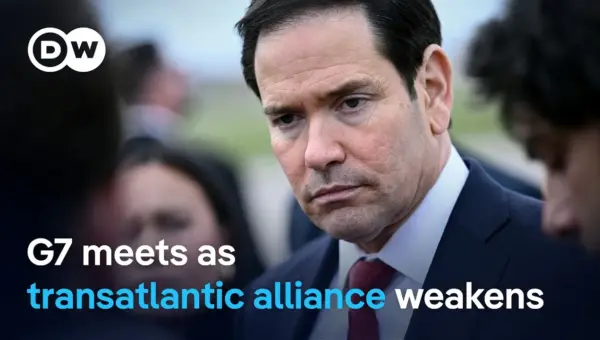
G7 Allies Clash Over Iran War Strategy, Urge Focus on Russia
G7 foreign ministers met in Paris, revealing deep divisions over the U.S. war with Iran. European allies urged the U.S. to pressure Russia, linking its actions to the conflict and fearing support for Ukraine will wane.

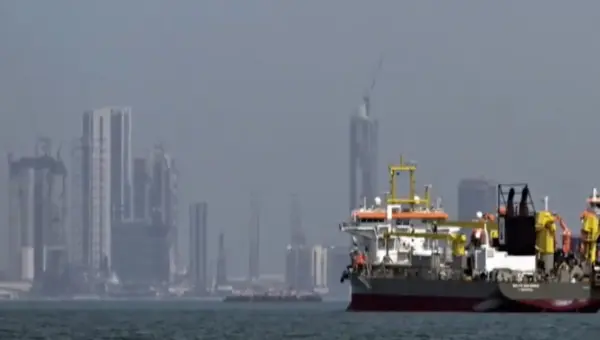
Iran Blocks China Ships, Exposing Beijing’s Weak Grip
Iran's recent decision to block Chinese ships at the Strait of Hormuz is exposing the limits of Beijing's influence in the Middle East. This action is causing delays and cancellations for Chinese manufacturers, turning a perceived geopolitical win into an economic strain.
Trump’s “Walk Away” Tactic Signals Tougher Stance on China
Retired Air Force Brigadier General David Stillwell believes President Trump's strategy of being willing to walk away from negotiations puts pressure on China. This tactic, combined with US global actions and strengthened alliances, signals a more assertive American foreign policy.