Top 10 God Arguments Revealed!
WatchMojo breaks down the 10 most compelling arguments for God's existence, from the mystery of consciousness to the logic of the cosmological argument. Explore centuries of philosophical thought.

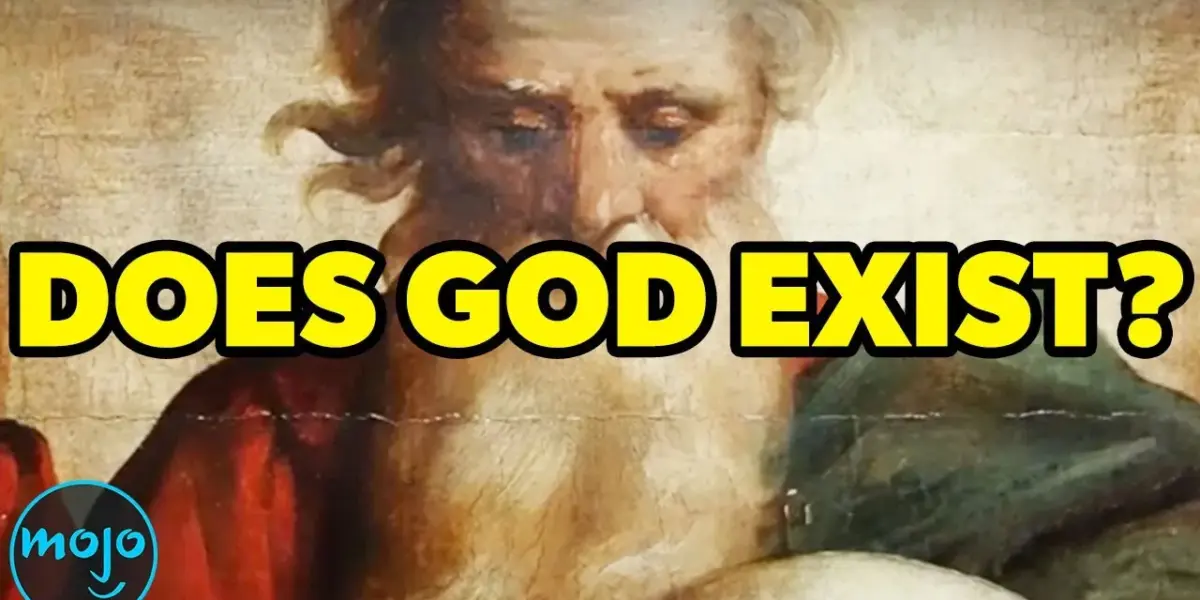
Top 10 God Arguments Revealed!
For ages, people have tried to prove God exists with solid arguments. WatchMojo’s latest video explores the top 10 most interesting arguments for God’s existence. These ideas have been discussed by thinkers for centuries, trying to explain why we believe or feel there’s something bigger than us.
The Mystery of Consciousness
Starting at number 10 is the argument from consciousness. Science can explain a lot, but it struggles with one big question: why are we aware of ourselves? We know the brain is involved, with neurons firing and signals moving. But this doesn’t explain the actual feeling of being ‘you.’ This is known as the ‘hard problem of consciousness.’ Some argue that if our thoughts and feelings come from physical stuff, they must have an origin. Could this origin be a great mind behind everything? Even famous atheist philosopher David Chalmers admits consciousness is a huge mystery, suggesting maybe there’s something beyond us, perhaps even God.
The Problem of Evil
Number 9 tackles the argument from the existence of evil. This argument actually starts by questioning God’s existence. If God is all-powerful and all-good, why does evil exist? Think about war, suffering, and injustice. For a long time, people used this question to challenge faith. But here’s the twist: when we call something ‘evil,’ we’re comparing it to a standard of what’s ‘good’ or how things ‘should be.’ Where does this moral standard come from? Many believe it points to something greater than us, something inherently good. C.S. Lewis himself said he doubted God because of evil, until he realized his own sense of right and wrong pointed to God’s existence.
Our Inner Sense of the Divine
At number 8, we have the argument from sensus divinitatis, or the sense of the divine. This argument doesn’t start in a lab; it starts within us. It suggests that humans have a natural, built-in awareness of divinity. Look across history and around the world, and you’ll see people everywhere, even in isolated tribes with no contact with others, sensing a higher power. Philosopher John Calvin believed God placed this awareness in everyone. Some studies even show that children naturally assume the world has a purpose. If this sense of the divine is universal, perhaps it was put there by God.
Miracles: Signs of the Supernatural?
The argument from miracles comes in at number 7. A miracle is an event that can’t be explained by science or natural laws. It’s something extraordinary that points to a force beyond our understanding. This argument moves the discussion from abstract ideas to real-life events. Throughout history and across cultures, people have reported amazing healings, divine encounters, and events that seem truly otherworldly. The resurrection of Jesus is often cited as a key example. Supporters argue that if these accounts don’t suggest God’s existence, then what does? The argument asks us to follow the evidence, even if it leads to supernatural conclusions.
Pascal’s Wager: A Smart Bet?
Coming in at number 6 is Pascal’s Wager, proposed by mathematician Blaise Pascal. Instead of using faith or emotion, Pascal used logic. He argued that you can either believe in God or not, and God either exists or doesn’t. If God exists and you believe, you gain everything (like eternal life). If God exists and you don’t believe, you risk losing everything. If God doesn’t exist, believing costs very little, while not believing gains very little. Pascal suggested that when the potential reward is infinite, betting on belief is the most logical choice, even if you have doubts. Living as if God exists can actually lead to belief.
Beauty’s Divine Touch
At number 5, we look at the argument from aesthetic experience. Why are humans so deeply moved by beauty? Think about a stunning sunset, a majestic mountain, or a baby’s face. These moments can evoke awe and strong emotions. From a purely survival-focused view (like evolution), beauty shouldn’t matter that much. So, why does it? Some argue that if beauty is real and universally appreciated, it suggests a divine artist or God responsible for creating a beautiful world. C.S. Lewis described this feeling as ‘joy,’ a longing that nothing in this world can fully satisfy, pointing to something beyond. Without a creator, beauty might seem like a cruel joke, but with God, it makes perfect sense as a sign of his presence.
Morality: A Universal Compass
Number 4 presents the moral argument. Most people agree that some things are objectively right and wrong. Cruelty feels wrong, and justice feels right, no matter where you’re from. If there’s no God, what basis do we have for these moral truths? We don’t treat them as mere opinions; we see them as facts. But if humans are just products of evolution, then morality might just be a preference, like liking one flavor of ice cream over another. We don’t truly live that way, though. We recognize that acts like the Holocaust were undeniably evil. Philosophers like William Lane Craig and Immanuel Kant argue that objective morals require a moral lawgiver, which they identify as God.
The Universe’s Design
At number 3 is the teleological argument, also known as the argument from design. This argument looks at the universe and sees clear signs of intelligent design. Think of finding a complex watch in a field; its intricate parts working together suggest a watchmaker. The universe, with its complex DNA and precisely tuned planets, seems similarly designed. Biochemist Michael Behe calls this ‘irreducible complexity,’ and physicist Freeman Dyson noted that the cosmos seems ‘like it knew we were coming.’ This precision and order suggest an intelligent designer, perhaps God, is behind it all.
Logic’s Proof: The Ontological Argument
Number 2 is the ontological argument, which uses pure logic to argue for God’s existence. In the 11th century, Anselm of Canterbury defined God as ‘that than which nothing greater can be conceived’ – the greatest being imaginable. The argument then suggests that if you can imagine the greatest conceivable being, but that being doesn’t exist in reality, then you’re not actually imagining the *greatest* conceivable being. Because a being that exists in reality is greater than one that exists only in the mind, the greatest conceivable being must exist in reality. This argument has been debated by philosophers like René Descartes and Alvin Plantinga for nearly a thousand years.
The First Cause: The Cosmological Argument
Finally, at number 1, is the cosmological argument. This argument is based on fundamental truths: things don’t come from nothing, and everything that begins to exist has a cause. If the universe and everything in it had a cause, and that cause had a cause, and so on, we eventually reach a point where there must be a first cause – something that started the chain of events without being caused itself. Thomas Aquinas called this the ‘first mover’ or ‘first cause.’ This uncaused, external source, powerful enough to bring the universe into existence, is identified as God.
WatchMojo asks viewers which of these arguments they find most interesting. Let us know your thoughts in the comments below!
Source: Top 10 Fascinating Arguments on Gods Existence (YouTube)

Related Articles


Viral Hits That Poke Fun: Top Parody Songs Revealed
Discover the surprising truth behind massive music hits! A new countdown reveals the top 10 songs that are secretly parodies, poking fun at music trends and culture. From Bob Dylan's clapback to Psy's critique, these tracks hid their jokes in plain sight.


WatchMojo’s Top Animated Characters Revealed!
WatchMojo has revealed the first part of their "Top 100 Animated Characters of All Time" list, featuring icons like Baymax, Woody Woodpecker, the Minions, Tintin, Danny Phantom, Bluey, Dick Dastardly, and Tinkerbell. The countdown celebrates beloved characters from film, TV, and anime, showcasing their enduring impact on pop culture.


Sherlock Holmes Crowned Smartest Fictional Character Ever!
Sherlock Holmes has officially been named the smartest character in all of fiction by WatchMojo. The list also highlights the enduring appeal of brilliant minds in pop culture, with shows like 'Young Sherlock' offering new perspectives on iconic intellects.