Toni Morrison’s ‘Song of Solomon’ Resonates Today
The Velshi Book Club revisits Toni Morrison's masterpiece, 'Song of Solomon,' exploring its themes of identity, legacy, and the healing power of language. Author Tayari Jones discusses the novel's enduring relevance and Morrison's unique ability to blend realism with profound storytelling.

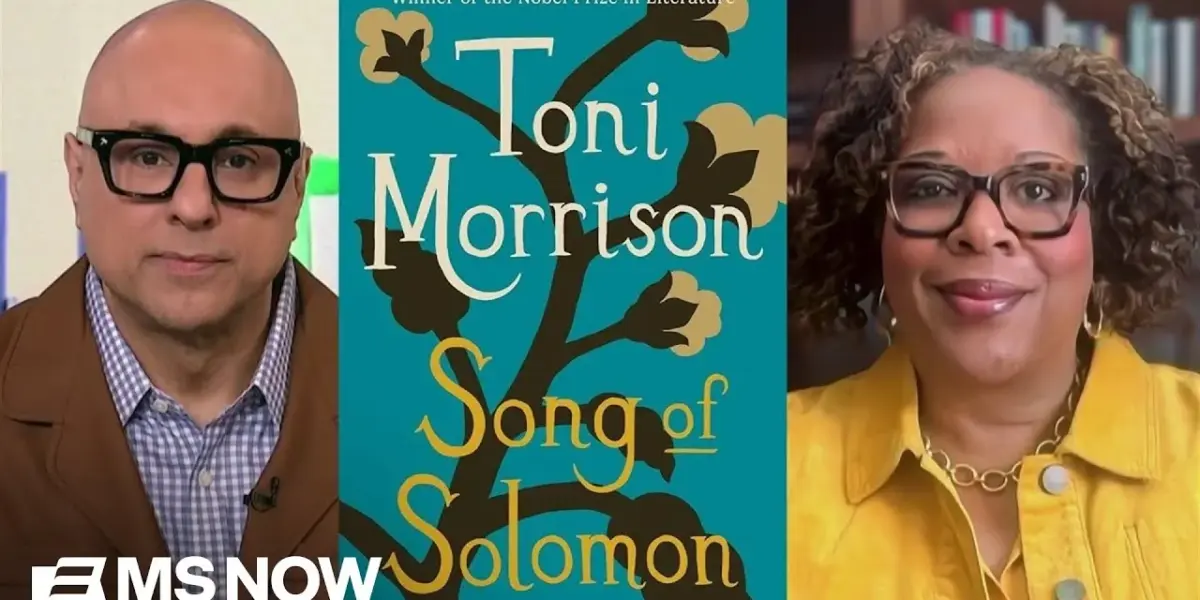
Morrison’s Masterpiece Revisited by Velshi Book Club
In a world grappling with pain and division, the enduring power of art to heal and illuminate remains crucial. This sentiment, echoed by the late Nobel laureate Toni Morrison in 2004, serves as the guiding principle for the Velshi Book Club’s latest exploration. The club has turned its attention to Morrison’s celebrated third novel, Song of Solomon, a work widely regarded as a masterpiece of American literature. This deep dive features insights from author Tayari Jones, who penned the introduction for the novel’s recent reissue.
A Story of Identity and Legacy
Song of Solomon, published in 1977, begins with a dramatic act of defiance: an insurance agent leaps to his death from a building rooftop. This tragic event triggers the labor of Ruth, who is watching from below, and leads to the birth of her son, Macon Dead III, better known as Milkman. Milkman’s journey is one of disillusionment and self-absorption, marked by a struggle to reciprocate the love he receives from his family. Despite his privileged upbringing as the son of a successful Black doctor and landowner, Milkman is haunted by the lingering wounds of slavery and a profound sense of emptiness.
At 32, a restless Milkman embarks on a quest for material wealth, seeking gold allegedly hidden by his enigmatic aunt, Pilate. However, his search yields a far more valuable treasure: a profound understanding of his ancestral heritage and, consequently, a clearer sense of self. Unlike modern DNA tests that offer pie charts of identity, the novel shows that true understanding comes from connecting with people and their stories, which often hold more truth than official records.
The Magic of Morrison’s Language
Tayari Jones emphasizes Morrison’s unique gift for weaving complex narratives. “Morrison’s gift lies in the even-handedness of her passions,” Jones writes. “Her layered characters engage in layered relationships, ponder layered dilemmas upon a layered landscape.” These intricate situations, varied in texture and color, are brought to life through Morrison’s masterful use of language. Jones notes that with Morrison, “it always comes back to language.”
Song of Solomon delves into themes far beyond its plot. It tackles the alienation caused by racism, the profound power of names and oral traditions, the pursuit of liberation, the vital importance of community, and the lasting impact of slavery. Crucially, the novel underscores how understanding one’s lineage and background is fundamental to self-discovery.
Aunt Pilate and the Realm of Realism
A pivotal character is Aunt Pilate, described as being born without a navel. This detail highlights her spiritual nature and disconnection from conventional birth, yet ironically, she is the one most deeply connected to Milkman’s past and the truths of his ancestors. She carries a physical legacy of bones, serving as a conduit to generations gone by. This element, along with Milkman’s eventual flight at the novel’s end, introduces a sense of magical realism.
However, Jones suggests Morrison might simply call this realism, as for many, magic is an inherent part of their worldview. “There is a sense that the past is always with us, that ghosts both literal and metaphoric are around us everywhere,” Jones explains. Pilate’s intuitive understanding of the world, which eludes her more empirically minded nephew, stems from this belief that everyone we have ever known remains present with us.
The Resurgence of Toni Morrison
The current reissuance of eleven of Toni Morrison’s books, including Song of Solomon, signifies a widespread “wave of Morrisonia.” This resurgence is attributed to Morrison’s status as one of America’s greatest novelists. As the anniversary of her passing approaches, these re-releases, featuring new introductions by contemporary writers, aim to explain the continued relevance of her stories in understanding the nation’s identity, especially during times of strife.
Morrison’s works offer guidance, cautionary tales, and insights that can help navigate the path forward toward a more just and nurturing society. Her profound observations, made in response to political shifts like the 2004 election, feel even more pertinent today. Fiction, as Morrison understood, offers a unique way to answer the question of “what happened,” by exploring the personal and emotional dimensions of history, providing a different lens through which to understand events and make informed decisions about the future.
An Invitation to Read
Despite Morrison’s reputation for literary depth, Jones encourages new and returning readers to approach Song of Solomon with an open mind. “Morrison doesn’t get enough credit for… she plots a novel like A House on Fire. You will turn the pages just to find out what happens next,” Jones says. She advises readers to set aside any preconceived notions or academic rules they may have learned about reading literature.
“This book is a delight. You will laugh out loud. You will find yourself quoting her masterful lines about everyday life,” Jones promises. The experience of reading Morrison is not just profoundly pleasurable but also deeply meaningful, offering a rich tapestry of story and wisdom. The Velshi Book Club advocates for this approach: simply read, enjoy, and discover the profound impact of these literary treasures.
Tayari Jones will return to the Velshi Book Club to discuss her own highly acclaimed novel, Kin, a story about friendship and motherhood in the American South, already being hailed as one of the year’s best books.
Source: Velshi Banned Book Club: ‘Song of Solomon’ by Toni Morrison with ‘Kin’ author Tayari Jones (YouTube)

Related Articles


AI Revolutionizes Textile Recycling, Tackling Fashion Waste Crisis
AI is set to revolutionize textile recycling, offering a solution to the global fashion waste crisis. New technologies use AI-powered cameras to sort fabrics accurately, a crucial step for efficient recycling. This innovation could lead to billions in profits and help revive local manufacturing.


Tiger Woods Arrested Again for DUI After Florida Crash
Golf legend Tiger Woods was arrested and charged with driving under the influence following a single-car crash in Florida. This marks the latest in a series of driving incidents for the sports icon, raising serious concerns about his judgment and safety. The arrest casts doubt on his planned return to the Masters tournament in just 12 days.


Israel’s Strategy Against Iran Revealed
Israel's strategy to counter Iran's nuclear ambitions and regional influence centers on containment, utilizing a mix of covert military actions, intelligence operations, and diplomatic pressure. Analysts highlight the growing urgency due to Iran's nuclear advancements, while also noting the persistent risk of escalation in the volatile Middle East.