Tiny Homes Drive Big Glamping Profits
Tiny homes are revolutionizing the glamping industry, with some 221 sq ft units generating over six figures annually. This model prioritizes unique guest experiences and amenities over sheer size, proving a powerful new avenue for real estate investment.

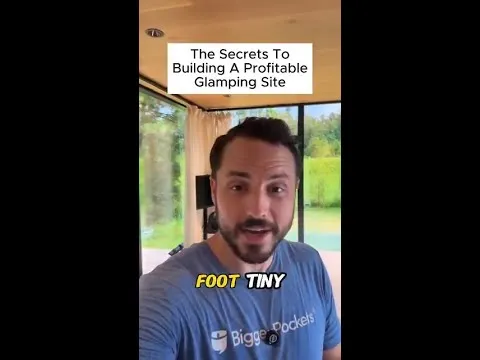
Tiny Homes Drive Big Glamping Profits
The burgeoning glamping industry is demonstrating a powerful new model for real estate investment, leveraging compact living spaces and high-end amenities to generate substantial revenue. One entrepreneur has achieved remarkable success by operating a cluster of 221-square-foot tiny homes, each grossing over six figures annually on platforms like Airbnb. This model challenges traditional notions of property value, proving that strategic design and curated guest experiences can command premium pricing, even in remarkably small footprints.
The Appeal of ‘Glamping’
The success of these tiny homes lies not in their size, but in the concept of ‘glamping’ – glamorous camping. Guests are not merely renting a structure; they are purchasing an immersive experience. “As you can see from this B-roll that I’m showing right now, we have an amazing sauna on the property for guests that’s private. We have an outdoor hot and cold tub for people on the property that is private. Tons of views, grills, a pond, everything in between that people would want to get an escape from nature from their local city,” explains the property owner. This focus on exclusive amenities and a connection to nature is what justifies nightly rates that might seem exorbitant for a standard 221-square-foot dwelling. The value proposition shifts from square footage to unique experiences and luxury comforts.
Integrating Utilities in Small Spaces
A key innovation highlighted is the successful integration of essential utilities and private bathrooms within the compact 221-square-foot homes. This feat of design and engineering is crucial for guest comfort and significantly enhances the property’s appeal, moving it beyond basic camping and into a category of comfortable, self-contained accommodation. This allows for a higher nightly rate and a more desirable rental product.
Understanding Investment Viability: The 603010 Rule
For potential investors eyeing the glamping market, a structured approach to market analysis is essential. The property owner references a proprietary “603010 rule” as a critical tool for assessing the viability of glamping sites in a given location. While the specifics of this rule are not detailed in the transcript, its existence underscores the importance of data-driven decision-making in this niche sector. Such a framework likely considers factors like local tourism demand, competition, zoning regulations, and potential operating costs to predict profitability.
Broader Real Estate Market Context
While the glamping model offers a unique investment avenue, it operates within the broader context of the real estate and hospitality markets. Factors such as interest rates, inflation, and consumer spending habits on travel and leisure can influence demand. Currently, while higher interest rates may be cooling some traditional housing markets, the desire for unique travel experiences remains strong. This could position glamping sites as a resilient investment, less susceptible to the fluctuations impacting conventional residential or commercial properties. The ability to generate high gross revenue per square foot also presents an attractive alternative to traditional rental income models, which are often constrained by lower rental yields and higher property management overheads.
Regional Variations and Target Audiences
The success of glamping sites is highly dependent on location. Areas with significant natural beauty, proximity to major urban centers, or popular tourist attractions are prime candidates. This model particularly appeals to urban dwellers seeking an escape, couples looking for romantic getaways, and families desiring unique vacation experiences. Investors would need to identify regions with a strong demand for short-term rentals and a supportive regulatory environment for alternative accommodations. Buyers looking for vacation homes might also consider properties with glamping potential as a way to offset ownership costs through rental income.
The Future of Compact Living and Experiential Real Estate
The success story of these high-revenue tiny homes in a glamping setting points to a growing trend in experiential real estate. As consumers increasingly prioritize experiences over possessions, properties that offer unique, memorable stays are poised for growth. The model also aligns with broader trends towards sustainable living and minimalist design, further enhancing its appeal. For real estate investors, understanding the power of amenities, location, and curated experiences is becoming as important as analyzing traditional metrics like cap rates (capitalization rates, which measure the potential return on investment for income-producing properties) or cash flow (the net amount of cash generated from an investment).
The glamping sector, exemplified by these profitable tiny homes, represents an innovative frontier in real estate. It highlights the potential for creative property development to unlock significant financial returns by catering to a desire for unique, nature-infused escapes.
Source: Secrets to a Profitable Glamping Site (YouTube)

Related Articles


Investors Buy $500M in Real Estate Amidst Uncertainty
Investors deployed over $500 million in real estate transactions during 2025, focusing on value-add opportunities, irreplaceable assets, and strategic new developments. Despite market uncertainty and higher interest rates, the approach centered on identifying distressed sellers and properties with clear paths to increased income.


Vacation Rentals: Own or Rent for Profit?
The dream of owning a vacation rental that pays for itself is appealing, but is it the smartest investment? This article explores the financial realities, comparing direct ownership with strategies focused on generating flexible passive income.


AI Sparks Job Losses: Real Estate Offers Shelter
As AI rapidly automates jobs, particularly in white-collar sectors, real estate is emerging as a potential refuge for financial stability. Experts warn of significant job displacement, making traditional career paths uncertain. However, strategic investment in housing offers a way to build passive income and financial independence.