Through the Drone Tunnel: A Perilous Journey on Ukraine’s Eastern Front Logistical Lifeline
A harrowing journey through a critical 'drone tunnel' in Eastern Ukraine reveals the perilous realities of modern logistical supply lines, constantly threatened by advanced drone warfare. Accompanied by a combat veteran, the trip offers a stark look at essential safety protocols and the profound psychological impact of prolonged conflict, highlighting both the evolving tactics of war and the enduring resilience of the human spirit.

Through the Drone Tunnel: A Perilous Journey on Ukraine’s Eastern Front Logistical Lifeline
As the conflict in Ukraine grinds on, the daily realities for those navigating its war-torn landscapes remain fraught with unseen and ever-evolving dangers. A recent journey through a critical logistical artery in Eastern Ukraine, just 15 to 20 kilometers from entrenched Russian positions, offers a stark glimpse into the ingenuity of modern warfare and the profound psychological toll it exacts. This treacherous stretch, dubbed a ‘drone tunnel’ by those who traverse it, serves as a vital supply line to front-line Ukrainian forces, a lifeline constantly threatened by advanced enemy surveillance and attack capabilities.
The journey, undertaken in the waning days of 2025 from Izyum to Sloviansk, was facilitated by ‘Legion,’ an American Army veteran who has been fighting in Ukraine since 2022. His experience and tactical acumen proved indispensable in navigating one of the hottest sections of the front. The narrative, shared by a journalist accompanying Legion, details a harrowing drive where every precaution, no matter how unconventional, is a matter of survival, and where the echoes of war resonate not just in distant explosions, but in the quiet, profound reflections of those who live it.
Navigating the ‘Drone Tunnel’: A Symphony of Vigilance and Risk
The term ‘drone tunnel’ itself conjures images of constricted, dangerous passage, and the reality is no less intense. This specific route, a two-lane road, is critical for resupplying Ukrainian soldiers holding the line near Sloviansk and Kramatorsk – strategic cities that have endured relentless assault and remain pivotal to the eastern front’s defense. The primary threat necessitating the ‘tunnel’ moniker is the omnipresent danger of Russian drones, particularly First-Person View (FPV) drones, which have revolutionized battlefield tactics through their precision and cost-effectiveness.
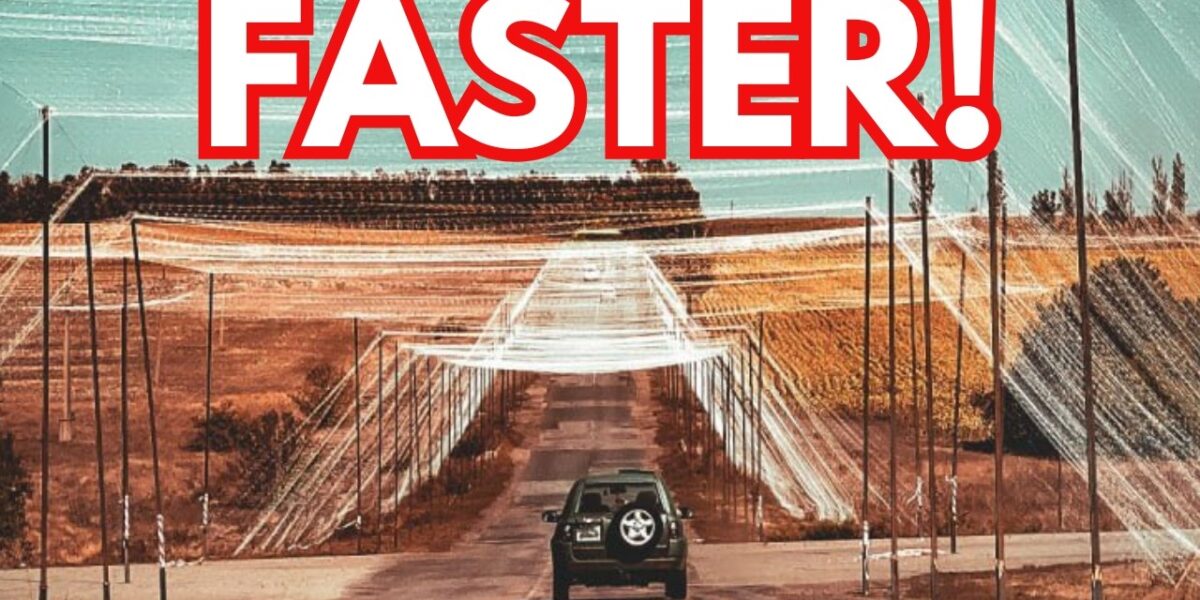
As the vehicle plunged into the night, the immediate environment underscored the gravity of the situation. The most striking visual defense was the extensive FPV netting strung overhead, a relatively new but essential layer of protection against the increasingly sophisticated drone attacks. “The nets are there for a reason,” Legion stated, his voice a testament to the constant awareness required. These nets, often simple but effective physical barriers, are designed to snag or disrupt incoming FPV drones, preventing them from reaching their intended targets – vehicles and personnel on the road below.
Unconventional Precautions and Real-Time Threats
The journey highlighted several unconventional safety protocols. One immediately noticeable detail was the persistent beeping in the vehicle, not from a drone detector, but from unbuckled seatbelts. This seemingly minor detail is a grim necessity: in areas of significant drone threat, it is deemed safer to leave seatbelts unbuckled to allow for the fastest possible exit from the vehicle should it come under attack. This illustrates the brutal calculus of survival on the front lines, where seconds can mean the difference between life and death.
Legion, with his seasoned eyes, constantly scanned the environment, looking for specific indicators of safety or impending danger. Beyond the FPV netting, he paid close attention to traffic patterns and the types of vehicles encountered. The presence of manned checkpoints, or ‘block posts,’ along the route offered a measure of reassurance, described by Legion as ‘save points’ in a video game. “Whenever I see that, I’m like, ‘Okay, cool.’ That’s like a checkpoint, right? Like a save point in a video game,” he explained, indicating the potential for rapid assistance if an incident occurred.
The team also relied on active defensive measures, including their own drone teams tasked with intercepting enemy drones, and the deployment of Radio Electronic Warfare (REV) systems, more commonly known as Electronic Warfare (EW). These systems are crucial for jamming enemy drone signals, disrupting their navigation, and neutralizing their threat. Despite these layers of defense, the ambient tension was palpable. “My anxiety’s gotten worse and worse,” Legion admitted, a candid reflection of the relentless psychological pressure.
The effectiveness of traditional blackout driving, a common tactic in past conflicts, was also discussed. In the age of thermal imaging, complete darkness offers little concealment against advanced drones. “No. Thermals,” Legion confirmed, explaining that only minimal light discipline is maintained closer to the zero line, just enough for drivers to see, with tail lights blacked out and headlights heavily taped to reduce their signature. This adaptation reflects the profound impact of drone technology on nocturnal operations.
The Rhythms of a War-Torn Road
The road itself presented its own challenges. While limited traffic at night allowed for faster movement, it also meant fewer eyes on the road. During the day, traffic was more consistent, including larger trucks moving heavy equipment, all utilizing this same vital artery. The constant need for the road to remain clear was paramount. “This becomes a major problem if it gets clogged up with a couple vehicles,” Legion observed. In the event of a strike, damaged vehicles would simply be pushed to the side, a stark testament to the relentless pace of logistical demands.
Moments of heightened tension punctuated the drive. A sudden “bright red” flash in the distance indicated active engagement. “Yeah, that’s because we got drones in the area. They’re blowing stuff up in the air or we’re blowing up one or the other,” Legion calmly explained, highlighting the constant aerial dance of death and defense. Later, a more proximate boom: “It’s right above us. It’s literally blowing up right above us.” These are the sounds of modern warfare, a continuous, invisible battle fought in the skies above.
Even minor mechanical issues took on greater significance. A conversation about a loose bumper, which Legion had warned about earlier, served as a grim reminder of how easily a small problem could escalate into a life-threatening one in such an environment. “It’s not the worst time that could have happened, but it’s close to the worst time that could have happened,” he noted, underscoring the razor’s edge upon which all operations are balanced.
Legion’s War: A Personal Odyssey of Survival and Transformation
Beyond the immediate dangers of the road, the journey offered a profound insight into the psychological landscape of a combat veteran. Legion, an American Army veteran, has been embroiled in the Ukrainian conflict since 2022. His reflections during the drive were raw and deeply personal, revealing the profound impact of prolonged exposure to war.
His anxiety, he admitted, had steadily worsened. He spoke candidly about a past period of what he termed ‘foolishness’ – undertaking solo missions, venturing to the ‘zero line’ alone, and a dangerous indifference to his own survival. “I was an idiot quite frankly. Did a lot of things by myself, not caring if I died,” he confessed. This period of reckless self-exposure, born from a deep depression, had left an indelible mark on his psyche.
The isolation he experienced during these solo endeavors was particularly impactful. “It gave me a real sense of isolation,” he recounted. “Every time a mortar round came in or, you know, artillery round came in… it gave me a harsh reminder that I was completely alone. And I felt like I was more alone than if I was on Mars.” This profound sense of solitude, coupled with the ever-present threat of death, painted a chilling picture of the mental burden carried by those on the front lines.
The Paradox of War: Seeking Death, Finding Life
Legion’s narrative took a poignant turn as he described a profound personal transformation. From a state of ‘seeking death,’ he found himself transitioning to a renewed appreciation for life. “Going from, you know, going out seeking death and then, you know, you end up finding life, right? It’s like it’s great cuz then you like love life. You’re like, I’m so happy now,” he explained. This paradoxical journey, often observed in extreme circumstances, highlights the human capacity for resilience and the re-evaluation of life’s value when confronted with its fragility.
However, this newfound love for life came with its own set of challenges. “Then you have a whole different set of new fears unlocked and anxiety and everything else,” he added. The shift from indifference to life to a fierce desire to live meant that every threat, every near-miss, now carried a heavier weight, fueling new anxieties that were almost ‘intolerable.’ This complex psychological aftermath is a testament to the enduring scars of combat, where escaping one mental state often ushers in another, equally demanding one.
His reflections also touched upon the ‘selfishness’ of depression, a retrospective insight into how his previous actions, driven by despair, affected others. This self-awareness is a crucial step in understanding and managing the mental health challenges faced by veterans, including Post-Traumatic Stress Disorder (PTSD) and moral injury, which are pervasive in long-term conflicts.
Humanity Amidst Brutality
Perhaps the most profound moment in Legion’s introspection was his commentary on the unexpected kindness and shared humanity witnessed even amidst the war’s brutality. He spoke of helping injured Russian soldiers, moments where the enemy uniform faded, revealing simply another human being in need. “You find them injured and and you and you help them, right?” he mused. “They’re all of a sudden a person… they’re not a uniform anymore. They’re just someone that needs your help and you see the fear in their eyes.” This powerful observation underscores the complex moral landscape of war, where acts of compassion can emerge from the most unlikely of circumstances, challenging preconceived notions of enmity.
The Eastern Front: A Tenuous Balance
The journey from Izyum to Sloviansk is more than just a drive; it is a microcosm of the broader strategic situation on Ukraine’s eastern front. The region, particularly the Sloviansk-Kramatorsk axis, remains a critical stronghold for Ukrainian forces. Izyum, once under Russian occupation, was liberated in September 2022, making the route from it to Sloviansk a vital link in the supply chain to the active front lines further east and south.
The narrator emphasized just how ‘tenuous’ the situation is. The main logistical route, despite its defenses, is constantly under threat. Russia’s strategy involves not only direct assaults but also systematic disruption of supply lines to isolate and weaken Ukrainian positions. The proliferation of FPV drones and other unmanned aerial vehicles (UAVs) has made this tactic incredibly effective, allowing for precise, low-cost strikes on moving targets.
The concern is that if Russian forces were to push even another 5 to 10 kilometers closer to this route, it could effectively shut down its use as a sustained logistical artery. Such a development would severely hamper resupply efforts to Sloviansk and Kramatorsk, potentially cutting off thousands of Ukrainian soldiers from vital ammunition, food, and medical aid. This strategic vulnerability highlights the immense pressure on Ukrainian defenders and the critical importance of maintaining control over every kilometer of territory.
The existence of alternative back roads, while theoretically offering options, are described as being “even in worse shape and they don’t have drone nets quite yet.” This further underscores the limited and perilous nature of logistical operations in the region, placing an extraordinary burden on the Ukrainian soldiers who continue to hold the line “day in and day out.”
The Unseen Architects of Safety: The Role of Facilitators
The journey also highlighted the indispensable role of individuals like Legion. As a seasoned veteran and facilitator, his expertise extended far beyond combat skills. Navigating Ukraine’s war zones requires intricate knowledge of local conditions, real-time intelligence, and a network of contacts. The narrator expressed profound gratitude to Legion for his role in ensuring their safety, acknowledging that such a trip would have been impossible to undertake alone.
Legion’s ability to “piece that together day by day” involved not just meeting the right people but also possessing the critical judgment to assess risks and make difficult decisions. “There were a couple different things we had planned on this trip that as as we got closer to doing that decided it wasn’t worth it. It was a little too risky at the time,” the narrator revealed. This constant evaluation and re-evaluation of risk, based on evolving intelligence and ground realities, is a hallmark of effective operation in a dynamic conflict zone.
The work of such facilitators, often operating behind the scenes, is crucial for journalists, aid workers, and other non-combatants seeking to understand and document the realities of the war. Their local knowledge, security protocols, and ability to adapt to rapidly changing circumstances are paramount to the safety and success of missions in high-risk environments.
Conclusion: A Glimpse into Enduring Resilience
The journey through Ukraine’s ‘drone tunnel’ is a powerful testament to the multifaceted nature of modern warfare. It illuminates the strategic importance of seemingly mundane two-lane roads, transformed into high-stakes logistical lifelines. It showcases the rapid evolution of defensive tactics, from FPV netting to sophisticated electronic warfare, in response to new threats.
But perhaps most profoundly, it offers a window into the human spirit under extreme duress. Through Legion’s candid reflections, we witness the devastating psychological toll of prolonged combat – the struggle with depression, the profound isolation, and the complex journey from indifference to a fierce embrace of life, albeit one now shadowed by new anxieties. Yet, even amidst the brutality, flashes of humanity persist, reminding us of the enduring capacity for empathy and compassion.
The eastern front remains a crucible of conflict, where Ukrainian soldiers perform “incredible work” daily to defend their nation. The precarious balance maintained along routes like the ‘drone tunnel’ underscores the ongoing challenges and the immense resilience required to face them. This journey serves as a vivid reminder that while the war may often be depicted through grand strategic movements, its true essence lies in the daily acts of courage, vigilance, and the profound human experiences of those who live and fight within its unforgiving embrace.
Source: POV: Driving Ukraine's Dangerous Drone Tunnels (YouTube)

Related Articles

Iran’s Regime Under Siege: Attacks Cripple Leadership, Impact Russia
Iran's regime is reportedly facing critical blows from targeted attacks, crippling its leadership and severing a vital military supply line to Russia. This dual pressure is significantly impacting Russia's war efforts in Ukraine, while internal dissent grows within Iran.


Putin’s Grip Weakens: Journalist Sees Russia’s Endgame
British journalist John Sweeney asserts that Vladimir Putin cannot afford to end the Ukraine war, as doing so would expose its futility and threaten his rule. He calls for stronger Western sanctions and increased aid to Ukraine, predicting a gradual erosion of Putin's power driven by economic pressures and internal dissent.


Ukraine Strikes Deep: Russia’s ‘Untouchable’ Assets Hit
Ukraine has successfully launched long-range drone attacks deep inside Russia, hitting a crucial chemical plant in Perm and an oil terminal in Krasnodar. These strikes dismantle Russia's perceived geographical safety and target key economic lifelines, impacting its ability to sustain the war effort. The attacks highlight Ukraine's evolving strategy of systematic disruption and innovative use of technology, including high-altitude balloons, to degrade Russian capacity.