The Urgency of Now: Why Waiting to Live Could Be Your Biggest Regret
A viral video creator, reflecting on the finite nature of life, urges viewers to stop deferring their dreams to a distant future. Through personal anecdotes and relatable analogies, he highlights the unpredictability of health and the imbalance between peak wealth and peak vitality, advocating for immediate action and small, impactful changes to live a life without regret.

The Urgency of Now: Why Waiting to Live Could Be Your Biggest Regret
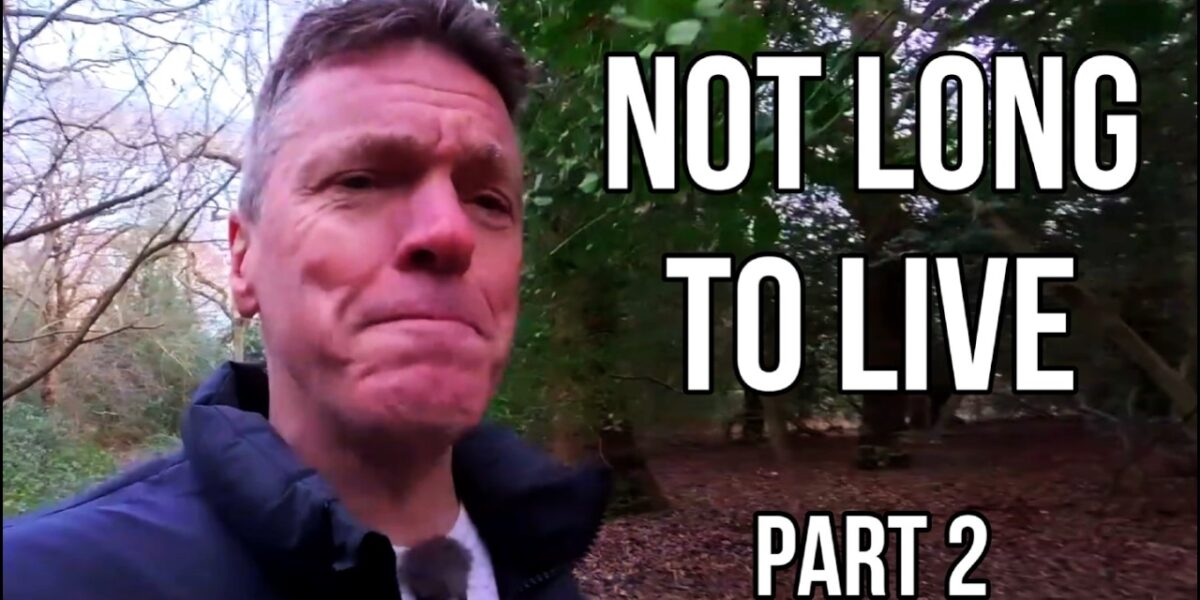
In an increasingly fast-paced world, many of us find ourselves caught in a cycle of anticipation, perpetually deferring our dreams and aspirations to a nebulous future. We work tirelessly, save diligently, and plan for a retirement that often feels like a distant mirage. Yet, a recent viral video, aptly titled ‘Not Long to Live,’ has struck a profound chord with audiences, prompting a vital conversation about the finite nature of our existence and the pressing need to embrace life with immediate intent. The creator, reflecting on the overwhelming response to his initial video, delves deeper into this existential dilemma, urging viewers to recalibrate their perspectives and seize the present moment before it’s too late.
The Finitude of Time: A Sobering Calculation
The speaker, a 57-year-old man, initiates his latest reflection with a stark numerical exercise. Citing the current average life expectancy for a man in the UK as 79 years, he calculates his remaining years. While acknowledging that this figure is typically calculated from birth and might be slightly adjusted for someone already past their mid-fifties, the simple arithmetic is compelling: 79 minus 57 leaves him with 22 years. On the surface, two decades might sound substantial, but when broken down, the reality becomes far more immediate and poignant.
Twenty-two years translates to approximately 8,000 days. This figure, though larger, still evokes a sense of brevity. Further dissecting it into more relatable segments, he notes it amounts to roughly 1,156 weekends, or a mere 22 Christmases and 22 summers. These calculations are designed not to instill dread, but to underscore the precious and dwindling nature of time. The seemingly distant horizon of ‘later’ rapidly shrinks into a series of finite, tangible moments.
Beyond the Average: The Unpredictability of Life
Crucially, the speaker emphasizes that these statistics represent an average, not a guarantee. “Will I live to 79? Is that realistic?” he ponders, acknowledging the fragility of life. He recounts numerous instances of friends and acquaintances who have not reached this average age, highlighting the stark reality that health challenges and unforeseen circumstances can dramatically alter one’s trajectory at any point. While he considers himself healthy and optimistic about potentially exceeding 79, the underlying message is clear: the future is promised to no one.
This uncertainty serves as a powerful catalyst for his central argument: if the future is inherently unpredictable, then delaying joy, purpose, and meaningful experiences is a gamble we can ill afford to take. The concept of ‘mortality salience’ in psychology suggests that an awareness of our own death can profoundly influence our attitudes and behaviors, often leading to a re-evaluation of priorities and a greater appreciation for the present.
The Sports Analogy: Playing to Win from the Start
To illustrate the folly of procrastination, the speaker employs a compelling sports analogy. He observes how teams, when losing in the final minutes of a match, often unleash an extraordinary burst of effort, sometimes scoring dramatically and even snatching victory from the jaws of defeat. This begs the question: “Why didn’t they play like that for the whole of the match?”
He draws a direct parallel to life: “There’s no point waiting until the end of your life to do all of your good things.” Many people fall into the trap of working tirelessly, postponing personal pursuits and adventures, with the sole aim of enjoying them in retirement. This mirrors the sports team waiting for ‘overtime’ to truly engage. The critical flaw in this strategy is that, just as a team might not score despite a last-ditch effort, one might find that by the time retirement arrives, it’s simply too late. Health may have deteriorated, opportunities may have vanished, or life itself may have run its course.
The Health-Wealth Paradox: A Crucial Imbalance
One of the most insightful points raised is the inherent disconnect between the typical peaks of health and wealth. For most individuals, financial wealth tends to accumulate over a lifetime, reaching its zenith in later years. Conversely, physical energy, vitality, and robust health generally peak much earlier in life, gradually declining with age. This creates a challenging paradox: by the time many people have amassed sufficient financial resources to pursue their dreams, their physical capacity to fully enjoy them may have diminished significantly.
The speaker articulates this imbalance perfectly: “You’ve got the most energy to do things younger in life and you’re more likely to be better off wealth-wise later in life.” This necessitates a delicate balance, a conscious effort to “find a balance between those two things that ideally you want some wealth whilst you’ve still got a lot of health.” The ancient adage, “health is wealth,” resonates with profound truth here. Without good health – physical mobility, mental acuity, and emotional well-being – even the greatest financial fortune can feel hollow, unable to unlock the experiences one once envisioned.
A Friend’s Story: The Unforeseen Tragedy of Frontotemporal Dementia
To underscore the unpredictable and devastating impact of health issues, the speaker shares a deeply personal and poignant story about a close friend. This friend, with whom he shared decades of camaraderie, was diagnosed with Frontotemporal Dementia (FTD) a few years ago, just as he was approaching his 60s. FTD, a lesser-known form of dementia, affects the frontal and temporal lobes of the brain, often impacting communication, personality, and behavior first. The speaker notes its similarity to the condition affecting actor Bruce Willis, bringing a relatable, public face to this challenging diagnosis.
The consequences for his friend have been heartbreaking. His wife has become his full-time carer, and his plans to retire and move to Italy have been irrevocably shattered. This tragic narrative serves as a powerful reminder that life’s grand plans can be derailed not just by death, but by debilitating illness that robs one of the capacity to enjoy the fruits of a lifetime of labor. It highlights the stark reality that “his health has deteriorated well before his wealth did,” leaving him with the means but not the ability to live out his dreams.
The Wake-Up Call: A Positive Imperative for Change
Despite the sobering reflections, the speaker insists that his message is fundamentally positive and uplifting. It is not meant to be morbid or to induce despair, but rather to serve as a potent “wake-up call” – an imperative to “do stuff now.” The goal is to inspire proactive change, to encourage a shift in mindset from passive waiting to active living. He challenges the notion that such changes must be monumental or financially prohibitive.
He shares his own recent efforts to inject more life into his routine. As a content creator primarily focused on geopolitical analysis from his home studio, he recognized the need for greater variety and engagement. This led him to launch a series of “food videos,” which serve multiple purposes: they compel him to leave his studio, explore new dining establishments, experience diverse cuisines, and most importantly, socialize with friends and family. His mother, still fit and healthy, often joins him, even taking on cameraman duties for some of these outings. This simple yet profound shift allows him to create cherished memories, explore new experiences, and foster social connections, all while avoiding the regret of a life lived solely in front of a screen.
Small Steps, Big Impact: Embracing Novelty and Connection
The core of his actionable advice is to embrace small, manageable changes that break the monotony of routine. He urges listeners to stop postponing things, whether it’s a long-desired trip, a hobby, or simply reconnecting with loved ones. “If you’ve been putting something off, thinking, ‘Oh, you know, maybe I’ll do that next year or next week or next month or whatever it might be,’ then why don’t you just think about doing it tomorrow or even tonight or, you know, if it’s something simple like you haven’t spoken to one of your family for a while… just make that phone call.”
The suggestions are varied and accessible:
- Reconnect: Reach out to family or friends you haven’t spoken to in a while, mending old rifts or simply rekindling connections.
- Change Routine: Try a different lunch spot, dine out, experiment with a vegetarian week, visit a new pub.
- Seek New Experiences: Attend a sports match, a concert, a theater performance.
- Embrace Nature: As he demonstrates during his walk in the muddy woods, interesting experiences don’t have to cost money. A simple walk in nature can be refreshing and energizing.
The aim is to cultivate a life where, when asked about your week, you don’t default to “the usual stuff.” Instead, you have stories to tell, new perspectives gained, and memories forged. This continuous pursuit of novelty and connection enriches life, making each day a potential adventure rather than a mere passage of time.
The Ultimate Deadline: Making Your Mark
The speaker concludes with a stark, universal truth: everyone will one day have a death certificate. He recounts a recent experience of receiving the death certificate for an 87-year-old investor he had worked with, who ultimately lived to 93. While acknowledging the investor had a good run, the moment served as a potent reminder of the ultimate finality. “You want to make sure that you’ve done everything that you really want to do before somebody signs that on your behalf.”
This isn’t about morbid introspection; it’s about empowerment. Recognizing life’s finite nature should not paralyze us with fear, but rather galvanize us into action. It’s the equivalent of a sports team realizing they’re in the final minutes or even overtime – the moment to “raise your game,” to summon your best performance, to live with unparalleled intensity and purpose. The challenge he leaves for his audience is clear: “raise your game, do something different this week.” It’s a call to move beyond complacency, to actively shape a life rich with experience, connection, and meaning, ensuring that when the final whistle blows, there are no lingering regrets.
Source: Not long to Live – Part 2 (YouTube)

Related Articles

Financial Freedom: Intentionality is Key
Attendees at the Dave Ramsey Smart Conference were urged to embrace intentionality to achieve financial freedom and a life of purpose. The core message highlights that personal transformation and success stem from conscious decision-making and a long-term, passionate approach to one's goals.

Enrichment 2021: Cultivating Hope and Business Growth
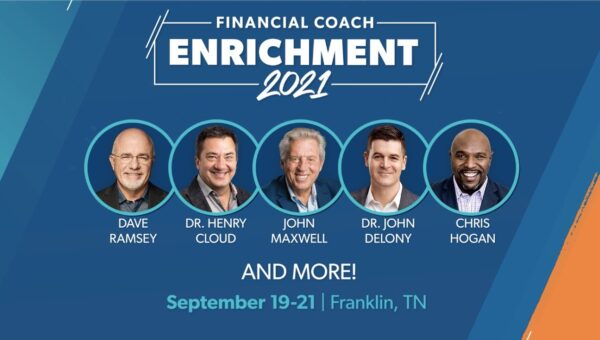
Enrichment 2021 aims to foster optimism and business growth by emphasizing individual control over thoughts and actions. Featuring Dave Ramsey, John Maxwell, and others, the event promises to equip attendees with skills, confidence, and a community-driven approach to achieving potential.

Trump Threatens “Unseen” Force on Iran After Leader’s Death
Following the assassination of Supreme Leader Ayatollah Ali Khamenei, U.S. President Donald Trump has vowed to unleash unprecedented force on Iran. While outlining ambitious goals including regime change, experts express skepticism about the effectiveness of airstrikes and the potential for popular uprising against a resilient Iranian government.