The Unseen Billions: How Russia’s Oil Loophole Continues to Fuel the War in Ukraine Despite Sanctions
Despite extensive international sanctions, Russia continues to fund its war in Ukraine through robust oil sales, identified by an investor as a "gigantic loophole." While initial sanctions were effective, current measures against the 'shadow fleet' are failing. A proposed solution involves targeting the eight major oil refineries in China, India, and Turkey that buy most Russian oil, threatening secondary sanctions to cut off this vital revenue stream.

The Unseen Billions: How Russia’s Oil Loophole Continues to Fuel the War in Ukraine Despite Sanctions
In the wake of Russia’s full-scale invasion of Ukraine, the international community responded with an unprecedented array of economic sanctions aimed at crippling the Kremlin’s war machine. While measures such as freezing Russian central bank reserves and cutting off major Russian banks from the SWIFT global payment system have inflicted significant pain, a critical flaw persists, allowing Moscow to continue funding its aggression. According to a prominent investor involved in early lobbying efforts for sanctions, the sale of Russian crude oil remains an “absolutely gigantic loophole,” generating hundreds of billions of dollars that directly underwrite the conflict.
The Initial Sanctions: A Swift and Painful Blow
When the invasion began, the world watched in horror, and governments moved quickly to impose severe economic penalties. The investor recalls the initial reluctance and caution among European Union and other nations regarding sanctions. “Everyone was like pushing me away and tiptoeing around,” the investor notes. However, the eventual package of sanctions was robust and designed to deliver a substantial blow to the Russian economy.
Key among these measures was the freezing of the Russian Central Bank’s international reserves, estimated to be around $300 billion, held in various foreign currencies and gold. This move aimed to prevent Russia from accessing a significant portion of its financial war chest, limiting its ability to stabilize its currency, import critical goods, and fund its military operations. The immediate impact was palpable, with the Russian ruble plummeting and widespread panic in financial markets.
Simultaneously, a significant number of Russian banks were disconnected from the Society for Worldwide Interbank Financial Telecommunication (SWIFT) system. SWIFT, a neutral messaging network, is essential for seamless international financial transactions. Its exclusion effectively severed these banks from the global financial system, making it exceedingly difficult for them to conduct cross-border payments, facilitate trade, and engage in international commerce. This measure, often described as the ‘nuclear option’ in financial sanctions, created immense logistical and financial hurdles for Russian businesses and individuals.
Beyond these two major actions, a multitude of other restrictions were imposed, including export controls on advanced technology, asset freezes on oligarchs and key government officials, and bans on Russian aircraft from European and North American airspace. These collective efforts were indeed “quite effective and and quite painful for the Russians,” as the investor acknowledges, leading to economic contraction, inflation, and disruptions in various sectors of the Russian economy.
The Gigantic Loophole: Russia’s Oil Exports
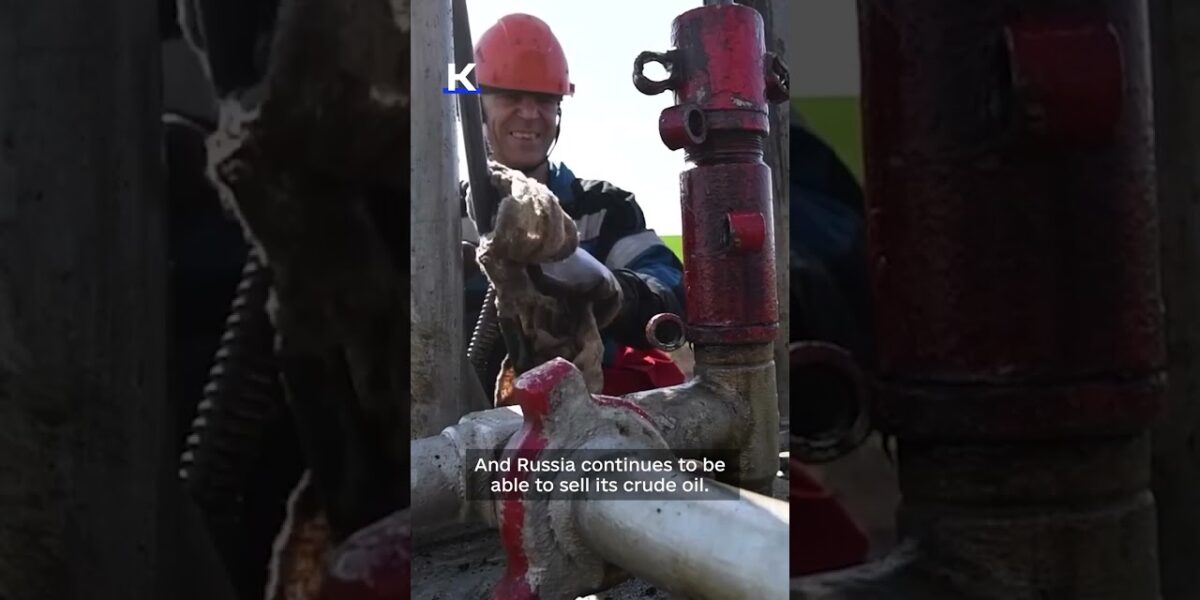
Despite the comprehensive nature of these sanctions, one fundamental sector of the Russian economy has largely escaped the most stringent measures: its vast oil industry. Russia is one of the world’s largest producers and exporters of crude oil, and this commodity forms the bedrock of its national budget, its export earnings, and its foreign exchange reserves. “Russia sells crude oil. It’s a major part of the Russian government budget. It’s a major export of Russia. It’s a major source of foreign exchange reserves,” the investor emphasizes.
The continued ability of Russia to sell its crude oil has undermined the broader sanctions regime, allowing it to generate “hundreds of billions of dollars” that directly finance its military activities in Ukraine. This revenue stream is not merely supplementary; it is foundational to the Kremlin’s financial stability and its capacity to sustain a prolonged conflict. Modern warfare is incredibly expensive, requiring constant outlays for personnel, equipment, logistics, and supplies. Without a continuous influx of funds, even a powerful military machine would eventually grind to a halt.
The reluctance to impose a full embargo on Russian oil stemmed from several complex factors. European nations, heavily reliant on Russian energy, feared catastrophic economic consequences, including soaring energy prices, inflation, and potential recession. The global oil market, already sensitive to supply disruptions, faced the prospect of unprecedented volatility. While a price cap mechanism was eventually introduced by the G7 and its allies, it has proven difficult to enforce effectively, with Russia finding ways to circumvent it and sell its oil at higher prices to non-participating nations.
Funding the War: The Direct Link
The connection between Russia’s oil revenues and its war effort is direct and undeniable. The Russian state budget is heavily dependent on oil and gas taxes, which historically account for a significant portion of its total revenue. These funds are then allocated to various government expenditures, including the military. In times of conflict, military spending naturally escalates, and the steady flow of oil money ensures that the Russian defense industry can continue to operate, procure necessary components, and pay its personnel.
“That money effectively funds the war in Ukraine,” the investor states unequivocally. To genuinely alter President Putin’s behavior and compel a cessation of hostilities, the investor argues, requires cutting off this vital financial lifeline. “In order to change Putin’s behavior, you need to make him run out of money. And the way to make him run out of money is to restrict his ability to sell his oil.”
This perspective aligns with the broader theory behind economic sanctions: to impose sufficient costs on a target regime that its calculus changes, leading it to cease undesirable actions. However, if a significant source of revenue remains untouched, the efficacy of the entire sanctions architecture is compromised. Russia has demonstrated remarkable resilience in adapting to sanctions, reorienting its trade flows, and finding new markets for its commodities, largely due to the continued demand for its oil.
Ineffective Measures and the Shadow Fleet
Efforts to curb Russian oil sales have not been entirely absent, but many have proven insufficient. The investor points to measures targeting the “shadow fleet” as largely “ineffective.” The shadow fleet refers to a growing network of aging tankers operating outside conventional maritime regulations, often with opaque ownership structures, flags of convenience, and without proper insurance. These vessels facilitate the illicit or sanctions-evading transport of Russian oil, allowing it to reach markets while obscuring its origin and circumventing price caps.
The tactics employed by the shadow fleet include ship-to-ship transfers in international waters, turning off transponders to avoid tracking, and forging documentation. While authorities have attempted to crack down on these practices, the vastness of the global maritime industry and the financial incentives for evasion make enforcement incredibly challenging. Each time a loophole is identified, new methods of circumvention emerge, creating a continuous cat-and-mouse game between sanctioning bodies and those seeking to profit from illicit trade.
The investor’s critique highlights a fundamental problem: focusing on the intricate logistics of evasion, such as tracking individual vessels or enforcing insurance restrictions, is a reactive and often losing battle. Instead, a more direct and impactful approach is needed.
The Proposed Solution: Targeting the Buyers
The investor proposes a radical, yet potentially highly effective, shift in strategy: instead of chasing the shadow fleet and engaging in piecemeal enforcement, the focus should be on the primary buyers of Russian oil. “You go after the buyers of the Russian oil,” the investor suggests. This strategy leverages the centralized nature of oil refining, where crude oil is processed into usable products like gasoline, diesel, and jet fuel.
The investor identifies eight specific oil refineries that purchase the majority of Russian crude. These are strategically located in key non-sanctioning countries: two in China, four in India, and two in Turkey. These nations have significantly increased their imports of Russian oil since the invasion, benefiting from discounted prices as Russia sought new markets after traditional European buyers scaled back their purchases.
The proposed mechanism is straightforward: issue a clear ultimatum to these refineries. “If you say to those oil refineries that you’ll be under sanctions if you continue to buy Russian oil,” the investor explains, the threat of secondary sanctions would be a powerful deterrent. Secondary sanctions are measures imposed by one country (or bloc) on entities in a third country for doing business with a sanctioned entity. They have been a potent tool in past sanctions regimes, notably against Iran.
Crucially, the investor suggests a reasonable transition period to allow these refineries to adjust their supply chains. “Give them 8 weeks or 12 weeks to find another source of oil.” This grace period would mitigate immediate shocks to global energy markets and allow the affected countries to diversify their crude oil imports, reducing the risk of a sudden supply crunch and exorbitant price spikes. Such a move, the investor concludes, “would put Putin out of business.”
Geopolitical and Economic Implications of Targeting Buyers
Implementing such a strategy would undoubtedly have profound geopolitical and economic ramifications, requiring significant diplomatic effort and a willingness to navigate complex international relations.
Global Energy Market Dynamics
The immediate concern would be the potential for disruption in global oil markets. While a transition period is proposed, suddenly redirecting a significant portion of Russia’s oil supply (which accounts for roughly 10% of global supply) could lead to price volatility. However, the global oil market is dynamic, with other major producers like Saudi Arabia, the UAE, and the United States potentially able to increase output to partially offset the reduction. Moreover, the long-term effect would be to force a more diversified and resilient global energy supply chain, reducing reliance on single, potentially unstable, sources.
For China, India, and Turkey, finding alternative suppliers for the volume of crude currently sourced from Russia would be a significant challenge. These nations are major energy consumers with rapidly growing economies. While they have diverse global suppliers, Russian oil has offered a strategic advantage, often at a discount, which has been crucial for managing inflation and supporting industrial growth. The decision to comply with secondary sanctions would force them to weigh their economic relationship with sanctioning powers against their energy security needs and their relationship with Russia.
Diplomatic Challenges and Bilateral Relations
Targeting refineries in China, India, and Turkey would represent a significant escalation in the economic war against Russia and would inevitably strain diplomatic relations with these nations. China, a strategic rival to Western powers, has consistently criticized sanctions and maintained its economic ties with Russia. India, a key partner in the Indo-Pacific strategy, also values its strategic autonomy and has historically maintained close ties with Russia for defense and energy.
Turkey, a NATO member, has played a complex balancing act, condemning the invasion while maintaining dialogue and trade with both Ukraine and Russia. The prospect of secondary sanctions would force these countries to make difficult choices, potentially pushing them closer to Russia or compelling them to align more strongly with the sanctioning bloc. The success of such a strategy would depend heavily on the unified resolve of the sanctioning powers and their ability to offer incentives or assurances to the affected nations.
Economic Impact on Russia
If successful, the impact on Russia’s war funding would be devastating. Cutting off the primary buyers of its oil, even with a grace period, would drastically reduce its export revenues, severely constrain its foreign exchange earnings, and cripple its budget. This would directly translate into a diminished capacity to fund its military, pay its troops, and replace lost equipment. The long-term consequence could be a significant degradation of its military capabilities and a severe economic recession, making it increasingly difficult for Putin to sustain the war.
Russia might attempt to find new buyers or develop alternative refining capacities, but such endeavors would be costly, time-consuming, and logistically challenging, especially without access to Western technology and financing. The global oil market, while vast, is also interconnected, and finding large-scale, legitimate buyers outside the reach of secondary sanctions would be exceedingly difficult.
The Broader Context of Sanctions Efficacy
The debate over the effectiveness of sanctions is ongoing. While sanctions rarely achieve immediate regime change, they are designed to impose sustained pressure, degrade capabilities, and alter behavior over time. The investor’s argument underscores a critical principle: for sanctions to be truly effective, they must target the most vital arteries of the target economy.
Historically, energy sanctions have proven to be among the most potent tools in economic statecraft. The global reliance on fossil fuels, coupled with the capital-intensive nature of the oil and gas industry, makes it particularly vulnerable to concerted international pressure. However, success hinges on broad international cooperation and a willingness to absorb potential economic blowback.
The proposal also highlights the need for adaptability in sanctions policy. As adversaries find ways to circumvent restrictions, sanctioning powers must continuously evolve their strategies, moving from broad-brush approaches to more targeted, impactful interventions. The shift from chasing the shadow fleet to directly confronting the major buyers represents such an evolution.
Conclusion: A Decisive Path Forward?
The investor’s stark assessment reveals a fundamental weakness in the current international sanctions regime against Russia: the continued flow of oil revenues. While initial sanctions caused significant disruption, the “gigantic loophole” of oil sales has allowed Moscow to sustain its war effort, generating billions that directly fund its aggression in Ukraine. The current approach, focusing on the complex and evasive shadow fleet, has proven largely ineffective.
The proposed solution—targeting the eight major refineries in China, India, and Turkey that collectively buy the majority of Russian oil, with the threat of secondary sanctions and a reasonable transition period—offers a direct and potentially decisive path to cut off Russia’s financial lifeline. Such a move would undoubtedly entail significant geopolitical challenges and require robust diplomatic engagement, but its potential to cripple Russia’s ability to wage war is undeniable. As the conflict grinds on, the international community faces a critical choice: continue with incremental measures or adopt a bolder strategy to truly starve the Kremlin’s war machine of its essential fuel.
Source: Oil remains biggest loophole in Russia sanctions, investor says (YouTube)

Related Articles

Trump: Iran Strikes Ahead of Schedule, Expects ‘Great Deal for World’
Three U.S. service members have been killed amid escalating conflict with Iran, President Trump confirmed. He stated that strikes are ahead of schedule, with senior Iranian leaders killed, and expressed optimism for a "great deal for the world" despite ongoing talks with Iranian officials.

Trump’s Putin Stance: US Strategy and Global Implications
Analysis suggests Donald Trump's approach to the Ukraine war involves pressuring Kyiv, but US involvement is crucial for resolution. China's influence and the 'MAGA' agenda's geopolitical implications are key factors.


US Strikes Iran: Mounk and Fukuyama Discuss Unpredictable Conflict
Leading political scientists Yascha Mounk and Francis Fukuyama analyze the recent US strikes on Iran, warning of unpredictable outcomes and internal instability. They question the objectives of the "war of choice" and its potential to destabilize the region, while also discussing the shifting global perceptions of Israel.