The Unseen Battle for Beijing: Why Western Analysts May Be Misreading Xi Jinping’s Grip on Power
A recent high-profile event in China has exposed a stark divide among experts regarding Xi Jinping's true power. While many Western analysts see an unchallenged leader, Chinese diaspora voices suggest his authority is waning, pointing to cultural differences, invisible power centers like party elders and princelings, and professional biases as reasons for misinterpretations.

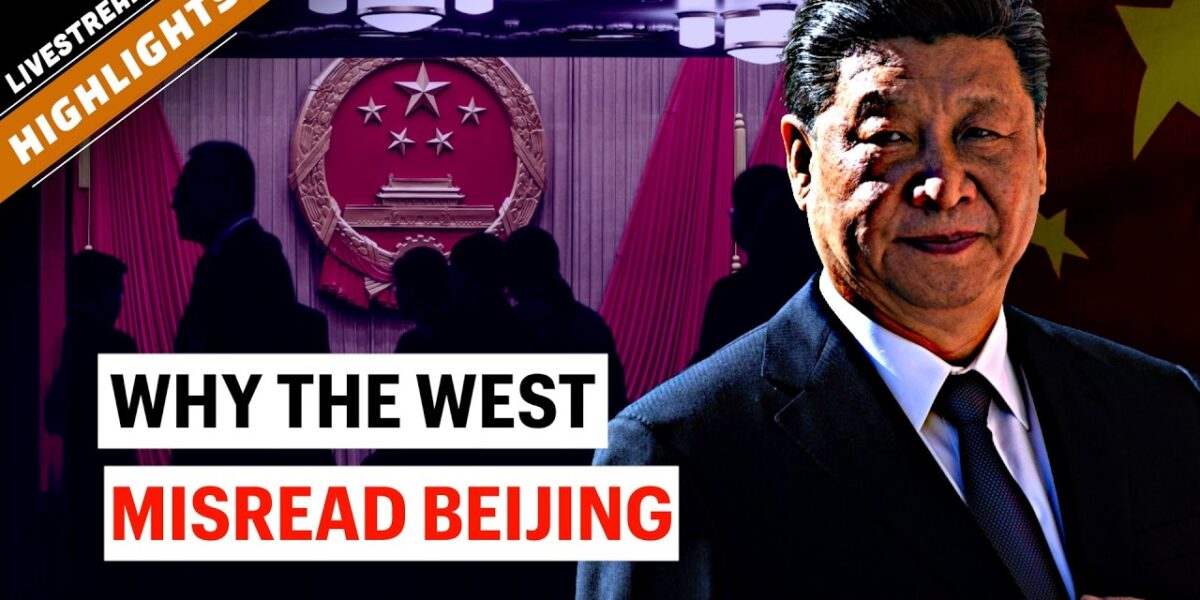
The Unseen Battle for Beijing: Why Western Analysts May Be Misreading Xi Jinping’s Grip on Power
In the opaque world of Chinese Communist Party (CCP) politics, a recent event has ignited a fierce debate among analysts, exposing a profound schism in how Beijing’s power dynamics are understood. Two weeks ago, on January 20th, General Jang Yosha, a prominent figure in the People’s Liberation Army (PLA), was reportedly ‘taken down.’ The precise circumstances surrounding his removal, and its implications for President Xi Jinping’s authority, remain shrouded in mystery, prompting a stark divergence in expert opinion. While many Western professional analysts assert Xi’s unchallenged dominance, a growing chorus of Chinese diaspora voices posits a far more fragile reality, suggesting Xi’s power may be weakening, and his recent actions a high-stakes gamble rather than a display of strength.
This fundamental disagreement underscores a critical challenge in interpreting the signals emanating from Beijing. Why do Western experts and Chinese diaspora analysts often arrive at such dramatically different conclusions? The answer, according to some, lies in a blend of deep-seated cultural differences in interpretation, a tendency to overlook invisible power centers, and even professional incentives that favor simplified narratives. Understanding these underlying factors is crucial for any accurate assessment of the CCP’s internal stability and its potential impact on global affairs.
The Jang Yosha Enigma: A Microcosm of Beijing’s Power Play
The reported removal of General Jang Yosha, alongside his ally Liu Jun Lee, serves as a pivotal case study in the ongoing struggle to decipher the true state of power within the CCP. Jang Yosha, a high-ranking princeling (a descendant of a former CCP leader) in uniform, represented a significant power bloc within the military establishment. His ‘takedown,’ therefore, is not merely an isolated incident but a potential indicator of deeper fissures at the apex of Chinese power.
Most Western professional analysts, including national security experts and mainstream China watchers, interpret this move as a testament to Xi Jinping’s firm control. Their argument is straightforward: only a confident and powerful leader would dare to move against two of the most influential generals in the PLA. From this perspective, the incident is seen as a strategic dispute over Taiwan policy or military management, firmly resolved by Xi, thus reinforcing his authority. The very audacity of the action, they contend, proves his unchallenged position at the helm.
However, many Chinese analysts within the diaspora community offer a dramatically different interpretation. They argue that Xi’s power has been eroding over the past 18 months, and that figures like Jang Yosha, backed by powerful party elders, had successfully hollowed out Xi’s control over the PLA. From this alternative viewpoint, Xi’s move on January 20th was not a display of strength but a desperate, high-stakes gamble – a ‘reverse coup’ designed to reassert control against formidable internal opposition. This interpretation suggests a leader under pressure, resorting to risky maneuvers to maintain his grip, rather than one comfortably wielding absolute power. The clash between these two perspectives highlights the urgent need to re-evaluate the analytical frameworks applied to CCP politics.
Decoding the Unspoken: Cultural Nuances in Chinese Politics
One of the primary reasons cited for the divergent interpretations of CCP power dynamics is a fundamental cultural difference in how information, or the lack thereof, is processed and understood. Western analytical traditions, deeply rooted in empirical observation and explicit communication, often struggle to interpret the subtle, unspoken cues that are paramount in Chinese political discourse.
The Art of Blank Space: From Painting to Politics
To illustrate this cultural divide, consider the contrast between Western and Chinese classical landscape paintings. Western art, from the Renaissance onwards, has been characterized by an obsession with realism, perspective, scale, and meticulous detail. The core value is accuracy – reproducing what the eye sees with scientific precision. Every inch of the canvas is typically filled, aiming for a comprehensive and explicit representation of reality.
Chinese landscape painting, by contrast, operates on an entirely different aesthetic philosophy. Mountains may be disproportionately large, rivers flow in impossible configurations, and perspectives are intentionally skewed. This is not a failure of technique but a deliberate artistic choice. Chinese painting is less about replicating physical reality and more about conveying an aesthetic mood, a spiritual realm, or a philosophical concept. Crucially, the most important concept in Chinese painting is ‘liu bai’ (留白), or blank space. What is not painted often carries more profound meaning than what is painted. Without this intentional emptiness, Chinese art, in many ways, loses its very essence and purpose.
This deep cultural difference extends directly to communication. In Chinese culture, what is unspoken frequently outweighs what is spoken. There is a profound understanding that true meaning often resides in the subtle, the implied, and the unarticulated. As a line from the ancient Chinese philosophical text, the Book of Changes (I Ching), suggests: "The invisible and the intangible is the Dao, while the visible and the tangible is only the container." This single sentence encapsulates the heart of Chinese thinking, prioritizing the underlying essence over its superficial manifestation.
Beyond the Visible: Eastern vs. Western Medical Science
Another powerful analogy can be drawn from the realm of medical science. Western empirical science, and by extension Western medicine, focuses on observable facts. Symptoms are seen, data is measured, evidence is analyzed, and treatments target what is visible and tangible. The emphasis is on direct, measurable, and verifiable phenomena.
Traditional Chinese Medicine (TCM), however, is built upon the intricate principles of Yin and Yang, the Five Elements, and the concept of meridians and acupoints – energetic pathways and points that are not visible to the naked eye. From the Chinese perspective, if one exclusively chases what is visible, one is merely scratching the surface, missing the fundamental root causes of imbalance. The unseen, in this context, is considered far more critical for true healing.
Applying the Lens: The Silence of the CCP
Bringing these cultural insights back to Chinese politics reveals a critical analytical blind spot. If one judges CCP politics solely on hard evidence, official statements, explicit announcements, and visible actions, there is a very high probability of missing the real story. In this highly controlled and culturally nuanced system, what is not said often matters more, or at least as much as, what is explicitly stated.
In the specific case of Xi Jinping’s reported move against Jang Yosha and Liu Jun Lee, the most telling indicators are not the official pronouncements – of which there have been remarkably few – but rather the profound silence and conspicuous omissions. The things that should have happened, but conspicuously did not, are the loudest signals.
Consider the following seven points of silence and omission in the two weeks following the alleged removal of the generals:
- No Public Military Endorsement: No theater command or military branch has publicly voiced support for the Party Center’s decision to remove the generals. In a system where loyalty pledges are paramount, this silence is deafening.
- Absence of Party/Government Agency Support: No major government agency or party organ has come out to endorse the move. Such endorsements are standard practice following significant personnel changes, especially those involving high-ranking military figures.
- Lack of Loyalty Statements: No senior or local officials have made loyalty statements to Xi Jinping in connection with this event. This contrasts sharply with previous purges where officials would rush to demonstrate their allegiance.
- Online Profiles Intact: The two generals’ profiles reportedly remain on official government websites, an anomaly for individuals who have been purged or "taken down."
- Muted Propaganda Campaign: Aside from a mention in the PLA Daily, the extensive state propaganda machine has not launched a full-scale denunciation campaign. The very purpose of this machine is to shape public perception and demonize fallen figures; its relative inaction is highly unusual.
- Politburo Silence: Perhaps the most significant omission is the complete silence from the Politburo, the CCP’s top decision-making body. A move of this magnitude would typically warrant a Politburo statement or meeting.
- NPC Inaction: The National People’s Congress (NPC) has not revoked the two generals’ delegate status. This is a procedural step that would normally follow the removal of high-ranking officials and its absence is a clear indicator of stalled or contested proceedings.
All of these actions "should have happened, but did not." This collective silence and these glaring omissions are not benign; they are awkward, loud, and deeply telling. They suggest a lack of consensus, a contested narrative, or perhaps even significant internal resistance to Xi’s actions. Thus, the first rule for understanding CCP politics, especially for Western analysts, becomes clear: "Don’t just study what’s said. Study what’s missing. Study silence. Study omissions. Study what gets deleted and what doesn’t. Study what should happen but somehow never does. That’s where the real story lives."
The Invisible Architects of Power: Party Elders and the Princelings
Beyond cultural interpretive differences, another critical blind spot for many Western scholars is their collective underestimation of powerful, yet largely invisible, centers of influence within the CCP: the party elders and the princely network.
The Shadowy Influence of Party Elders
Western analysts often focus intensely on Xi Jinping and his immediate power circles, overlooking the enduring and often decisive influence of retired party elders. The main reason for this oversight is simple: party elders are largely invisible. They do not give speeches, hold press conferences, or sit in the public spotlight. Their power operates in the shadows, through informal channels and behind-the-scenes negotiations.
However, invisibility does not equate to inaction, and it certainly does not signify a lack of power. Historically, party elders have played decisive, often kingmaking, roles in CCP politics. Consider several pivotal examples:
- Mao Zedong’s Cultural Revolution: By 1966, Mao was already functioning as a party elder, having relinquished the state presidency in 1959 after the disastrous Great Leap Forward. Day-to-day policy was handled by figures like Liu Shaoqi and Zhou Enlai. Yet, Mao, leveraging his immense prestige and personal networks, bypassed normal party-state channels, mobilized the Red Guards, and relied on ad hoc groups and his wife to launch the Cultural Revolution, fundamentally reshaping China’s political landscape. His power was informal, yet absolute.
- Deng Xiaoping’s Paramount Leadership: For much of the 1980s and early 1990s, Deng Xiaoping ruled China without holding the top formal titles. He was neither General Secretary, President, nor Premier, and later not even Chairman of the Central Military Commission. Yet, he held the final say on China’s direction. Major political decisions, leadership changes (including the removal of two General Secretaries), and crisis responses all required Deng’s approval. He was the "paramount leader" by informal consensus, not formal title.
- Jiang Zemin’s Enduring Influence: This model of elder influence continued into the Hu Jintao era (2002-2012). Jiang Zemin, as a retired top leader, continued to exert decisive influence from behind the curtain for many years, effectively making Hu Jintao a leader in name more than in substance. Hu was often pejoratively referred to as the "child emperor" due to Jiang’s continued sway.
Fully aware of how powerful party elders can be, Xi Jinping, upon taking power, made concerted efforts to curb their influence. He imposed tighter controls on their security details, movements, and travel. However, this did not eliminate their power; it merely pushed it further into the background, making them even more invisible. Their presence, nevertheless, is still keenly felt. When Xi Jinping’s policies, such as the stringent "zero-COVID" measures or economic crackdowns, traumatized the country, opposition forces within the party naturally gravitated toward these influential elders.
Furthermore, the creation of new coordination and decision-making mechanisms within the party, formalized around late June (as per the transcript), effectively institutionalized and, in some ways, formalized the role of party elders in counterbalancing Xi. Their behind-the-scenes bargaining among top power brokers, though invisible, is a crucial layer of Chinese politics that remains seriously understudied by Western analysts. This oversight profoundly impacts how one reads the current crisis.
There is virtually no scenario in which Jang Yosha would openly pose a threat to Xi Jinping without significant backing from these party elders. Without such elder support, Jang would never have dared to challenge Xi. The struggle between Jang Yosha and Xi Jinping is, therefore, not a simple two-man duel; it involves multiple powerful stakeholders entrenched within the party’s uppermost power structure. To ignore the elders is to fundamentally misread the entire political chessboard. Some have even termed the CCP’s party elders as China’s "deep state" – they remain invisible, yet they broker deals, veto leaders, and shape succession. If one only watches who is on stage, one misses who is pulling the strings from the back.
The Red Aristocracy: The Princelings’ Quiet Clout
Closely tied to the party elders is another powerful, often invisible, group: the princely network. These are the descendants of former CCP party leaders, forming a powerful, interconnected web of influence. While most princelings do not hold formal political office, they exert immense control over key sectors of China’s economy through their extensive business interests and deep connections. They see themselves as the "entitled clan," the "red aristocracy," with a birthright to power and privilege.
Many princelings are not interested in the day-to-day grind of frontline politics; their priority is simple: protect the longevity of the regime and preserve the immense privileges that come with their bloodline. Because they often operate outside formal political structures and shun the public spotlight, they, like the elders, remain largely invisible to external observers. Yet, their collective power in influencing policy, personnel decisions, and economic direction is undeniable.
Together, the party elders and the red aristocracy form two formidable, yet largely invisible, power centers in CCP politics. It is widely understood that without the backing of these two groups, Xi Jinping would never have risen to the top leadership position. By reportedly moving against Jang Yosha, who was not only a powerful general but also the highest-ranking princeling in uniform, Xi has effectively declared war on both camps simultaneously. These two historically influential, often hidden, forces are now seen by some as converging against him. You simply cannot understand the intricate dynamics of CCP politics if you fail to account for their presence and influence.
The Perils of Simplified Analysis: Professional Incentives and Policy Blind Spots
Beyond cultural differences and the oversight of invisible power centers, there’s another compelling reason why many Western experts tend to insist that Xi Jinping remains in full control: professional incentives. It is argued that many analysts are not necessarily ignorant of the complex dynamics outlined above; rather, acknowledging a fractured power structure within the CCP complicates the neatly packaged policy frameworks favored in Washington and other Western capitals.
If Xi is no longer firmly in control, it becomes significantly harder to present a clean, coherent China strategy. It blurs threat assessments, muddies accountabilities, and introduces an uncomfortable level of unpredictability into policy planning. The safer, more convenient analytical choice, therefore, is to treat Xi Jinping as an omnipotent, fully in-charge leader and to dismiss any signs of internal fracture as mere smoke screens or regime disinformation. After all, it is much easier to justify a clear, decisive policy when there’s a single, all-powerful villain at the top, a monolithic entity against which to formulate strategy.
However, this logic, while professionally convenient, is deeply flawed and potentially dangerous. The assumption that Xi Jinping is less threatening if he is losing control is fundamentally backward. In fact, a wounded, cornered, and desperate dictator is often far more dangerous and prone to reckless actions than a confident one. Power fragmentation inside the CCP does not necessarily reduce risk; it often significantly increases it.
History provides ample evidence that wars and major international crises do not always begin with carefully planned grand strategies followed by perfect execution. On the contrary, they frequently originate from miscalculations, accidents, or uncontrolled escalations within chaotic and unstable power systems. When the center of power is unstable, the risk of reckless, unpredictable moves goes up dramatically, and with it, the chances of war or severe geopolitical instability increase.
Therefore, it is imperative for analysts to separate two distinct, yet often conflated, questions: "Is Xi Jinping in full control?" and "Is the CCP becoming more dangerous to the outside world?" The answer to one does not depend on the other. Conflating these two separate inquiries leads to bad analysis, distorted threat assessments, and potentially very costly policy mistakes in an increasingly volatile global landscape. A more nuanced, culturally informed, and politically astute understanding of Beijing’s internal power struggles is not merely an academic exercise; it is a critical necessity for international security and stability.
Conclusion: Towards a More Nuanced Understanding of Beijing
The alleged "takedown" of General Jang Yosha has laid bare the deep divisions in how the world perceives power within the Chinese Communist Party. The prevailing Western narrative of an unchallenged Xi Jinping stands in stark contrast to the Chinese diaspora’s view of a leader grappling with eroding authority and powerful, invisible opposition. This divergence stems from fundamental differences in cultural interpretation, a tendency to overlook the profound influence of party elders and princelings, and professional biases that favor simpler, more actionable policy frameworks.
To truly comprehend the complex and often clandestine world of CCP politics, it is essential to move beyond surface-level observations. A deeper understanding requires embracing the cultural nuances of "blank space" and "unspoken meaning," acknowledging the formidable, albeit invisible, power centers of the party elders and princelings, and critically examining the professional incentives that might inadvertently lead to analytical oversimplification. Only by adopting a more comprehensive and sophisticated lens can international observers hope to accurately gauge the true strength of Xi Jinping’s grip and, crucially, anticipate the potential risks and trajectories of a powerful, yet potentially internally fractured, China.
Source: How to Read CCP Power When Nothing Is Announced (YouTube)

Related Articles
Xi’s Reign of Terror: Are CCP Officials Really Dying?
Rumors swirl about Xi Jinping orchestrating deadly purges of CCP officials, with unverified reports of executions and suicides surfacing. A critical analysis reveals the challenges of discerning truth from fiction in China's opaque political system.
China’s Info War: Rumors, Ads Hint at Deep Political Strife
Unusual rumors of executions and a provocative game advertisement hint at a brewing information war within China. State media's own subtly critical reports further suggest deep political undercurrents and potential dissent.
Xi’s Military Purge Sparks Questions of Paranoia and Weakness
President Xi Jinping's extensive purge of top military commanders has triggered debates about his paranoia and the PLA's readiness. Analysts question if these dismissals signal a consolidation of power or reveal deep-seated corruption and incompetence within China's armed forces, with significant implications for regional stability, particularly concerning Taiwan.