The Rise of Strongman Rule: How America’s ‘Vetocracy’ Fuels Trumpism and Democratic Decline
The rise of strongman leaders globally, including Donald Trump, is linked to an underlying issue in liberal democracies: 'vetocracy.' This excessive proceduralism, characterized by an accumulation of laws and veto points, paralyzes government and prevents effective action, leading to public frustration and a yearning for unconstrained leadership. Addressing this systemic paralysis is crucial to safeguarding democratic institutions and fostering a government capable of serving the common interest.


The Rise of Strongman Rule: How America’s ‘Vetocracy’ Fuels Trumpism and Democratic Decline
In an increasingly complex global political landscape, a striking phenomenon has emerged: the rise of so-called ‘strongman’ leaders who seek to govern beyond the traditional confines of legislative processes and established law. This trend, visible in nations from Hungary to India, Turkey to El Salvador, finds a compelling parallel in the United States, where the presidency of Donald Trump has brought into sharp focus the deep-seated challenges within American democracy. At the heart of this global shift, and particularly pertinent to understanding the origins of Trumpism, lies a concept described as ‘vetocracy’ – an excessive proceduralism that paralyzes governance and inadvertently paves the way for leaders promising decisive, unconstrained action.
The observation of strongman rule across various nations highlights a common thread: a leader’s inclination to bypass or even contradict existing legislation and constitutional principles. Donald Trump, particularly during his second term, frequently utilized executive orders, often perceived as challenging established rules or constitutional norms. This approach, while seemingly an anomaly, is argued to be a direct consequence of a deeply entrenched system of governmental paralysis within liberal democracies, particularly in the United States.
Deformations of Liberalism: A Triple Threat to Governance
To fully grasp the environment that fosters such leadership, it’s essential to examine the underlying deformations within liberalism itself. Traditionally, liberalism is understood as a political philosophy founded on individual rights, the rule of law, and democratic governance. However, contemporary critiques suggest that liberalism has undergone significant transformations, inadvertently creating conditions ripe for populist backlash and the yearning for strong leadership.
The Neoliberal Legacy: Inequality and Discontent
One major deformation is ‘neoliberalism,’ characterized by an extreme form of market capitalism. Emerging prominently in the late 20th century, neoliberal policies emphasized privatization of industries, deregulation, and a reduced role for the state in economic affairs. While proponents argued for increased efficiency and economic growth, critics contend that neoliberalism has exacerbated economic inequality, concentrating wealth in the hands of a few while leaving many behind. This widening gap between the rich and the poor, coupled with a perceived erosion of social safety nets, has fueled widespread public discontent and a sense of abandonment by established political systems. Such economic grievances often serve as fertile ground for populist movements that promise to disrupt the status quo and reclaim economic sovereignty for the common person.
Woke Liberalism and Identity Politics: Dividing the Universal
A second deformation, often termed ‘woke liberalism’ or ‘identity politics,’ is seen by some as having deviated from the core liberal principle of universal equality. Instead of focusing on the shared humanity and equal rights of all individuals, this perspective is argued to have divided people into groups based on their marginalized status, emphasizing differences rather than commonalities. While intended to promote social justice and address historical grievances, critics suggest that an excessive focus on identity politics can inadvertently create societal fragmentation, foster resentment among different groups, and distract from broader issues of economic and social cohesion. This perceived division can further alienate individuals who feel their concerns are overlooked, pushing them towards leaders who promise to unite a perceived ‘silent majority’ against what they view as divisive cultural trends.
Excessive Proceduralism: The Paralysis of ‘Vetocracy’
However, beyond these two widely discussed deformations, there lies a third, perhaps even more fundamental, issue that directly contributes to the rise of strongman rule: ‘excessive proceduralism.’ While a liberal society inherently relies on the rule of law and constitutional checks and balances to limit government power, an accumulation of law and procedure can lead to a state of paralysis. This phenomenon, labeled the ‘procedural fetish’ by legal scholar Nick Bagley, describes a situation where the emphasis on following procedures becomes so overwhelming that it impedes the government’s ability to achieve concrete results for its citizens.
Bagley, a former legal adviser to Michigan Governor Gretchen Whitmer and a professor at Michigan Law School, points out a paradox: many liberals and progressives advocate for more government action to address societal problems, yet simultaneously insist on stringent adherence to procedures as the sole source of governmental legitimacy. This dual demand results in an ever-growing thicket of laws and regulations that constrain government operations. Consequently, ambitious projects, such as building high-speed rail networks or adequate housing in major cities – even in states typically governed by progressive administrations – face insurmountable hurdles, becoming bogged down in endless legal challenges and bureaucratic red tape.
The American System: A Labyrinth of Veto Points
The United States political system, with its intricate design of checks and balances, is particularly susceptible to this ‘vetocracy’ – a system defined by ‘rule by veto.’ Compared to many other democracies, the American system boasts an exceptionally high number of veto points, where various parts of the political structure can halt initiatives they oppose. This broad distribution of power, while intended to prevent tyranny, often leads to gridlock and governmental inertia.
- Bicameral Legislature: The necessity of passing legislation through both the House of Representatives and the Senate, where a powerful upper house can effectively block bills, confirm ambassadors, and ratify treaties, creates a significant hurdle.
- Federalism: The distribution of power between federal, state, and local governments means that projects can be stopped at multiple jurisdictional levels, each with its own set of regulations and interests.
- Independent Judiciary: The Supreme Court and lower federal courts possess the authority of judicial review, enabling them to invalidate legislation deemed unconstitutional, adding another powerful veto point.
Contrast this with the classic British Westminster system, where a simple majority in Parliament is typically sufficient to pass any piece of legislation. In that model, there is no entrenched Bill of Rights to constrain governmental action, and the primary check on power is the prospect of the next election. The American system, by design and evolution, is far more constrained, making decisive action a rarity rather than a norm.
Beyond Constitutional Checks: The Regulatory Quagmire
The vetocracy extends far beyond constitutional provisions, permeating statutory and regulatory frameworks. A prime example is the California Environmental Quality Act (CEQA). This landmark legislation grants all 40 million residents of California legal standing to litigate against virtually any public or private project they dislike, citing potential environmental impacts. While CEQA’s original intent was to protect the environment, its broad scope and ease of use have transformed it into a powerful tool for various interests – including local opposition, competitors, and even labor unions – to delay, modify, or outright kill projects ranging from housing developments and public transportation to renewable energy installations. As a result, building anything substantial in California becomes an arduous, multi-year, and often prohibitively expensive endeavor, subject to a barrage of lawsuits.
This inherent tension between the broader public good and concentrated private interests is a fundamental challenge in democratic politics. Infrastructure projects, like bridges, roadways, or airports, are designed to serve a general interest, yet their construction inevitably impacts specific individuals or communities. A healthy political system needs to effectively reconcile these competing interests. However, the American system, with its myriad veto points, tends to disproportionately empower those individual or narrow interests, making it far easier for them to halt projects than for the broader public interest to prevail.
The Historical Roots of American Distrust in Government
The accumulation of these procedural hurdles and veto points is not accidental; it stems from a deeply ingrained tradition in American political culture: a profound distrust of government. This skepticism has manifested itself across the political spectrum throughout history.
Conservative Opposition to the Administrative State
From the outset, conservatives harbored a deep suspicion of centralized governmental power. This distrust intensified in the 1930s with the rise of the New Deal administrative state. The expansion of federal agencies and the increasing power of unelected bureaucrats to regulate economic and social life provoked strong opposition from conservatives, who viewed it as an overreach that threatened individual liberty and free markets. They argued that these administrative bodies lacked democratic accountability and were prone to inefficiency and corruption.
Liberal Turn Against Government: The Rise of Public Interest Law
Ironically, liberals, who had championed the government’s role in the New Deal era to undertake large-scale infrastructure projects like the Tennessee Valley Authority, also began to turn against governmental power in the 1960s. The rise of public interest law, spearheaded by figures like Ralph Nader, brought a new critique. Nader and his allies argued that government was not always acting in the public interest or on behalf of social justice. Instead, they contended, it was often captured by powerful economic interests, necessitating external constraints and greater public oversight. This led to a push for more transparency, accountability, and citizen participation, often through new legal and procedural requirements.
This convergence created a peculiar ‘horseshoe connection’ between progressives and conservatives. Both, albeit for different reasons, came to agree that government itself had become a significant problem. This bipartisan consensus fueled a legislative and regulatory environment designed to further constrain governmental power, laying the groundwork for the modern vetocracy.
Trumpism: A Direct Reaction to Vetocracy
It is within this context of pervasive vetocracy that the emergence of Trumpism becomes more comprehensible. Leaders like Donald Trump, or even figures from the private sector such as Elon Musk, who have direct experience attempting to build things or implement large-scale initiatives, encounter firsthand the immense obstacles posed by the American system. Their frustration with the endless legal challenges, bureaucratic delays, and numerous veto points often leads them to a common conclusion: the system is broken, and the only way to achieve results is to bypass or disregard the law altogether.
The Trump administration provided numerous examples of this approach. From the rapid firing of officials who challenged his directives to actions like the demolition of the East Wing of the White House, allegedly without adhering to established rules for public buildings, there was a clear pattern of prioritizing executive will over established procedures. Furthermore, the administration’s policies on asylum and the legal treatment of refugees were frequently criticized for ignoring existing statutes and international agreements, leading to widespread accusations of human rights violations. These actions, while deeply concerning for the rule of law, can be interpreted as a leader’s desperate attempt to cut through the Gordian knot of vetocracy, even at the cost of democratic norms.
Finding the Middle Way: Rebuilding America’s Capacity to Act
The challenge facing American democracy is profound: how to navigate a path between the lawless executive authority exemplified by Trumpism and the paralyzing vetocracy that has rendered government ineffective. Neither extreme is sustainable or desirable. The old status quo, characterized by an inability to build and innovate, fosters public cynicism and a yearning for decisive action, creating an opening for strongman leaders. Conversely, a system where leaders routinely disregard the law poses an existential threat to democratic institutions and individual liberties.
The departure of Donald Trump from office, or the eventual shift in political landscape, presents an opportunity to address the underlying systemic issues. The goal must be to reform the American system so that it can once again make decisions in the common interest and effectively undertake necessary public projects. This requires finding a ‘middle way’ – a legal, consent-based system that nonetheless streamlines decision-making and reduces unnecessary constraints on government action.
Achieving this will necessitate a comprehensive re-evaluation of how laws are made, how regulations are implemented, and how public projects are approved. It involves striking a delicate balance: preserving the essential checks and balances that protect against tyranny, while simultaneously fostering a governmental capacity to act with agility and effectiveness. This means examining complex permitting processes, re-evaluating the scope of environmental review statutes, and potentially reforming legislative procedures to reduce gridlock. Ultimately, it is about restoring public trust in government’s ability to deliver tangible results, thereby diminishing the appeal of leaders who promise to simply break the system, regardless of the consequences.
Source: Trump and American Vetocracy (YouTube)

Related Articles

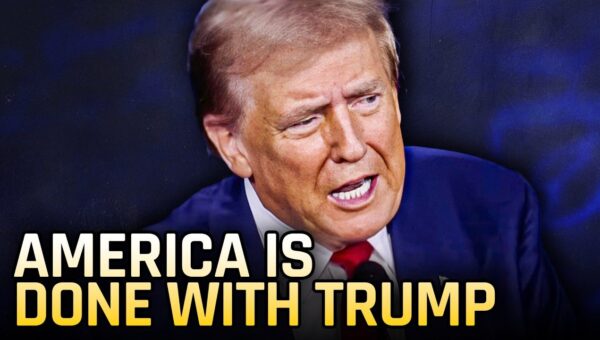
Americans Fear Nation Is Failing Due to Broken Checks and Balances
A new poll reveals a majority of Americans believe the U.S. is a "failed state" due to a broken system of checks and balances. The findings suggest Donald Trump exposed pre-existing vulnerabilities rather than creating new ones. This has sparked calls for significant constitutional reform to prevent future leaders from exploiting these weaknesses.

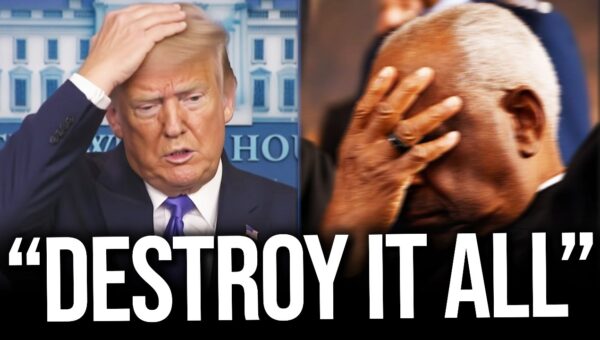
Trump Declares ‘War’ on Supreme Court After Tariff Ruling, Igniting Constitutional Firestorm
Former President Donald Trump has launched a scathing attack on the Supreme Court following a ruling that struck down his tariffs, accusing justices of lacking courage and using rhetoric likened to his January 6th pronouncements. This unprecedented assault on the judiciary, including his own appointees, raises alarms about constitutional checks and balances and the erosion of respect for democratic institutions.


Averting Catastrophe: Expert Analysis Unpacks a Hypothetical Second Trump Term and the Resilience of American Democracy
Amidst a hypothetical second Trump term in late 2025, an expert warns against catastrophic thinking, highlighting severe institutional damage and a radical foreign policy shift. However, the analysis points to emerging signs of resilience: strong Democratic electoral performances, judicial pushback, growing Republican dissent, and a public opinion largely at odds with the administration's policies, offering a path for American democracy to reassert itself and for allies to stand firm.