The Great Firewall’s Shadow: How China’s Military Account on X Unleashed a Barrage of Racist Attacks
China's Ministry of National Defense launched an official account on X, formerly Twitter, sparking widespread backlash and a barrage of racist attacks against critics. The incident highlights China's internet hypocrisy and alleged state-sponsored online harassment campaigns.

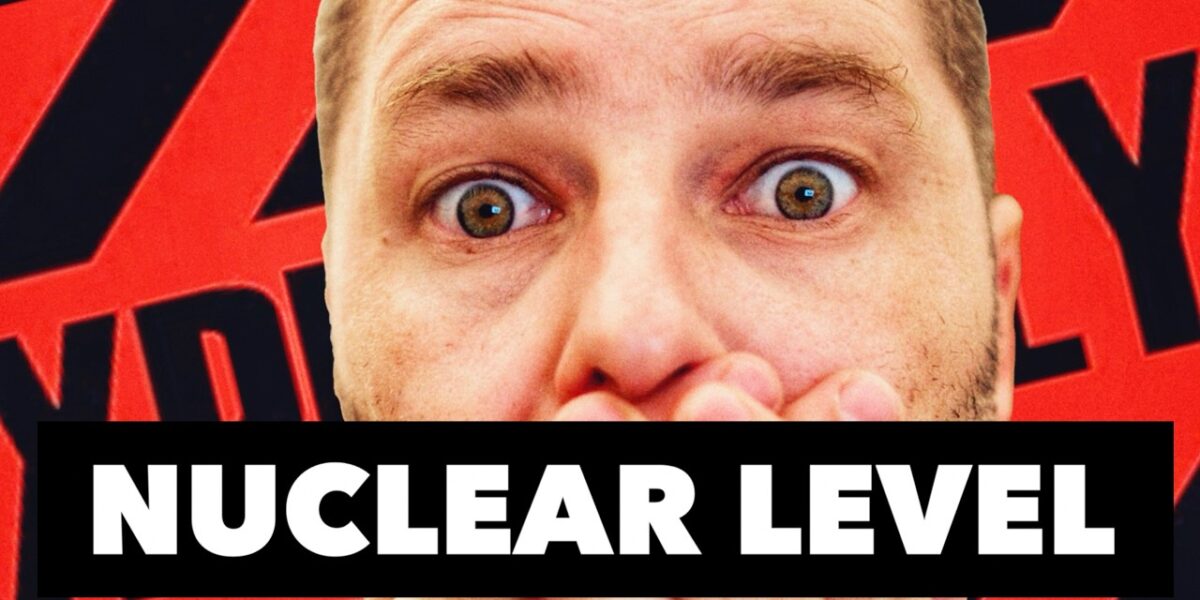
The Great Firewall’s Shadow: How China’s Military Account on X Unleashed a Barrage of Racist Attacks
In an era where digital platforms serve as battlegrounds for information and influence, a recent incident involving China’s Ministry of National Defense opening an official account on X (formerly Twitter) has ignited a firestorm. The move, intended to project a modern image and disseminate propaganda, backfired spectacularly, exposing the hypocrisy of China’s internet censorship and unleashing a torrent of vitriolic, racist attacks against a content creator who dared to question the decision. This event highlights a broader concern about state-sponsored online operations, the weaponization of social media, and the challenges faced by individuals who challenge authoritarian regimes in the digital space.
A Bold Move Meets a Swift Backlash
The Chinese government, notorious for its stringent control over online content and the infamous “Great Firewall” that blocks access to numerous foreign websites, including X, made a surprising announcement: the Ministry of National Defense had launched an official account on the platform. This decision, seemingly aimed at engaging with an international audience and broadcasting its message, was met with widespread sarcasm and confusion among Chinese netizens. Many questioned how they were expected to access or even see the account, given the government’s own restrictions.
The move was widely perceived as hypocritical, especially considering that foreign government entities are generally barred from Chinese social media platforms. The analogy of the U.S. Department of Homeland Security or the CIA opening an official account on platforms like Weibo or Douyin was presented as a stark illustration of the double standard.
A Polite Question, A Vicious Response
One content creator, who has been a vocal critic and observer of China, decided to politely comment on the Ministry of National Defense’s propaganda video on X. His simple remark, suggesting a return to domestic platforms rather than using overseas ones, triggered an immediate and brutal response. What followed was an onslaught of deeply offensive, racist, and sexually violent messages, predominantly in Chinese, which would have largely gone unnoticed by the global audience were it not for X’s built-in translation feature.
The nature of these attacks was shocking, employing derogatory terms like “white pig” and containing graphic threats and insults directed at the content creator and his family. This deluge of hate speech raised a critical question: if X is blocked in China, how were these individuals able to access the platform and launch such coordinated attacks?
The “50 Cent Army” and State-Sponsored Harassment
The answer, according to the content creator, lies in a well-documented phenomenon: the existence of state-sponsored online commentators, often referred to as the “50 Cent Army” (wumao). This network, allegedly bolstered by prisoners forced to participate, is tasked with defending the Chinese government’s image online and attacking its critics. The explanation posits that these individuals, along with a segment of fervent nationalists who circumvent censorship using VPNs, form a formidable force capable of overwhelming dissenting voices.
The content creator emphasized that while this behavior is representative of a coordinated state-backed operation and a segment of nationalistic individuals, it does not necessarily reflect the attitudes of all Chinese people. He drew upon his 14 years of experience living in China, stating that many ordinary Chinese citizens he encountered were not racist or vulgar towards foreigners. However, he also acknowledged that these individuals might not actively intervene to stop racist behavior, not out of personal agreement, but due to a general reluctance to confront such issues.
Hypocrisy, Propaganda, and the Digital Battlefield
The incident underscores a significant concern: the ability of authoritarian regimes to leverage international platforms for propaganda while simultaneously censoring their own citizens. The Chinese government’s use of X for its Ministry of National Defense account, while blocking the platform for its populace, is seen as a prime example of this double standard. Furthermore, the subsequent coordinated attacks on critics suggest a deliberate strategy to silence dissent and intimidate those who question the government’s narrative.
The content creator argued that the Chinese government not only permits but actively encourages these types of attacks. With their advanced technological capabilities and control over internet infrastructure, they possess the means to prevent such posts from being published. Therefore, the continued proliferation of hate speech and propaganda is seen as an endorsement, a calculated move to project power and influence beyond their borders.
The Call to Action: Protecting Digital Spaces
The implications of this event extend beyond a single instance of online harassment. It raises profound questions about the responsibility of social media platforms in moderating state-sponsored content and combating coordinated disinformation campaigns. The content creator issued a strong call to action, urging companies and governments to take a stand against the influence of the Chinese government on Western platforms.
He advocated for a unified rejection of what he described as “brainwashing garbage” and “propaganda crap.” While acknowledging that Chinese citizens may have little choice in what they are exposed to online domestically, he stressed that individuals in democratic societies have the power to choose and to resist. The plea is for companies to stop hosting such content and for governments to address the growing influence of foreign authoritarian regimes in the digital public square. The goal is to prevent these platforms from becoming conduits for hate, bigotry, and state-sponsored manipulation.
Broader Implications and the Future of Online Discourse
This event is a microcosm of a larger geopolitical struggle playing out in the digital realm. As nations increasingly compete for global influence, the internet has become a critical front. China’s sophisticated approach, combining overt propaganda with covert online harassment, presents a challenge that Western democracies are still grappling with how to effectively counter. The reliance on translation tools to expose such behavior, while effective, also highlights the limitations of current moderation systems.
The incident serves as a stark reminder that online discourse is not always organic; it can be manufactured and weaponized by state actors. The normalization of such tactics by authoritarian governments poses a threat to open societies and the principles of free speech and reasoned debate. The call to petition companies and governments is a recognition that individual action, while important, must be amplified by collective pressure to effect meaningful change.
Ultimately, the controversy surrounding the Chinese Ministry of National Defense’s X account and the subsequent wave of racist attacks is more than just an online spat. It is a manifestation of a deeper conflict over information control, national sovereignty in the digital age, and the very nature of truth in a globally interconnected world. The response from platforms and policymakers will be crucial in determining whether digital spaces remain open forums for exchange or become further fractured by state-sponsored propaganda and hostility.
Source: Even Youtube was Shocked! I Dared Question China's Military… Then Hell Unleashed (YouTube)

Related Articles
Taiwan’s Nuclear Dilemma: Deterrence or Disaster?
As China expands its nuclear arsenal and military presence, the question of whether Taiwan should possess nuclear weapons or host U.S. nuclear arms gains urgency. The debate weighs the potential for deterrence against the risks of escalation, drawing parallels to Ukraine's disarmament and Taiwan's own past nuclear ambitions.

Kremlin’s Ceasefire Refusal Exposes Deliberate War Continuation
Kremlin spokesperson Dmitry Peskov's repeated rejections of ceasefire proposals reveal a deliberate strategy to prolong the conflict. By cloaking refusals in complex diplomatic language and redefining "peace," Moscow aims to prevent its populace from realizing that an end to hostilities is a choice, not an inevitability.


Germany Navigates Tricky US-China Balancing Act
Germany faces a complex geopolitical challenge, needing to balance its alliance with the US and its economic ties with China. Experts suggest a 'smart approach' focusing on diversification and strategic autonomy, rather than a forced choice, is the most viable path forward.