The Epstein Files: Unveiling a Shadowy Backdoor Connecting Western Elites to China’s Power Core
New revelations from the Epstein files suggest Jeffrey Epstein acted as a crucial intermediary, allegedly connecting Western financial elites with China's powerful Communist Party. He reportedly taught Wall Street executives how to navigate Chinese politics through 'elegant bribery' and facilitated 'sons and daughters' hiring schemes, enabling unprecedented access and success for institutions like JP Morgan in China. These documents paint a disturbing picture of a shadowy network that managed wealth, influenced succession, and even contemplated regime change within the highest echelons of Chinese power.

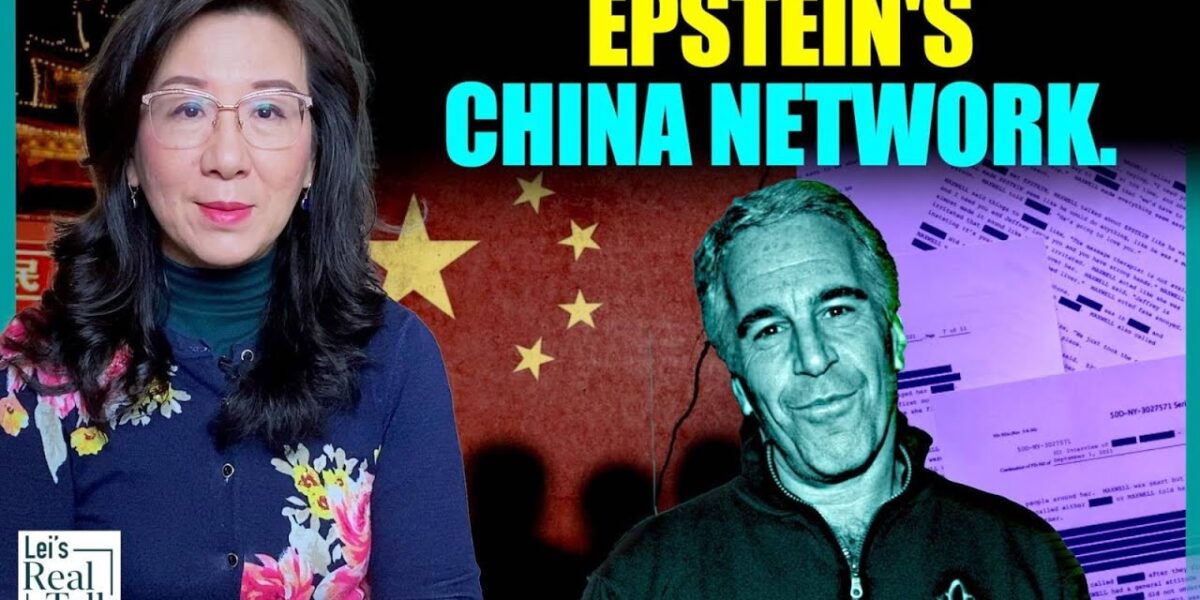
The Epstein Files: Unveiling a Shadowy Backdoor Connecting Western Elites to China’s Power Core
The recent public release of documents related to Jeffrey Epstein, the disgraced financier and convicted sex offender, has ignited a firestorm of speculation and revelation. While much of the public discourse has focused on his predatory sexual activities and the high-profile individuals implicated, a deeper dive into these extensive files has unearthed a profoundly unsettling dimension: Epstein’s alleged role as a key fixer, intermediary, and architect of influence between Western financial elites and the inner sanctums of the Chinese Communist Party (CCP).
Far from being merely a criminal who blackmailed powerful figures, Epstein, according to a meticulous review of the documents and associated analyses, appears to have operated a sophisticated network that served as a clandestine conduit for Western capital to penetrate the tightly controlled Chinese system, and, conversely, for CCP elites to secure their wealth and influence abroad. This intricate web, described as welding “Western greed and CCP authoritarian power into one monstrous machine,” reveals a disturbing interplay of power, corruption, and geopolitical maneuvering.
The Architect of Influence: Epstein’s ‘Guanxi’ Philosophy
At the heart of Epstein’s alleged modus operandi was a ruthless understanding of human weaknesses and the strategic application of Chinese cultural nuances, particularly the concept of guanxi (关系). This term, encompassing connections, relationships, and networks, is fundamental to navigating China’s complex social and political landscape. Epstein, a Brooklyn native, astonishingly found himself in a position to instruct seasoned Wall Street executives on its intricacies.
A striking example emerges from a 2009 email exchange between Epstein and Jess Staley, then a senior JP Morgan executive who later became CEO of Barclays. In this correspondence, a seemingly subservient Staley received a lesson from Epstein on how to spell and understand guanxi. Epstein, the convicted sex predator, was effectively schooling a titan of global finance, a man who managed hundreds of billions, if not trillions, of dollars, on the true mechanics of power within the CCP.
Epstein’s advice to Staley was blunt and devoid of corporate niceties: “Your arrogant Wall Street elites need to stop showing up in China wavering thick legal contracts. That stuff is childish. Inside the red wall, contracts are just paper that can be tossed into a shredder at any time. There are only two real currencies: face and a sense of security.” He elaborated that CCP officials, while not lacking money, desperately craved a promise of survival, a guarantee that their families and fortunes would remain safe during the inevitable political earthquakes and reshuffles within the system.
This formed the core of Epstein’s Guanxi philosophy: to gain licenses, financial permits, or market dominance in China, Western entities could not merely be investors. They had to transform themselves into integral parts of the CCP elite families’ interest networks. The unspoken price for becoming “one of us” was clear: the Western bank would become the CCP elite family’s private overseas safe and a placement office for their children and relatives.
Epstein’s detailed approach extended beyond abstract theory. He meticulously crafted psychological scripts for Staley’s behavior in meetings in Beijing. Imagine a banking tycoon accustomed to barking orders in a Manhattan skyscraper being instructed to humble himself in Beijing, adopting a posture “flatter than the carpet in the Great Hall of the People.” Epstein drafted standard lines: “When you meet the ministers and party secretaries who control financial life and death, never say ‘I’m here to invest and make money.’ Instead, you’re supposed to bow your head and say, ‘I’ve come here to seek your guidance. I deeply admire your long civilization and your great wisdom in governance.’” This revealed Epstein’s profound, albeit twisted, understanding of the CCP officials’ psychology – a complex blend of collective inferiority and extreme personal arrogance.
The manipulation even extended to the nature of bribes. Epstein advised against crude offerings of gold bars or cash, deeming them insulting and low-level. Instead, he advocated for “elegant bribery”: a recommendation letter to a top private school for their children, a private introduction to Nobel Prize winners, or helping a family member “recover lost antiques” at a New York auction. Even meeting locations were carefully chosen. For Chinese companies (backed by CCP elites) operating in the US, Epstein suggested his museum-like mansion on East 71st Street or elite private clubs in London, wrapped in “royal prestige,” offering a sense of “hospitality.” Conversely, in China, he advised JP Morgan executives to avoid luxury hotels in favor of hidden private garden clubs accessible only to insiders. It is even alleged that JP Morgan established covert, unmarked offices in London and New York specifically to cater to China’s top elites.
Under this meticulously engineered psychological manipulation, Wall Street executives allegedly began to enter Zhongnanhai, not just for business, but to forge emotional connections and perform what amounted to ritualistic offerings of loyalty. Epstein, acting as a hidden director, fine-tuned every handshake, compliment, and strategic move in Beijing. This alleged collusion, the transcript suggests, led to Wall Street abandoning its vigilance toward the CCP system, transforming into the authoritarian regime’s “most loyal and most expensive lobbyist in the West.”
Wall Street’s Gateway to Zhongnanhai: The ‘Sons and Daughters’ Program
Epstein’s schemes were not limited to psychological manipulation; he designed concrete interest traps to lock both sides together. In October 2009, he advised Staley to launch a “new China initiative” with a dedicated China entity and a board of advisors including “China politico” (likely referring to Politburo members). This initiative, in blunt terms, was envisioned as an overseas shelter for the family members of China’s top officials.
Epstein directly instructed the Wall Street tycoon to “target the senior officials and their families who love traveling abroad, loved Western lifestyles, and secretly want an escape hatch.” The strategy involved offering them “fancy titles,” “obscene salaries,” and, crucially, allowing their children to be “gilded inside JP Morgan’s global network.” This was the true prototype of what later became the infamous “sons and daughters” hiring program on Wall Street.
While publicly framed as a “localization strategy,” this program was, in reality, a naked form of “cross-border hostage diplomacy and influence trafficking.” JP Morgan later faced substantial fines, reportedly hundreds of millions of dollars, from the SEC for this practice. And JP Morgan was not alone; media reports implicated other major financial institutions, including Citigroup, Goldman Sachs, Credit Suisse, Deutsche Bank, Morgan Stanley, and UBS, in similar practices. The children of these top CCP officials often received hefty salaries for doing very little, some not even working full-time.
Epstein’s influence extended to financial instruments as well. He reportedly suggested using complex tools like credit default swaps (CDS) to provide Chinese officials with secret, untraceable asset management channels. This solved a critical problem for CCP elites: how to launder illicit money made in China and quietly move it into the global financial system, particularly New York, without triggering anti-corruption investigations back home. Essentially, Epstein, a convicted sex trafficker, allegedly taught a Wall Street veteran how to use the bank’s professional cover to cloak “red money” in the invisibility of financial derivatives. This was the essence of Epstein’s Guanxi web, where princelings collected paychecks in Manhattan while their family wealth flowed covertly through JP Morgan’s vast financial operations.
Navigating the Red Dragon’s Lair: JP Morgan’s Unprecedented Success in China
The crucial question, then, is whether these elaborate schemes actually yielded results. According to the analysis presented, they did, dramatically so. The CCP notoriously guards its financial system, making it nearly impossible for foreign banks to operate freely. Hidden barriers, license restrictions, and bureaucratic hurdles often leave foreign entities empty-handed. Yet, under Epstein’s alleged coaching and long-term strategic layout, JP Morgan managed to cut an unparalleled path through this labyrinth, becoming “Zhongnanhai’s most favorite guest.”
By early this year, JP Morgan’s footprint in China had become the benchmark for foreign banks. It was the first fully foreign-owned futures company in China (as of 2020), the first wholly foreign-owned securities company (approved in 2021), and achieved full ownership of a local asset management business in 2023. Its offices are now planted in every first-tier Chinese city, from Beijing and Shanghai to Guangzhou and Chengdu, at a time when other foreign banks were forced to retreat due to an inability to secure licenses. This extraordinary success, the analysis contends, was not a business miracle but the culmination of more than a decade of Epstein’s schemes, where every favor, backroom meeting, and “sons and daughters” placement eventually translated into privilege and special treatment.
High-Stakes Diplomacy: Meetings with Power Brokers
Further documentation reveals the depth of Epstein’s alleged involvement. An internal email dated September 2, 2010, from Jess Staley to Epstein, offers a glimpse into the high-stakes deal-making. Staley, fresh from a round of high-level meetings in Beijing, expressed his exhilaration, stating he had just concluded “the most senior meeting JP Morgan has had save for Jamie J.” (referring to Jamie Dimon, JP Morgan’s CEO) with Wang Qishan, then China’s Vice Premier in charge of finance and widely regarded as the toughest gatekeeper in China’s financial system.
More astonishingly, Staley reported spending “almost two hours with Minister Li Yuanchao of the Organization Department,” adding, “He will be in the standing committee in the next government.” The Organization Department is the CCP’s powerful personnel department, controlling promotions, demotions, and the political life and death of officials. The image of an American banker discussing not balance sheets but political futures with the man who controlled the CCP’s entire political ladder is profoundly revealing. Staley left Epstein with a cliffhanger, promising to reveal “what he offered/asked when we meet,” before casually adding, “I’m seeing the prince this afternoon.” Given the context of 2010, when Xi Jinping was China’s Vice President and designated successor to Hu Jintao, the “prince” most logically referred to Xi Jinping himself.
Connecting these dots, the picture emerges: Epstein, operating from the backroom, while JP Morgan, fronted by Staley, engaged in high-level closed-door bargaining with Li Yuanchao in the morning and met with the future leader Xi Jinping in the afternoon. Epstein was the first to be updated on these activities. This was not casual networking; it was a transnational power-harvesting machine operating at full speed, a “power swap” where Epstein had allegedly penetrated the CCP’s most secret and sensitive power nerve centers, transforming into a “transfer station for power deals between China and the United States.”
The Princelings’ Pipeline: Boyu Capital and the Globalization of Red Wealth
Epstein’s alleged network also facilitated the wealth extraction arm of CCP’s top families. A DOJ file contains an email from David Stern, Epstein’s longtime lawyer, forwarding an early marketing pitch for Boyu Capital in 2011. Boyu Capital was founded by Jiang Zhicheng, grandson of former CCP leader Jiang Zemin, who was only in his early twenties at the time. The email casually noted that “Hong Kong’s richest man” had already invested $100 million USD in the fund. Jiang Zhicheng, a newcomer, needed Epstein’s backing, and the “super network” of Western royalty, political elites, and academic heavyweights behind Epstein provided the crucial stamp of legitimacy.
This reveals a brutal truth: the globalization of wealth for the CCP’s top ruling families was deeply tied to the Western elite networks allegedly cultivated by Epstein. Epstein purportedly used his social web to package Boyu Capital as a politically safe China investment for Western hidden elites. In return, Epstein gained higher-level political immunity and priority access to projects inside China. This created a “filthy closed loop”: Epstein teaches Wall Street how to enter China; Wall Street helps princelings manage their money; and these “red families” then leverage Epstein’s Western network to build layers of political and reputational shields, enabling even greater wealth extraction. This aligns with Jiang Zemin’s infamous dictum: “make big money quietly.”
Academic Espionage and Human Data Harvesting: The Tsinghua University Connection
Epstein’s alleged influence extended into the academic sphere, specifically involving Tsinghua University, China’s top university and Xi Jinping’s alma mater, tightly controlled by the Party. The files indicate Tsinghua became another ground for power brokering and data harvesting, with a project brokered by Shing-Tung Yau, a world-class mathematician with sway at both Harvard and Tsinghua.
Email exchanges between Yau and Epstein regarding a “confidential” plan to build a Tsinghua satellite campus in Boston were found. Yau brought in Gerald Chan, a prominent Hong Kong real estate tycoon and investor (of the Chan brothers who donated significantly to Harvard). In December 2016, Epstein and Gerald Chan met for lunch at a restaurant near Harvard. The scene – a global real estate tycoon and investment heir meeting a convicted sex offender whom Harvard had officially warned against engaging with – discussing China’s top university’s overseas expansion plan, is strikingly absurd.
Further documents include a “private and highly sensitive” letter from Tsinghua University’s Office of International Affairs to Epstein, reporting coordination with a Harvard mathematician to send two top PhD graduates from Tsinghua’s math department to Harvard’s research programs for three years. This program was reportedly founded by Epstein himself. A convicted sex offender, shunned by US academia, was effectively acting as the overseas placement director for Tsinghua students with Harvard.
Epstein’s motivation was revealed privately: he bragged that Tsinghua was the “world’s most ideal, at least exploited data collection site.” By “data,” he meant “human data.” He viewed Tsinghua graduates as future members of China’s leadership inner circles, future decision-makers in political and technological systems. His aim was to use research funding at overseas campuses to build psychological profiles, map family vulnerabilities, and collect traces of students’ private lives abroad – essentially, collecting “compromat” on future Chinese elites. In this sense, Epstein and the CCP were a “perfect match,” both adept at mapping and exploiting human vulnerabilities. Epstein, it appears, wasn’t just trying to control today’s power holders; he was attempting to “pre-purchase tomorrow’s successors.”
Geopolitical Speculator: Betting on Power Shifts in Zhongnanhai
Epstein’s network also demonstrated an uncanny ability to capture real-time, highly sensitive political dynamics within the CCP. In November 2012, when Xi Jinping was installed as China’s fifth leader, and the world media speculated on his direction, Epstein was reportedly ahead of the curve. He texted David Stern, asking if he had seen a New York Times piece about “Shen Shandong’s wife” (referring to Duan Weihong, ex-wife of Desmond Shum, allegedly a financial proxy for the Wen Jiabao family).
Stern’s reply was jaw-dropping: the new leadership was planning a “massive internal investigation into all asset holding structures linked to Wen Jiabao’s family,” a campaign “personally designed by Jiang Zemin to clear the field for Xi Jinping.” This information, captured days after Xi Jinping took power, accurately predicted his first major move: using an asset investigation to purge rivals, particularly Wen Jiabao’s overseas wealth network. Epstein’s interest in Wen Jiabao’s assets and CCP internal politics stemmed from a predatory calculation: the “collapse of old power centers means new laundering channels and new asset restructuring opportunities.” Epstein, therefore, was not a bystander but a “geopolitical speculator,” betting on regime power shifts to extract maximum wealth, seeing Xi Jinping as the man who would “clear space” for Wall Street to capture the next wave of wealth.
The Shadowy Kingmakers: Contemplating Regime Change
Perhaps the most chilling revelation is an anonymous, redacted email found in Epstein’s files, dated May 13, 2019. This was a period of intense US-China trade war, with Xi Jinping having flipped the table on negotiations and Donald Trump imposing 25% tariffs. Inside the CCP, whispers and observations of Xi Jinping’s “bloated but still fragile” power were rampant. The email reads: “When Xi Jinping and Wang Qishan are removed or stepped down, break the radical Carter, install our guys, wreak havoc on collaborations in the west.”
This message suggests that in Epstein’s world, Xi Jinping was never a true partner but rather a “well-fed steward” managing China’s resources and wealth. When Xi Jinping facilitated global elites in harvesting China, they were partners in destiny. But the moment his “wolf warrior diplomacy” threatened global profits, these predators seemingly turned on him. The word “removed” is stark, implying that by 2019, Epstein’s circle was secretly contemplating replacing Xi Jinping if his actions jeopardized their interests. This, the analysis concludes, represents the “darkest form of kingmaking,” where, on the surface, they helped Xi Jinping purge rivals, but in the shadows, they were already grooming “their guys,” the next batch of proxies. Essentially, Epstein and Xi Jinping were portrayed as “two demons betting against each other,” with Xi Jinping aspiring to be an emperor and Epstein and his backers aiming to be kingmakers.
Broader Implications and Unanswered Questions
The alleged revelations from the Epstein files paint a deeply unsettling picture of transnational power brokering, blurring the lines between finance, politics, and potentially, intelligence. The implications are vast, touching upon national security, global financial integrity, and the ethical boundaries of Western institutions operating in authoritarian regimes.
This alleged backdoor connection to Zhongnanhai raises critical questions about the vulnerability of democratic systems to authoritarian influence, the true cost of unchecked corporate greed, and the extent to which powerful individuals can operate outside conventional legal and ethical frameworks. The long-term consequences of such deeply intertwined and morally compromised relationships between Western financial titans and the CCP’s elite are yet to be fully understood. The Epstein files, in this context, are not just a record of sexual depravity but a potential blueprint for how global power is truly wielded, often in the shadows, far from public scrutiny.
Source: The Epstein Files: The West’s Back Door into Zhongnanhai (YouTube)

Related Articles
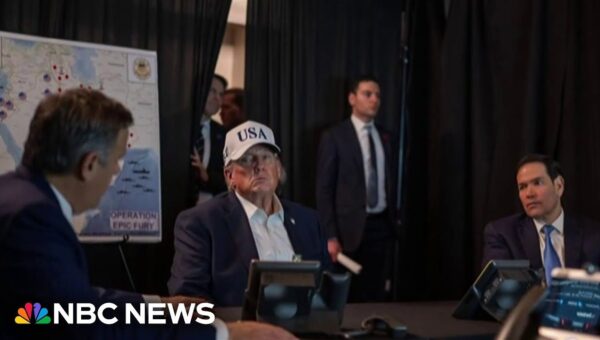
Trump: Iran Strikes Ahead of Schedule, Expects ‘Great Deal for World’
Three U.S. service members have been killed amid escalating conflict with Iran, President Trump confirmed. He stated that strikes are ahead of schedule, with senior Iranian leaders killed, and expressed optimism for a "great deal for the world" despite ongoing talks with Iranian officials.

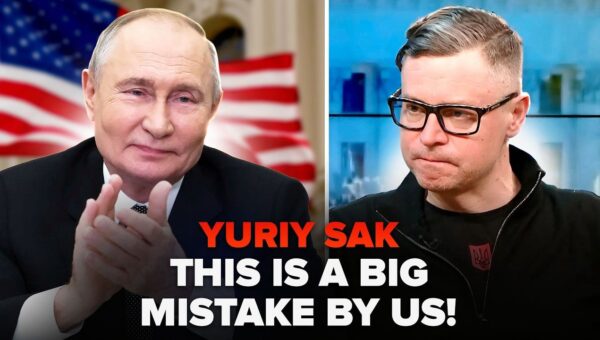
Trump’s Putin Stance: US Strategy and Global Implications
Analysis suggests Donald Trump's approach to the Ukraine war involves pressuring Kyiv, but US involvement is crucial for resolution. China's influence and the 'MAGA' agenda's geopolitical implications are key factors.

US Strikes Iran: Mounk and Fukuyama Discuss Unpredictable Conflict
Leading political scientists Yascha Mounk and Francis Fukuyama analyze the recent US strikes on Iran, warning of unpredictable outcomes and internal instability. They question the objectives of the "war of choice" and its potential to destabilize the region, while also discussing the shifting global perceptions of Israel.