The Epstein Files: A Glimpse into a Global Web of Power, Deception, and Unanswered Questions
The recent release of millions of Jeffrey Epstein's files has unveiled a global network of power, privilege, and alleged predation, implicating high-profile figures from politics, business, and royalty. Despite the DOJ's flawed transparency efforts, the documents hint at compromised officials, financial irregularities, and a chilling intelligence asset theory, while sparking criminal investigations and resignations across Europe in stark contrast to U.S. inaction.

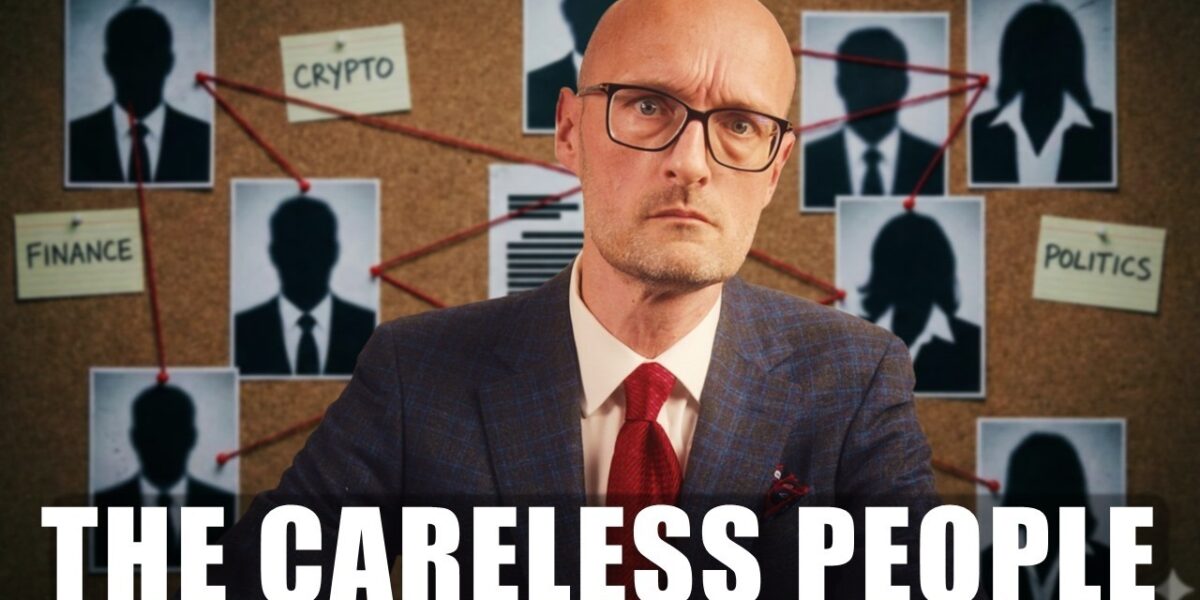
The Epstein Files: A Glimpse into a Global Web of Power, Deception, and Unanswered Questions
In a long-anticipated move, the U.S. Department of Justice (DOJ) recently released over three million pages of documents related to its investigations into the late financier and convicted sex offender Jeffrey Epstein. This monumental data dump, encompassing everything from emails to vacation photos, was ostensibly intended to provide a definitive account of a scandal that has cast a long, dark shadow over the global elite. What emerged, however, was not a clear resolution but a tangled web of allegations, compromised officials, and a deeply flawed transparency effort that has only intensified public scrutiny and raised more questions about the powerful individuals who allegedly enabled Epstein’s heinous activities.
The newly unveiled files read like a veritable “who’s who” of global power brokers, implicating a startling array of figures from two U.S. presidents and a rotating cast of British and European royals to prominent names in business, law, and high finance. Many who had previously dismissed their connections to Epstein as tangential were revealed to have far deeper ties than they had ever publicly admitted. The sheer breadth of this network suggests that Epstein was not merely a predator operating in the shadows, but a central figure in a social and financial ecosystem that catered to and protected some of the world’s most influential people.
A Transparency Debacle: The Flawed Release of the Epstein Documents
The release of these millions of pages was, by many accounts, a chaotic and deeply problematic exercise in transparency. From the outset, the DOJ’s handling of the documents drew widespread criticism, fueling suspicions that the true extent of Epstein’s network and the complicity of his associates were being deliberately obscured.
One of the most immediate controversies involved the technical accessibility of the files. Initially, the DOJ website featured a convenient “download all” button, allowing journalists and researchers to quickly acquire the entire dataset. However, in a move that baffled and frustrated the public, this button was swiftly removed once the department realized it was actually being utilized. It was replaced by a cumbersome system that required users to download files one by one, effectively creating a significant barrier to comprehensive analysis.
Beyond the logistical hurdles, the integrity of the released data itself came under fire. Reports quickly emerged of documents appearing and disappearing from the online portal. A particularly notable instance involved a file identified as EFTA 01667, which reportedly contained a list of unverified FBI tips concerning a U.S. president. This document briefly became one of the most widely discussed PDFs online before it was unceremoniously scrubbed from the site the following morning and, as of recent reports, has not been re-uploaded. The DOJ’s explanation for these removals – citing the need to rectify “redaction errors” – did little to assuage public concern, instead reinforcing the perception of a deliberate effort to control the narrative.
Further compounding the issue was the fact that the release was far from complete. The DOJ had previously stated that it possessed over six million pages of records pertinent to the Epstein investigations, yet only approximately 3.5 million were made public. Crucially, many of the most sought-after records, including bank and brokerage statements and communications with foreign governments, were among the missing millions. Lawmakers and legal experts were quick to point out that existing statutes forbid the redaction of files merely to avoid reputational harm or due to political sensitivity – guidelines that the DOJ appeared to treat as mere suggestions.
The redaction process itself was described as “bizarre” and “sloppy.” Instances were observed where the same document was uploaded multiple times, each with entirely different redactions. Case numbers, meant to be unredacted, were blacked out in some versions while visible in others. Perhaps most comically, in one instance, the letters “JP” were redacted from “JP Morgan,” ostensibly to protect the privacy of a multi-billion-dollar investment bank that has been a household name for over a century. More gravely, major news outlets like The New York Times and the Associated Press discovered that the DOJ had accidentally released unredacted photos of victims, including some who had never publicly come forward. While these files were eventually pulled, the incident starkly highlighted the government’s purported commitment to protecting victims while simultaneously redacting the names of Epstein’s suspected co-conspirators.
Adding insult to injury, the law mandates that every redaction must be accompanied by a written justification. These explanations, however, were conspicuously absent. Instead, the public was presented with entire 100-page files consisting of solid black blocks. Even for documents withheld for national security reasons, the DOJ was required to provide unclassified summaries – another requirement that appears to have been overlooked. The overwhelming sentiment was that this was not a genuine attempt at transparency but rather a strategic obfuscation, aptly summarized by a commenter: “Oh no, they’re finding needles. Quick, add more hay.”
A Web of Connections: High-Profile Figures and Startling Allegations
The released documents painted a vivid, albeit disturbing, picture of Epstein’s extensive network, revealing the intimate and often compromising relationships he cultivated with some of the world’s most powerful individuals.
Bill Gates: Health Concerns and Alleged Favors
One of the initial bombshells involved Microsoft co-founder Bill Gates. Two frantic, typo-ridden emails sent by Epstein to himself in 2013 suggested a more “practical” side to his relationship with Gates. Epstein appeared to claim that Gates had contracted a sexually transmitted disease from “Russian girls” and sought Epstein’s assistance in obtaining antibiotics that could be secretly administered to his then-wife, Melinda. Additionally, Epstein alleged that he had provided Adderall to Gates for his bridge tournaments. Gates has vehemently denied these claims, attributing them to a “disgruntled liar” upset at being cut off. If true, however, these allegations are a damning indictment of a system where even one of the wealthiest men in the world allegedly struggled to access basic healthcare through conventional channels, resorting instead to a convicted sex offender for medical supplies.
Leon Black: The Price of Influence
The files also shed light on the nature of Epstein’s financial dealings with high-profile figures. Leon Black, co-founder of the private equity group Apollo Global Management, emerged as a significant client. In 2013, when Black reportedly showed reluctance to pay an “inexplicably large fee” to Epstein, a chilling email from Epstein served as a powerful reminder: “Leon, as you’re well aware, there’s little I won’t do for you, and a great deal that I’ve already done, both known and some things that will need to remain unknown.” Black subsequently paid Epstein over $150 million for “tax advice” that a congressional committee later characterized as information already in the public domain or previously provided by Black’s own lawyers. Black, through his attorneys, has denied any allegations of misconduct.
Howard Lutnik: The Neighbor Next Door
Commerce Secretary Howard Lutnik, who lived next door to Epstein’s seven-story Manhattan townhouse, found his “I barely knew the guy” defense severely challenged by the new revelations. Lutnik had previously recounted a story on a podcast about visiting Epstein’s home with his wife, hearing a “revolting” comment, and deciding never to be in a room with Epstein again. However, the files indicate a much deeper connection. Real estate records show that Lutnik acquired his house from Epstein in 1998 for a mere $10 “and other valuable consideration” – an astonishingly low price for a Manhattan townhouse, even at the time. Furthermore, emails from 2012 reveal Lutnik and his family planning a visit to Epstein’s private island, Little St. James, on their yacht, four years after Epstein’s guilty plea. This suggests Lutnik, who would have received mandatory notifications about a registered sex offender living next door, maintained a relationship with Epstein long after his criminal conviction. An FBI email summary (EFTA 01648951) even contained an unverified allegation that Lutnik made his money through Ponzi schemes and money laundering, and that Epstein sold him the house worth millions for $10.
Elon Musk: Begging for Invitations
Despite years of denials and claims of being “photobombed” by Ghislaine Maxwell, Elon Musk’s name appears over a thousand times in the files, painting a starkly different picture of his relationship with Epstein. Far from turning down invitations, the emails suggest Musk was actively seeking them. One particularly striking entry shows Musk emailing Epstein on Christmas morning, expressing a desire to “hit the party scene and let loose,” specifically noting that “a peaceful island experience is the opposite of what he was looking for.” Epstein, ever the attentive host, reportedly warned that the “ratio” on the island might make Musk’s then-wife uncomfortable, to which Musk allegedly replied, “Ratio is not a problem.” While Musk has since acknowledged the emails are genuine, he maintains they were misinterpreted and he ultimately never visited the island due to logistics. Another email revealed Musk’s anger at being invited to an event with diplomats, prompting Epstein to reassure him that his party would feature “no one… over the age of 25 and all are very cute.”
Prince Andrew: A Royal’s Desperation
The files further cemented the Duke of York, Prince Andrew’s, deeply compromised position. They revealed Epstein aggressively lobbying Howard Lutnik to secure Andrew a job or a lucrative role, even providing introductions at Lutnik’s firm, Cantor Fitzgerald. This offered a startling glimpse into the unseen mechanics of power, showing a royal prince resorting to a convicted sex offender as a headhunter for a Wall Street brokerage. Amusingly, Andrew and Sarah Ferguson reportedly invited Epstein, alongside Harvey Weinstein and Ghislaine Maxwell, to their daughter’s 18th birthday party. While Andrew has been stripped of royal titles and evicted from Royal Lodge, the depth of his association with Epstein, including previously released compromising photos, continues to fuel public outrage.
Woody Allen: A Consistent Presence
Filmmaker Woody Allen also features prominently in the Epstein files, indicating a close friendship and frequent interactions. Epstein’s calendar alone showed nearly 100 scheduled meetings with Allen, including trips to a film center specifically to watch Allen edit. While the documents do not provide evidence of illicit activities involving Allen, his consistent presence in Epstein’s orbit underscores the extent to which the convicted predator cultivated relationships with influential figures across various sectors.
The Intelligence Asset Theory: A Lingering Shadow
One of the most persistent and unsettling theories surrounding Epstein is that he was not merely a well-connected predator but an intelligence asset. This theory gained significant traction with journalist Vicky Ward’s 2019 report for The Daily Beast, alleging that former U.S. Labor Secretary Alex Acosta told investigators the Epstein case was “above his pay grade because Epstein belonged to intelligence” – a claim Acosta has since denied.
A newly released document, file EFTA000090314, an FD 1023 form used by the FBI to record information from a confidential human source (CHS), lends some weight to this theory within the FBI’s own records. While the FBI notes that such reports are often unverified raw intelligence, the source made staggering claims. They alleged that renowned lawyer Alan Dershowitz explicitly informed Acosta that Epstein was connected to both U.S. and allied intelligence services. The document went further, claiming Epstein had trained as a spy under former Israeli Prime Minister Ehud Barak. The allegations didn’t stop there, also implicating Dershowitz himself as being “co-opted by Mossad” and that the Israeli intelligence agency would debrief him after his phone calls with Epstein. In an even more explosive claim, the document alleged that Donald Trump had been “compromised by Israel” and that Jared Kushner, a former student of Dershowitz’s, was the “real brains behind the operation.”
It is crucial to approach these claims with a “massive grain of salt,” as the document itself refers to previous reports that are not included in the current release, and the reliability of a confidential source can vary widely. However, the mere fact that the FBI was recording these allegations of foreign influence on U.S. officials by Israel, Russia, and the UAE as late as October 2020 suggests that the intelligence angle was not simply a baseless conspiracy theory but a matter of internal concern within federal law enforcement. Without more comprehensive information, however, a definitive conclusion remains elusive.
The Banking Sector’s Complicity and Delayed Action
The files also brought to light the alarming extent to which major financial institutions were aware of Epstein’s illicit activities long before his 2019 arrest. A particularly revealing aspect of the release was the inclusion of Suspicious Activity Reports (SARs). These documents, submitted by financial institutions to the Financial Crimes Enforcement Network (FinCEN) to report suspected money laundering, fraud, or violations of the Bank Secrecy Act, are almost never made public. It is also illegal to disclose to the customer that an SAR has been filed – a concept known as “tipping off.”
The documents revealed that major banks had flagged Epstein’s accounts for suspected human trafficking and money laundering years prior to his final arrest. For instance, a British court heard last year that Jes Staley, then a top executive at JP Morgan, actively lobbied for the bank to retain Epstein as a client in 2011, despite other executives expressing concerns about his human trafficking activities. Shockingly, despite these internal worries, JP Morgan did not file an SAR over these concerns until 2019, the year of Epstein’s arrest. The 2019 SAR itself flagged transactions involving leading Wall Street figures, including Leon Black, whose aforementioned $150 million payments to Epstein were also a point of contention.
This raises serious questions about the effectiveness of financial regulations and the willingness of powerful institutions to prioritize profit over ethical considerations and legal obligations. The delayed action by banks, especially in the face of internal concerns, suggests a systemic failure to address suspected criminal behavior when it involved a highly connected and wealthy client.
The Sweetheart Deal: How Justice Was Subverted
The narrative of Epstein’s impunity cannot be fully understood without revisiting the infamous 2008 “sweetheart deal” that allowed him to largely escape justice for years. This deal, overseen by then-U.S. Attorney Alex Acosta, granted Epstein a mere 13-month sentence in a county jail (with significant work release privileges) and, more critically, provided blanket immunity to any potential co-conspirators. This effectively transformed the U.S. Justice Department into a “private security firm for Epstein’s entire social network.”
The files highlight the crucial role of Marie Vilifana, the original lead prosecutor, who, unlike her superiors, appeared genuinely committed to her job. By May 2007, Vilifana had meticulously assembled an 82-page prosecution memo and a 53-page draft indictment that would likely have brought an end to Epstein’s reign of abuse. Her investigation went beyond the direct allegations of abuse, broadening to include money laundering and the operation of an unlicensed money transmitting business. She subpoenaed Epstein’s banks for financial records and even contacted his most significant client, billionaire Les Wexner, regarding their business arrangements. This aggressive pursuit reportedly sent Epstein into a “total tailspin,” prompting him to fire off frantic emails to his lawyers, who then launched a concerted campaign to have Vilifana removed from the case. They argued her tactics were “unduly invasive” and that she was pursuing “baseless claims” to pressure their client. Remarkably, this campaign succeeded. Despite Vilifana warning her superiors that Epstein posed a continuing threat, she was ordered to halt her investigation and begin plea negotiations.
The conventional wisdom has often attributed Epstein’s lenient treatment to his extensive political connections, including friendships with figures like Bill Clinton. However, a comparison with the case of Dennis Hastert, a former Speaker of the House and a far more politically powerful figure, challenges this notion. Hastert, despite his connections, was imprisoned in 2015 on financial technicalities related to hush-money payments, even after the statute of limitations had run out on his underlying crimes. This suggests that Epstein’s sweetheart deal was not simply a result of political influence but something far more insidious.
Reputation Management: Intimidation, Digital Scrubbing, and Celebrity Endorsements
Epstein’s ability to operate with relative impunity for so long was also aided by an aggressive and multifaceted campaign of reputation management, employing both old-school intimidation tactics and sophisticated digital scrubbing efforts.
Mob-Style Intimidation
One of the most infamous stories involves Graydon Carter, the then-editor-in-chief of Vanity Fair. In 2003, while reporter Vicky Ward was working on a profile of Epstein and interviewing his early accusers, Epstein reportedly took matters into his own hands. He confronted Carter in his office, subjecting him to hours of “torturing and berating,” demanding that nothing about his involvement with teenage girls be published. When verbal abuse proved insufficient, the threats escalated: a live bullet was left on Carter’s Manhattan doorstep, followed by the severed head of a dead cat in the yard of his country home. While direct evidence linking Epstein to these acts was absent, the message was clear enough for Vanity Fair to scrub the abuse allegations from the final article. Yet, as the transcript points out, it is difficult to believe that the FBI, which was simultaneously conducting major mafia takedowns, would be intimidated by such tactics, suggesting a different reason for their inaction.
The Digital Cleanup Crew
Following his Florida plea deal, Epstein embarked on a multi-million-dollar, high-tech effort to launder his image, presenting himself as a misunderstood Wall Street “renaissance man.” This digital scrub was spearheaded by a peculiar character named Al Seckel, who described himself as a “popularizer of visual illusions” and a “cognitive scientist,” despite lacking genuine qualifications. Seckel, who was married to Ghislaine Maxwell’s sister, Isabel Maxwell, was tasked by Epstein with burying articles containing “pesky words like pedophile” and replacing them with positive headlines about Epstein’s philanthropy and promotion of scientists. He boasted to Epstein about hacking his Wikipedia page to replace an arrest mugshot with a more “dignified photograph,” hailing it as an “important victory.” Seckel also organized the “Mindshift Conference,” a purported high-brow gathering of Nobel laureates on Epstein’s island in 2011, seemingly an attempt to legitimize Epstein through association with intellectual luminaries. Seckel’s own story ended mysteriously in 2015, with rumors persisting that he may have faked his own death after falling or jumping from a cliff in France – a fitting end for a man who specialized in illusions and cleaning up inconvenient online footprints.
Propaganda and Celebrity Endorsements
The image rehabilitation efforts extended to media production. Steve Bannon, the former Trump strategist, collaborated with Epstein around 2019, strategizing and filming a sympathetic documentary. The DOJ files include approximately two hours of this footage, intended to portray Epstein as a financial genius who had made “one understandable mistake.” Bannon even suggested Woody Allen could help edit the film, highlighting the extent of Allen’s involvement with Epstein, including nearly 100 scheduled meetings. This bizarre artistic collaboration between a populist media figure, a legendary director, and a convicted sex offender aimed to polish a tarnished public image, with some online comments suggesting the propaganda was indeed effective.
Epstein also received a wealth of “helpful advice” from his famous friends on managing his public relations woes. The renowned linguist Noam Chomsky, who described his weekends with Epstein as “wonderful,” advised him in 2019 to simply ignore the growing press scrutiny, characterizing the reporting as a form of “hysteria.” This tone-deaf advice from a globally recognized intellectual underscored how even the most brilliant minds could lose their moral compass when billionaire-funded dinners were on the line. Legal advice was equally specialized: Mitch Weber, a protégé of Alan Dershowitz who later worked in the Trump administration, emailed Epstein to discuss the legality of transporting minors for sex to jurisdictions with lower ages of consent. Katherine Rumler, a former White House attorney, advised Epstein on what Donald Trump should say if questioned about their association. For the ultimate “PR polish,” Sir Richard Branson reportedly suggested a strategy where Bill Gates would vouch for Epstein as a “brilliant advisor.” The underlying philosophy within Epstein’s circle seemed to be that “due diligence” meant checking if one’s friends were famous enough to make crimes disappear, rather than investigating the crimes themselves.
Global Accountability vs. American Inaction
Perhaps one of the most striking contrasts revealed by the Epstein files is the divergent approach to accountability between the United States and other nations. While U.S. law enforcement authorities continue to maintain that their “systematic review revealed no incriminating client list and that they didn’t uncover any evidence that could predicate an investigation against uncharged third parties,” the fallout across Europe and Asia tells a very different story.
In the United Kingdom, the Metropolitan Police launched a criminal investigation into Peter Mandelson, a former Business Secretary and key architect of the Labour Party, for misconduct in public office – a charge that can carry a life sentence. The files revealed that while serving as a government minister, Mandelson provided Epstein with real-time, market-sensitive insights into UK policy, including confidential briefings on the 2008 financial crisis, early confirmation of a €500 billion bailout, and discussions on the design of the UK’s banker’s bonus tax. This information could have been used for insider trading by Epstein. Mandelson even suggested that the head of JP Morgan should “mildly threaten” the UK chancellor over these rules. The relationship also had a personal financial dimension, with bank records showing Epstein wired £10,000 to Mandelson’s partner for an “osteopathy course” (described as a “witch doctor” in the transcript), which Mandelson advised labeling as a loan to avoid gift tax filings. The consequences have been severe: Mandelson has resigned from the Labour Party and the House of Lords, and Prime Minister Keir Starmer, who appointed Mandelson as the UK’s ambassador to Washington despite known Epstein links, has been forced to apologize to victims.
The ripple effects extend further. In Slovakia, a former foreign minister and prime ministerial adviser was forced to resign after files showed him joking with Epstein about “gorgeous girls in Kiev.” Norwegian police have opened an aggravated corruption investigation into a former prime minister regarding improper gifts and loans from Epstein. Even in Turkey, prosecutors have launched an inquiry into allegations that children were trafficked into Epstein’s network from the country. This stark contrast – homes being raided and senior officials resigning in Europe and Asia, while U.S. authorities insist on a lack of evidence – leads to a sobering conclusion: “in the business of political accountability, the Atlantic Ocean acts as a very effective filter.”
Conclusion: The Lingering Stain of a Global Scandal
The release of the Jeffrey Epstein files, despite its many deficiencies and controversies, has offered an unsettling glimpse into a global network of power, privilege, and alleged predation. It has exposed not only the deeply disturbing activities of a convicted sex offender but also the mechanisms by which powerful individuals and institutions may have enabled, protected, or simply turned a blind eye to his crimes. From the compromised transparency of the document release itself to the startling allegations against high-profile figures like Bill Gates, Elon Musk, and Prince Andrew, and the chilling implications of an intelligence asset theory, the files underscore a profound crisis of accountability within the global establishment.
While the United States government maintains a stance of finding no prosecutable evidence against uncharged third parties, the swift and decisive actions taken by authorities in other nations highlight a stark disparity in the pursuit of justice. The persistent questions surrounding Epstein’s true handlers, the full extent of his network, and the systemic failures that allowed him to operate for so long continue to demand answers. The Epstein scandal remains a lingering stain, a potent reminder that beneath the veneer of respectability, a dark undercurrent of influence and impunity can profoundly corrupt the very institutions meant to uphold justice and protect the vulnerable.
Source: The Devil Himself! – The Worst of The Epstein Files (YouTube)

Related Articles

Trump FBI Accused of Halting Epstein Probe in 2019
Newly released emails from the Jeffrey Epstein files indicate that the Trump administration's FBI ordered the NYPD to halt their 2019 investigation into Epstein. Further correspondence references a "murder" investigation into Epstein's death, contradicting the official suicide ruling and fueling demands for transparency.
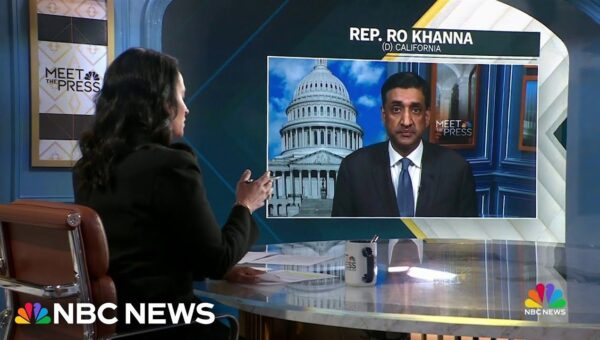
Khanna Urges Trump to Testify Voluntarily in Epstein Probe
U.S. Representative Ro Khanna is calling on former President Donald Trump to voluntarily testify in the Jeffrey Epstein probe, citing Bill Clinton's recent deposition as a new precedent. Khanna believes Trump should follow Clinton's lead in answering all questions from investigators.

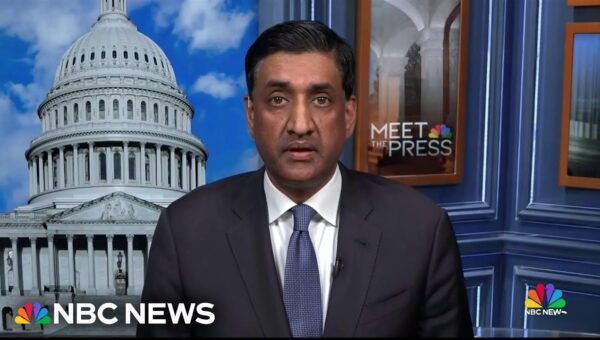
Ro Khanna: Americans Not Safer After Iran Leader’s Death
Congressman Ro Khanna argues that Americans are not safer following the death of Iran's Supreme Leader, Ayatollah Khamenei. He criticizes Republican foreign policy and pushes for a War Powers Resolution to limit presidential war-making authority. Khanna also calls for transparency in the Jeffrey Epstein case, advocating for testimony from prominent figures.