The End of Shame: America Grapples with a Crisis of Decency and Leadership
America is grappling with a profound crisis of leadership and a concerning erosion of decency, exemplified by recent divisive political rhetoric and the normalization of once-taboo behaviors. Economic hardships and a perceived lack of government accountability have further fractured the nation, leading many to believe that the solution must ultimately come from an activated citizenry demanding radical positive change and a return to foundational ideals.

The End of Shame: America Grapples with a Crisis of Decency and Leadership
In an era increasingly defined by political tribalism and a relentless 24-hour news cycle, America finds itself at a critical juncture, wrestling with a profound crisis of leadership, a pervasive decline in public decency, and the alarming normalization of what was once considered shameful. Recent events, amplified by social media, have brought these issues into sharp focus, prompting a national conversation about the nation’s direction and the very fabric of its societal norms.
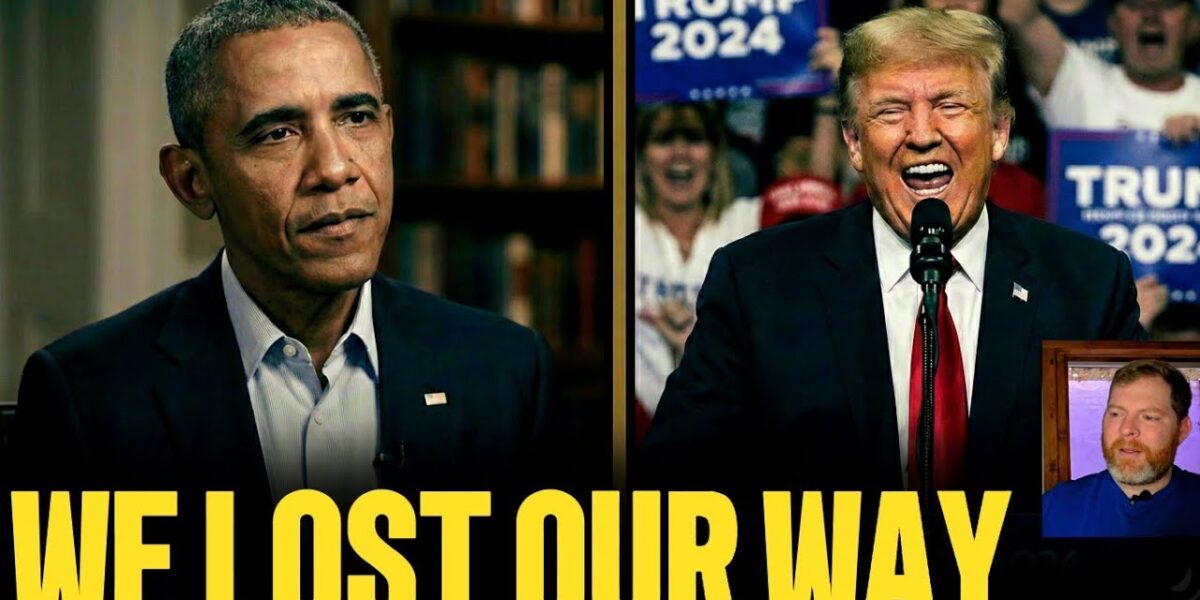
At the heart of this contemporary debate lies a disturbing incident involving former President Donald Trump, who recently shared a meme on Truth Social depicting former President Barack Obama with ape-like features. This act, which quickly went viral, ignited widespread outrage globally, drawing immediate comparisons to the historical dehumanization of Black Americans during the Jim Crow era and the dark days of slavery, where such caricatures were used to legitimize systemic mistreatment and oppression.
Responding to this escalating discourse, former President Barack Obama addressed the situation on Brian Taylor Cohen’s show, offering a poignant reflection on the state of American politics and the challenges facing the nation. While acknowledging the attention-grabbing nature of such behavior, Obama expressed a belief that the majority of Americans still value decency, courtesy, and kindness. He highlighted a concerning loss of decorum and propriety among certain public figures, lamenting the absence of shame where it once served as a societal check.
The Erosion of Decency: A National Reckoning
The incident involving the meme is not an isolated one but rather a symptom of a broader trend that many observers argue has accelerated since 2015. This period, often characterized as a crisis of leadership, has seen a perceived concerted effort by various administrations to undermine the competence of their predecessors, often at the expense of national unity and respect for institutions.
The speaker in the original discussion vividly recalls a time in rural America when symbols of hate, such as Confederate flags and Klan memorabilia, were taboo and hidden away. Today, he argues, these symbols and the ideologies they represent have become normalized, even celebrated, under the guise of "heritage." This shift, he contends, signifies a profound "end of shame," where actions that would once lead to immediate removal from office in other Western democracies are now legitimized by influential media figures and lack accountability in the United States.
The rise of social media has undeniably played a significant role in this transformation, creating echo chambers and platforms where inflammatory content can spread unchecked, often prioritizing virality over veracity or civility. This environment fosters a "clown show," as Obama described it, that distracts from substantive issues and further polarizes the populace.
A Fractured Nation: Political Polarization and the "Two Populations"
Beyond the decline in civility, America is increasingly grappling with deep-seated political polarization that transcends traditional party lines. The speaker suggests that the nation is no longer merely divided into two political tribes but rather "two populations vying over control of the same space." This stark assessment points to a fundamental divergence in values, perspectives, and visions for the country’s future.
The current administration is criticized for a perceived lack of "true opposition" to various challenges, including domestic security concerns and what some describe as a "crackdown on the American population." This sentiment fuels a growing belief that the political establishment, often viewed as a "uni-party," is unresponsive to the needs of ordinary citizens, leaving the people as the sole source of meaningful resistance and change.
This political environment is further complicated by the constant "flooding" of the 24-hour news cycle, which some believe serves to deflect attention from underlying chaos and governmental actions. The cumulative effect is an erosion of trust in institutions and a feeling of being unheard and unrepresented by the traditional political class.
Economic Strain and the American Dream Under Threat
Underpinning these social and political challenges is a pervasive sense of economic hardship that has gripped large segments of the American population. The discussion points to a "complete degradation" of the American dream over the past 15 years, citing several critical issues:
- Monetary Policies: Policies that have devalued American currency.
- Tariffs: New studies indicating that 90% of tariffs on imports are borne by U.S. citizens.
- Housing Crisis: An ongoing crisis since 2019-2020, leading to unaffordability that has "frozen out multiple generations."
- Childhood Food Insecurity: Levels not seen since the Great Depression, highlighting a severe lack of care for future generations.
- Generational Wealth: A "despoiling" of generational wealth due to the consolidation of vast wealth by the wealthiest class.
These economic pressures contribute to a widespread feeling that the government is failing to support working and middle-class families, instead prioritizing the interests of the wealthiest 1%. This narrative of economic injustice further fuels public discontent and a sense that the system is rigged against the average American.
The People’s Imperative: A Call for Citizen Action
Despite the grim assessment, both former President Obama and the speaker agree on one crucial point: the ultimate solution to America’s challenges must come from its people. Obama emphasizes the "extraordinary outpouring of organizing, community building, decency" by citizens who are fighting back against authoritarian tendencies and pushing for truth and justice, even in the face of adversity, citing examples like community efforts in Minneapolis.
The speaker echoes this sentiment, asserting that "the numbers truly are on their side" for those who seek sanity and clarity against authoritarian behavior. However, he also warns of a "culture of fear" perpetuated through mainstream media, government policy, and propaganda, designed to prevent popular uprisings. The tipping point, he suggests, will be when the consequences of inaction outweigh the fear of revolution.
This environment has fostered the rise of "democratic socialists" and "political outsiders" who are increasingly becoming the voice of the people. Yet, there’s a cautionary note: the desire for an outsider leader also led to the rise of Donald Trump. Future leaders, the speaker argues, must genuinely prioritize the interests of the working and middle classes over the wealthiest elite to prevent continued national decline.
Towards a "Radical Positive Change": Reimagining America’s Future
The discourse culminates in a powerful call for "radical positive change" – a "renaissance to the founding ideals" of America. The nation, described as a "special place" that has been "hijacked" by "robber barons" who weaponize division, needs a fundamental reorientation.
The challenges extend beyond domestic issues to America’s standing on the global stage. Questions are raised about the nation’s diminishing "soft power," its weakening influence with former allies, and its increasingly isolated position. The future of America’s diplomatic role and its ability to "recapture some of the shine that maybe it used to have" are pressing concerns.
A particularly troubling aspect highlighted is the perceived lack of justice and accountability for powerful individuals, even in the face of widespread scandals and "thousands of victims." The speaker questions what happens when the American people finally realize their government will not offer them true justice, and that official actions are merely "symbolic" to lower tension. This potential disillusionment, he suggests, could lead to profound societal shifts.
The path forward, while daunting, is seen as an opportunity for profound reform. It requires serious policy changes, and potentially even constitutional amendments, to address neglected problems like childhood food insecurity and the consolidation of wealth. The ultimate question remains: "What America are we going to be when this is over?" The answer, it seems, will be forged by the collective will and actions of the American people themselves, in their pursuit of a more just, decent, and accountable society.
Source: Why America Is Failing: The End Of Shame (YouTube)

Related Articles

Trump Open to Iran Talks After Attacks, Shifts on Regime Change
President Trump has agreed to negotiate with Iran's new leadership following recent U.S. and Israeli attacks, signaling a potential shift from his regime change objective. The move has drawn scrutiny from former officials who question the strategic coherence of U.S. policy.

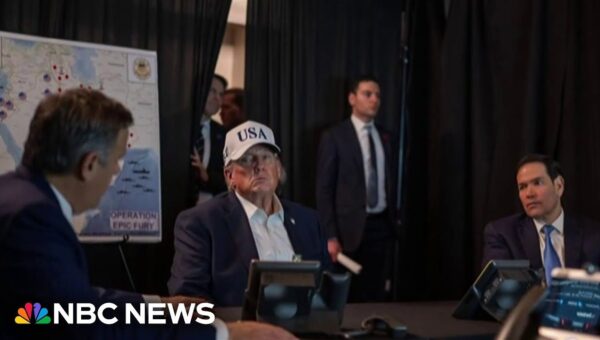
Trump: Iran Strikes Ahead of Schedule, Expects ‘Great Deal for World’
Three U.S. service members have been killed amid escalating conflict with Iran, President Trump confirmed. He stated that strikes are ahead of schedule, with senior Iranian leaders killed, and expressed optimism for a "great deal for the world" despite ongoing talks with Iranian officials.
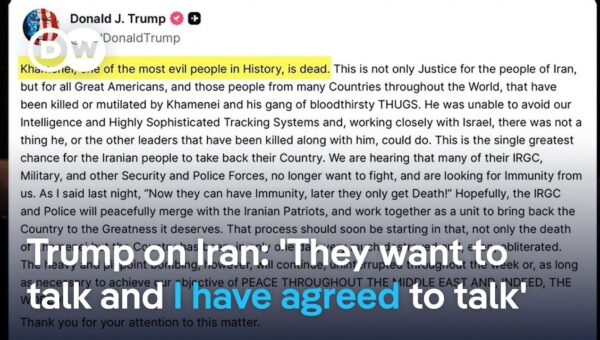
Trump Agrees to Talks with Iran After Major Strikes
President Donald Trump has agreed to talks with Iran's leadership following coordinated strikes that reportedly killed key figures, including the Supreme Leader. While Trump claims significant military successes, U.S. strategy remains unclear, and public opinion shows limited support for the actions amid rising American casualties.