The Calculated Deception of Jennifer Pan
Jennifer Pan orchestrated the murder of her parents in a calculated act driven by oppressive expectations and a desire for freedom. This article delves into the shocking details of the case, the investigation, and the trial that exposed a meticulously planned deception.

The Calculated Deception of Jennifer Pan
The true crime landscape is often defined by its brutal realities and the desperate acts born from them. Yet, the case of Jennifer Pan stands apart, not just for the shocking violence at its core, but for the unprecedented public access to the raw, unvarnished details of her life. Over eleven hours of footage, narrated in part by Pan herself, offer a chillingly intimate glimpse into her psychopathological state, painting a portrait of a young woman driven to extreme measures by a suffocating pursuit of perfection.
A Life Under Pressure
Born in Markham, Ontario, Jennifer Pan grew up in a middle-class household with her older brother. Her parents, Bich and Han, immigrants from Vietnam, adhered to a parenting philosophy that could be described as authoritarian. Success and achievement were not merely encouraged; they were obligations, paramount in both academics and extracurricular pursuits, often at the expense of their children’s well-being.
Jennifer initially channeled this intense pressure into figure skating, where her exceptional talent held Olympic promise. However, at 14, a devastating knee injury abruptly ended her dreams. The focus shifted, as expected by her parents, to academics. But Jennifer’s aptitude lay in athleticism, not academics; her C-minus averages stood in stark contrast to her parents’ demand for straight A’s.
Rather than confront her parents, Jennifer chose a path of deception. She began faking test results, then report cards, culminating in a fabricated high school diploma and a university acceptance letter to study pharmacology. In her parents’ eyes, Jennifer was on track for a prestigious and lucrative career. In reality, she was a high school dropout living a secret life with her drug dealer boyfriend of nearly eight years.
The Ultimatum and the “Solution”
The double life unraveled in 2010 when her parents discovered the truth. At 24, Jennifer was presented with an ultimatum: either return home, sever ties with her boyfriend, and re-enroll in school under strict supervision, or be disowned entirely, losing all financial support. Neither option appealed to Jennifer. Instead, she devised a third way.
Jennifer allegedly enlisted her boyfriend to arrange a mock home invasion. Three of his acquaintances were tasked with ransacking the Pan household and murdering her parents. The plan was set for Monday, November 8th, around 11 p.m. Jennifer would unlock the front door, admitting the intruders. A neighbor’s surveillance camera captured three figures entering the home at 11:05 p.m. They fled just under 18 minutes later. At precisely 11:23 p.m., 911 received a call from the Pan residence.
The Aftermath and the Investigation
The scene that greeted emergency responders was horrific. Bich Pan was shot twice and killed instantly. Her husband, Han Pan, was also shot twice, once in the neck and once in the face. Miraculously, he survived and was placed in an induced coma at the hospital. Jennifer, taken to the same hospital as a precaution, was cleared of injury. She remained by her father’s bedside for three hours before being taken to the Markham police station to give a voluntary statement as a witness.
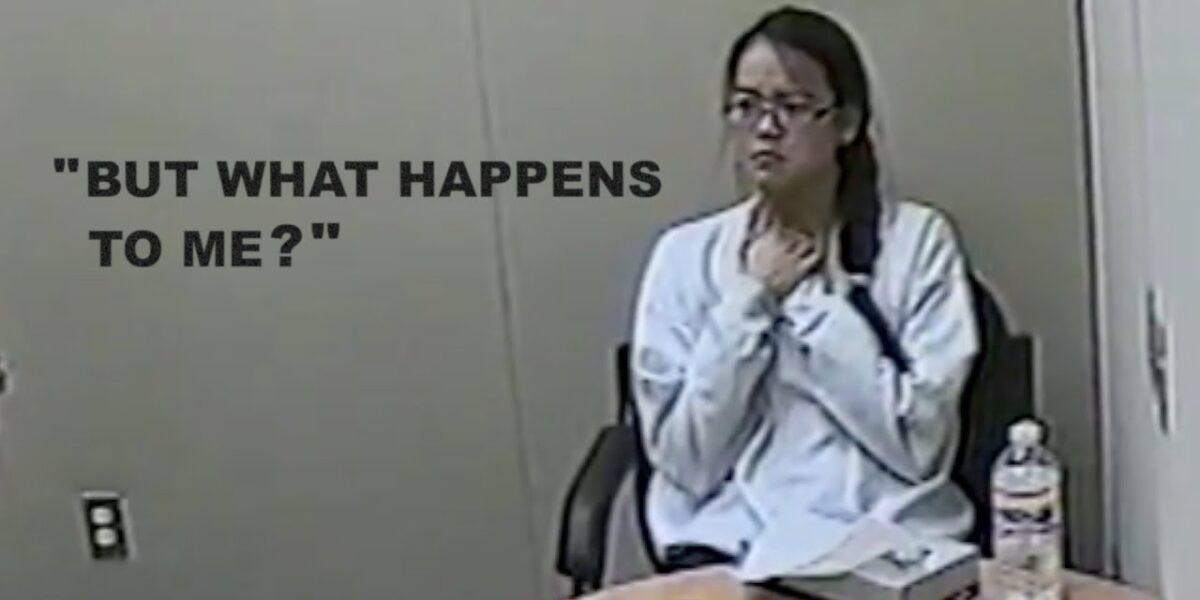
During this initial interview, Jennifer was read her rights as a witness, informed of the penalties for fabricating evidence, and cautioned about the importance of truthfulness. Detectives noted her reaction to a box of tissues, attributing it to a startle reflex amplified by trauma. She recounted the events of November 8th, describing how she heard unfamiliar voices, was confronted by an intruder with a gun, and witnessed her parents being threatened. She detailed how she was taken upstairs to help find money and later tied to a banister while the intruders confronted her parents downstairs. She claimed to have heard two gunshots, her mother’s scream, and then more shots before the intruders fled. She stated she then heard her father moving and managed to call 911 from a hidden phone, despite her hands being tied behind her back.
However, inconsistencies began to emerge. The detective pressed Jennifer on details, probing the appearance of the assailants and the sequence of events. Her narrative, initially presented with a veneer of emotional distress, began to show cracks under scrutiny. Her account of who spoke about the purse, the description of one assailant’s clothing, and the amount of money taken shifted. Crucially, her ability to retrieve a phone from her waistband and make a call while allegedly bound behind her back to a banister raised significant questions.
A second statement, given two days later, revealed further contradictions. While still officially a witness, the line of questioning shifted towards cross-examination, highlighting discrepancies in her earlier testimony. Her emotional displays, which had been somewhat convincing in the initial interview, appeared to dissipate rapidly when questioned on specific details, suggesting a rehearsed narrative rather than genuine recollection.
Justice and Sentencing
The investigation culminated in Jennifer Pan and her boyfriend, Daniel Wong, being charged with first-degree murder and conspiracy to commit murder. The prosecution argued that Pan orchestrated the murder plot to escape her parents’ control and gain access to a life insurance policy.
In 2015, Jennifer Pan was found guilty of first-degree murder and conspiracy to commit murder. She was sentenced to life in prison with the possibility of parole after 25 years. Daniel Wong and two others involved in the home invasion were also convicted and received lengthy prison sentences.
Broader Implications
The Jennifer Pan case serves as a stark reminder of the devastating consequences that can arise from extreme parental pressure and the lengths to which individuals may go to escape perceived control. It highlights the complexities of family dynamics, cultural expectations, and mental health. The availability of extensive footage also raises questions about privacy, the public’s fascination with true crime, and the potential for sensationalism versus informed understanding. While Jennifer Pan’s actions were undeniably horrific, her case underscores the importance of open communication within families and the need for healthy mechanisms to cope with pressure and disappointment, rather than resorting to violence and deception.
Source: Jennifer's Solution (YouTube)

Related Articles


Silent Warnings: When Ordinary People Foresee Disaster
Explore the chilling accounts of ordinary individuals whose warnings about impending crimes were tragically ignored. From financial fraud to mass violence, these stories highlight the critical importance of heeding early signs.


Cryptic Note, Impossible Fall: The Unsolved Death of Rey Rivera
Rey Rivera's death is shrouded in mystery, marked by a cryptic note, an impossible fall from a building, and a police investigation that hit insurmountable obstacles. The case remains officially unsolved, leaving more questions than answers.


Serial Killers’ Dumbest Mistakes Exposed!
From leaving digital breadcrumbs on Expedia to shoplifting a can of salmon, notorious serial killers have been caught due to surprisingly simple and often foolish mistakes. This article delves into the most egregious blunders that led to their capture.