The Backwards Tractor: A Lesson in Neuroplasticity
Destin demonstrates a backwards-driving tractor, revealing how learned neural pathways from the backwards bicycle allow for instant operation. This highlights the brain's neuroplasticity and the surprising cognitive skills of drone pilots.


The Backwards Tractor: A Lesson in Neuroplasticity
In a delightful turn of events that blends mechanical tinkering with profound insights into the human brain, Destin, the creator behind the popular YouTube channel Smarter Every Day, has unveiled his latest project: a fully functional backwards-driving tractor. This isn’t merely a novelty; it’s a tangible extension of a concept that has captivated both Destin and his audience for years – the backwards brain bicycle, a device that forces the rider to pedal in one direction while the handlebars steer in the opposite. The successful adaptation of this principle to a much larger and more complex machine like a tractor offers a fascinating glimpse into the adaptability of our neural pathways.
From Bicycle to Big Rig: A Cognitive Challenge
The journey began years ago with the creation of the backwards brain bicycle. This seemingly simple modification, where turning the handlebars left makes the front wheel turn right and vice versa, presents an extraordinary challenge to our ingrained motor control. For most, the intuitive responses developed over a lifetime of riding bicycles become a significant obstacle. Destin himself famously took eight months of dedicated practice to master it, a testament to how deeply our brains are wired for conventional control systems. However, he observed a curious phenomenon: when individuals approached the bike with a specific, locked-in determination, some could learn to ride it in mere days.
This led Destin to explore the role of focused learning and cognitive flexibility. He famously sent a backwards brain bicycle to Mike Boyd, a renowned builder and tinkerer known for his rapid learning capabilities. Boyd, a testament to focused dedication, mastered the bicycle in an astonishing hour. This disparity in learning times highlighted a key question: what distinguishes those who adapt quickly from those who struggle?
The Tractor’s Twist: Instant Adaptation
The real revelation came with the backwards tractor. Unlike the bicycle, which required a significant learning curve, Destin found he could operate the tractor immediately. “When I got on the tractor, the backwards tractor, When I got on that thing, I instantly could do it. I didn’t have to learn anything. I already had that neural pathway in my head,” he explained. This immediate competence suggests that the neural pathways forged by learning the backwards bicycle were not lost but retained, ready to be re-engaged. The ability to switch between normal and backwards bicycle modes, with only a brief wobble before the brain selects the appropriate ‘algorithm,’ further underscores this point: mastery, once achieved, can persist.
The Drone Pilot Connection: Inverted Thinking
Further investigation into who could master the backwards bicycle quickly revealed a common thread: drone pilots. Destin noted that individuals skilled in piloting drones, particularly those accustomed to flying in inverted modes, often found the backwards bicycle significantly easier to learn. This observation points to a specific type of cognitive skill – the ability to mentally invert spatial relationships and control inputs. For a drone pilot, controlling a craft that is upside down or performing maneuvers that defy conventional orientation is second nature. This mental flexibility, this capacity for ‘inverted thinking,’ appears to be a powerful predictor of rapid adaptation to the backwards brain bicycle.
Neuroplasticity: The Brain’s Remarkable Ability to Rewire
The backwards tractor and bicycle serve as compelling, albeit unconventional, demonstrations of neuroplasticity – the brain’s remarkable ability to reorganize itself by forming new neural connections throughout life. Learning a new skill, especially one that requires overcoming deeply ingrained habits, forces the brain to create and strengthen new pathways. The struggle with the backwards bicycle illustrates the initial resistance of established neural networks. The rapid adaptation of some, and Destin’s own immediate competence with the tractor, highlight the brain’s capacity to build, retain, and recall these new pathways.
This phenomenon has not gone unnoticed in academic circles. The backwards brain bicycle has been used as a metaphor in numerous academic articles to explain concepts related to cognitive bias, learning, and the challenges of unlearning established patterns of thought. The core principle remains: our ingrained ways of thinking and acting can be barriers to new learning, but with focused effort and the right approach, these barriers can be overcome, and new, more effective neural pathways can be forged.
A Thank You to the Community: The Smarter Every Day Discovery Team
Beyond the scientific exploration, Destin also took the opportunity to announce the Smarter Every Day Sticker Team for the current year, now dubbed the “Discovery Team.” This initiative is a way to thank patrons who support the channel on Patreon.com/smartereveryday. These patrons enable Destin to pursue projects, even those that might not perform well algorithmically, allowing for greater creative freedom and authenticity. The sticker packs, featuring designs related to the year’s content – including cicadas, rocket launches, and eclipses – are a tangible token of appreciation for this vital community support.
The support from patrons is crucial, as Destin emphasizes, in freeing him from the pressures of algorithmic performance and allowing him to dedicate time to creating intelligent, respectful content that he is passionate about. The stickers themselves become part of this interactive experience, with community members encouraged to share photos of where they’ve placed them, further extending the reach and impact of the channel’s explorations.
What’s Next? The Enduring Fascination with Control
The backwards tractor, while currently a source of amusement, represents more than just a quirky modification. It’s a physical manifestation of our ongoing quest to understand how we learn, adapt, and overcome our own cognitive limitations. The insights gained from these experiments have implications far beyond riding bicycles or tractors. They touch upon education, training, problem-solving, and even our understanding of consciousness itself.
As Destin continues to explore the world around us with curiosity and a commitment to scientific accuracy, projects like the backwards tractor serve as powerful reminders of the incredible plasticity of the human brain and the enduring fascination of mastering the seemingly impossible. The next step might involve further refining the understanding of what specific cognitive traits facilitate rapid learning, or perhaps even exploring other complex systems that can be “reversed” to challenge our perceptions and expand our capabilities.
Source: The Backwards Brain Tractor – Smarter Every Day 305 (YouTube)

Related Articles


Are You Seeing Discrimination? Your Mindset Might Be the Cause
A Dartmouth College study revealed how the expectation of being judged can lead individuals to perceive discrimination, even when no bias exists. This highlights the power of our mindset in shaping social reality and offers insights into managing perceived victimhood.


White Dwarf Dyson Spheres: A Tiny Star’s Big Energy Solution
Astronomers are exploring the possibility of building Dyson spheres around compact white dwarf stars, which offer a long-lasting and stable energy source. Meanwhile, the Vera Rubin Observatory promises near real-time astronomical discovery, and new data challenges models of supermassive black hole formation in the early universe.
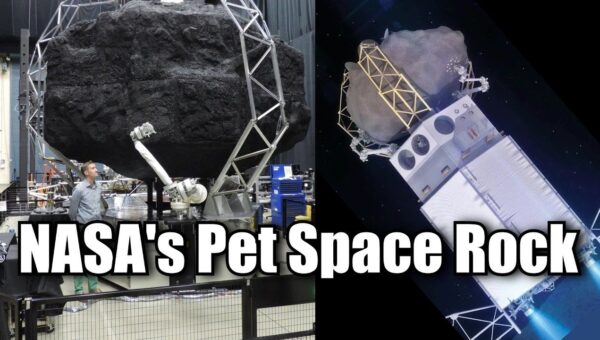
NASA’s Asteroid Mission: From Mars Dream to Lunar Gateway
NASA's ambitious Asteroid Redirect Mission (ARM), designed as a stepping stone to Mars, aimed to capture a small asteroid boulder and tow it to lunar orbit for astronaut testing. Though cancelled, its advanced propulsion and robotic technologies live on in NASA's Lunar Gateway and future deep space exploration plans.